Engineered Wood Supplier China: A Buyer's Guide
What to Look for, How to Evaluate, and How to Avoid Common Pitfalls When Sourcing Engineered Wood from Chinese Manufacturers
Sourcing engineered wood from China can offer significant advantages in terms of cost and manufacturing capacity. However, buyers need to navigate quality variations, certification requirements, and logistical considerations. This guide provides practical information to help you make informed purchasing decisions.
What Are You Looking For?
Matching your application to the right product type
Before contacting suppliers, clarify your specific requirements. Different applications demand different engineered wood products:
| Application | Product Type | Key Requirements |
|---|---|---|
| Transformer insulation | Insulating Laminated Wood | High dielectric strength, oil resistance, low moisture content |
| Building exterior walls | Flame-Retardant Wall Panels | Fire rating certification, weather resistance, dimensional stability |
| Door/window frames | Wood Profiles for Doors & Windows | Consistent dimensions, moisture resistance, paint adhesion |
| LNG/cryogenic support | Marine Low-Temperature Supporting Wood | Ultra-low temperature performance, strength retention at -163°C |
| Sports facilities | Sports Wooden Profiles | Impact resistance, consistent bounce characteristics, durability |
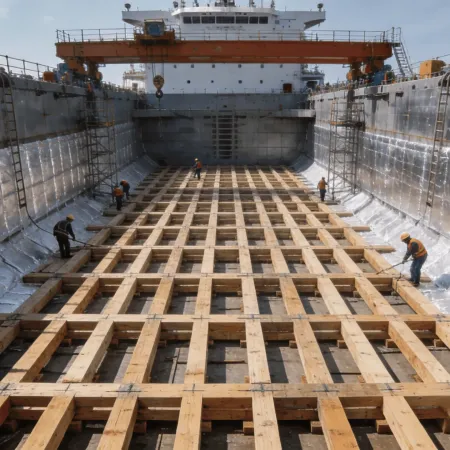
| Marine decking | Marine Anti-Corrosion Flooring | Anti-slip surface, saltwater resistance, UV stability |
💡 Tip
Be specific about your technical requirements when requesting quotes. Vague specifications lead to incompatible products and wasted time.
How to Evaluate Suppliers
Verification steps beyond marketing claims
Not all engineered wood manufacturers deliver consistent quality. Here's how to assess potential partners:
Certification Verification
Request copies of ISO 9001, product-specific certifications (CARB, CE, etc.), and third-party test reports. Verify authenticity directly with issuing bodies.
Factory Audit
Visit in person or hire a third-party inspector. Check equipment condition, quality control checkpoints, and raw material storage.
Sample Evaluation
Order samples from multiple suppliers. Test for your specific application rather than relying on supplier-provided data.
Reference Check
Ask for customer references in your region or industry. Contact them directly about delivery reliability and product consistency.
Document Checklist for Supplier Evaluation
- Business License — Verify legal registration and scope
- Quality Management Certificate — ISO 9001 or equivalent
- Product Test Reports — From accredited laboratories (SGS, Intertek, etc.)
- Export License — Confirms international trade capability
- Environmental Compliance — FSC, PEFC, or local environmental certifications
Understanding Pricing Factors
What drives cost differences between suppliers
Prices for engineered wood vary significantly based on multiple factors. Understanding these helps you compare quotes accurately:
| Product Category | Primary Cost Drivers |
|---|---|
| Standard laminated boards | Thickness, density, surface finish quality, order volume |
| Electrical grade laminate | Dielectric property requirements, oil resistance testing, quality control intensity |
| Fire-rated panels | Fire rating class, additive types, certification requirements |
| Cryogenic/marine grade | Low-temperature testing requirements, material selection, specialized QC procedures |
⚠️ Red Flag
Quotes significantly below market range often indicate compromised quality, incorrect specifications, or hidden costs. Request detailed breakdowns to understand what's included.
Additional cost factors to clarify:
- MOQ (Minimum Order Quantity) and whether it fits your needs
- Payment terms and currency
- Incoterms (FOB, CIF, DDP) and what's included
- Packaging standards for international shipping
- Lead times and penalty clauses for delays
Common Pitfalls & How to Avoid Them
Lessons from experienced buyers
🚫 Pitfall: Assuming All "Engineered Wood" Is the Same
Terms like "laminated wood" or "engineered timber" cover vastly different products. Always specify density, adhesive type, layer structure, and performance requirements in your RFQ.
🚫 Pitfall: Skipping Pre-Shipment Inspection
Quality can vary between sample batches and production runs. Arrange third-party inspection (SGS, Bureau Veritas) before shipment, especially for first-time orders.
🚫 Pitfall: Ignoring Moisture Content Specifications
Wood moisture content affects dimensional stability. Specify acceptable ranges (typically 6-12% for interior use) and require moisture meter readings on packing lists.
🚫 Pitfall: Unclear Acceptance Criteria
Define defect tolerances, dimensional tolerances, and testing methods in your purchase order. Vague standards lead to disputes.
About Chambroad
Background information for your evaluation
Chambroad is a Chinese manufacturer producing engineered wood products including laminated wood, flame-retardant panels, and specialized profiles for industrial applications.
Manufacturing Capabilities:
- Multi-layer hot pressing lines for various densities and thicknesses
- CNC machining for precision-cut profiles
- In-house quality testing laboratory
- Custom formulation capabilities for specific performance requirements
Product Range:
- Insulating Laminated Wood — For electrical transformers and switchgear
- Flame-Retardant Wall Panels — Exterior cladding with fire ratings
- Wood Profiles for Doors & Windows — Dimensional stable frames
- Marine Low-Temperature Supporting Wood — Cryogenic applications
- Sports Wooden Profiles — Flooring and equipment components
- Marine Anti-Corrosion Flooring — Decking and walkway systems
Quality Standards: ISO 9001 certified, products tested to GB, IEC, and ASTM standards as applicable.
Export Experience: Ships to Southeast Asia, Middle East, Europe, and North America.
📌 Note
This information is provided for your evaluation. We recommend conducting your own due diligence including sample testing and reference checks before placing orders.
Frequently Asked Questions
Common questions from buyers
What's the difference between E0, E1, and CARB Phase 2 certifications?
These are formaldehyde emission standards. E0 (≤0.05 mg/m³) and E1 (≤0.124 mg/m³) are Chinese/European standards. CARB Phase 2 (≤0.09 ppm) is the California Air Resources Board standard, required for products sold in California. For indoor applications, specify which standard you need.
How long does production typically take?
Standard products: 2-4 weeks. Custom specifications: 4-8 weeks. Add 2-3 weeks for shipping depending on destination. Always confirm current lead times when ordering.
What payment terms are standard?
For new customers, 30% deposit + 70% against B/L copy is common. Established relationships may negotiate better terms. Avoid 100% advance payment with new suppliers.
Can I request custom dimensions or formulations?
Most Chinese manufacturers accommodate custom requirements. Expect higher MOQs (Minimum Order Quantities) for custom work, typically 1-2 container loads depending on product type.
How do I handle quality disputes?
Include inspection clauses in your contract. Document issues with photos and third-party inspection reports. Reputable suppliers will negotiate solutions; for persistent issues, consider trade assurance services or legal recourse depending on contract terms.
Ready to Source Engineered Wood from China?
Get detailed specifications, samples, and competitive quotes for your project requirements.
Technical questions? Contact our engineering team for application-specific guidance.