



.png?imageMogr2/crop/220x71/gravity/center/format/webp)

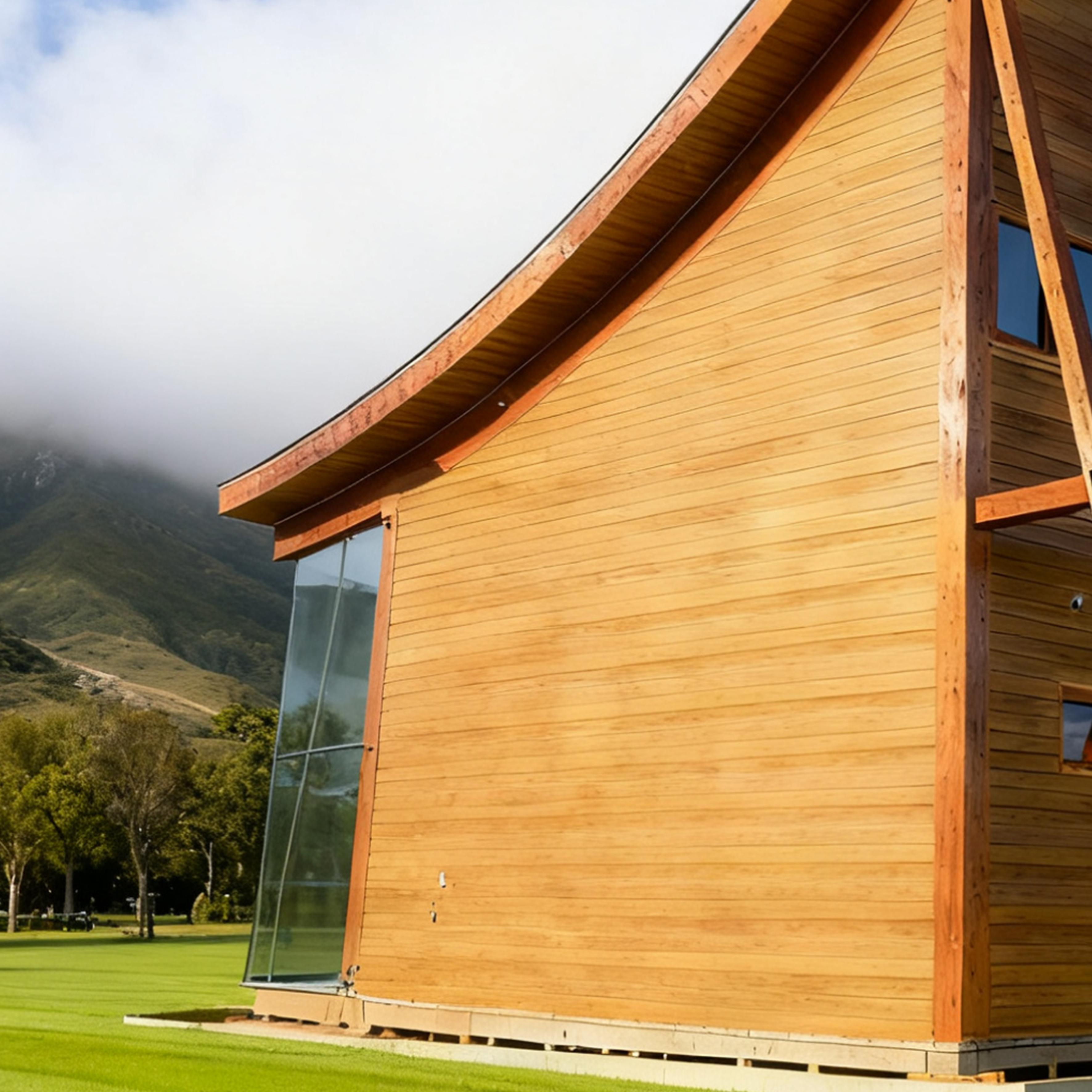
Advancing architectural integrity and industrial efficiency through biomass-modified technology and sustainable material science.
The Evolution of Structural Materials: Overcoming Modern Construction Limitations
Architects, civil engineers, and industrial procurement specialists face a recurring trilemma: balancing aesthetic naturalism with long-term durability and stringent safety regulations. Traditional timber, while visually appealing, often fails under extreme moisture, salt-mist exposure in coastal environments, or rigorous fire safety audits for high-rise buildings. Conversely, synthetic composites frequently lack the "warmth" and tactile prestige required for high-end hospitality and urban landscape projects.
This is where Modified Wood emerges as a transformative solution. By fundamentally altering the cellular structure of timber using biomass-based processes, Chambroad has developed a suite of materials that transcend the limitations of natural wood while maintaining its carbon-sequestering benefits.
Strategic Comparison: Traditional vs. Chambroad Modified Wood
| Feature / Material | Standard Softwood | Synthetic WPC | Chambroad Modified Wood |
|---|---|---|---|
| Dimensional Stability | Poor (Prone to warping) | Moderate (Thermal expansion) | Superior (Minimal movement) |
| Fire Resistance | Untreated / Low | Varies (Plastic content) | Class B-s1, d0 Standard |
| Salt Spray Resistance | Very Low | High | Exceptional (Marine Grade) |
| Sustainability | High (Renewable) | Low (Microplastics) | Green & Low Carbon |
The Science of Biomass Modification
Our Modified Wood is not merely "treated" with surface coatings; it undergoes a deep molecular transformation. Through biomass-based impregnation and thermal modification processes, the hydroxyl groups in the wood's cell walls are reduced or stabilized. This significantly lowers the material's equilibrium moisture content (EMC).
The result is a timber product that is virtually "immune" to the biological decay and fungal growth that plagues traditional wood. For industrial applications, such as insulation laminated wood, this process ensures high dielectric strength and mechanical stability even under prolonged immersion in transformer oil.
Application Selection Guide
Outdoor Infrastructure
Recommended: Marine-grade anti-corrosion flooring and flame-retardant wall panels.
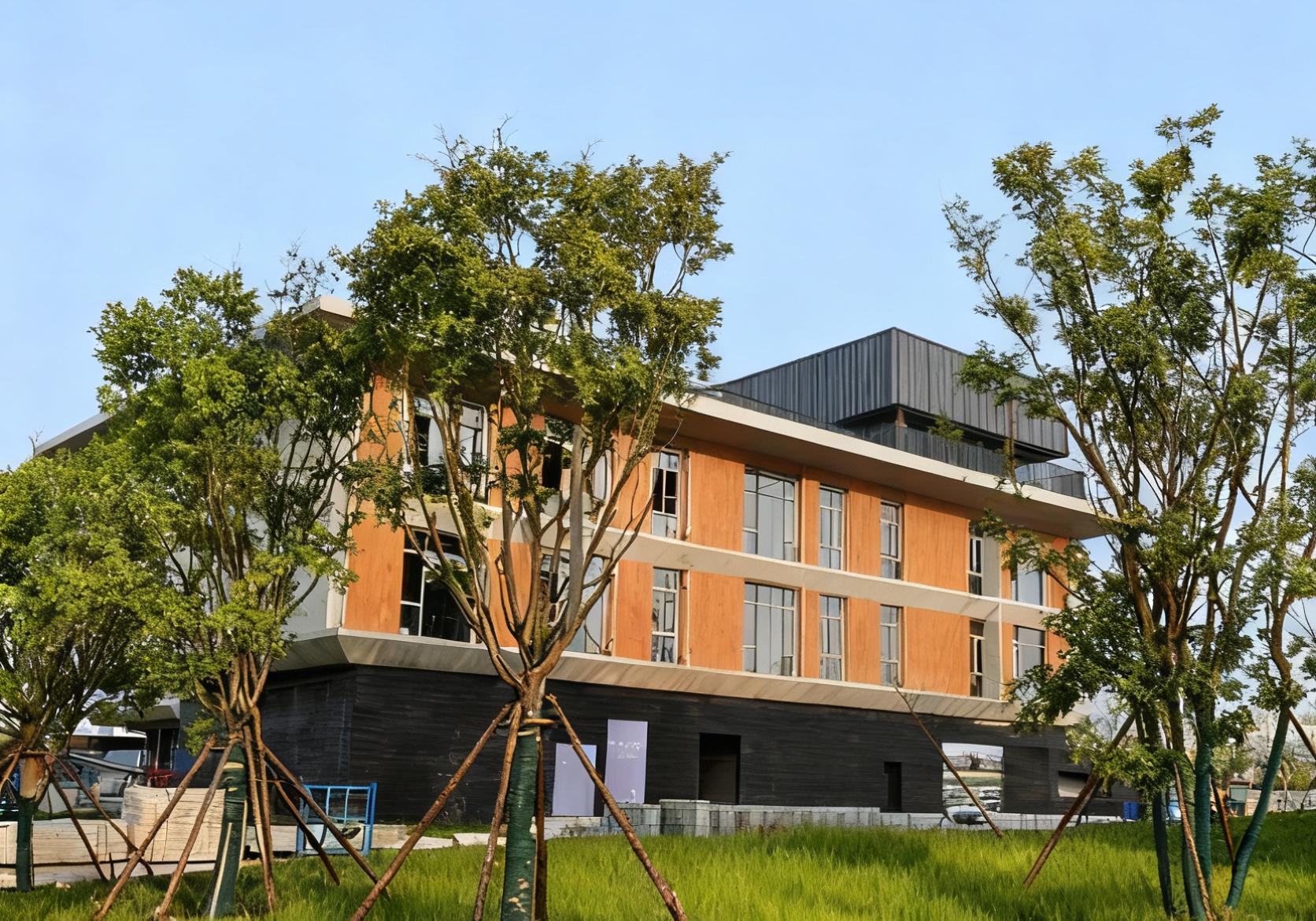
Ideal for coastal boardwalks, high-rise facades, and luxury hotel landscapes where salt air and fire safety (Class B-s1) are paramount.
Functional Profiles
Recommended: High-strength window/door profiles and sports equipment wood.
Optimized for passive houses and premium sports gear like billiards tables and Pilates reformers, requiring high hardness and moisture resistance.
Industrial Specials
Recommended: Insulation laminated wood and LNG cryogenic support wood.
Specialized for 220KV+ oil-immersed transformers and LNG fuel tank supports on vessels requiring extreme low-temperature stability.
Manufacturing Excellence & Precision
One of the primary advantages of Chambroad’s Modified Wood is its consistency in the manufacturing cycle. Unlike traditional wood, which may vary significantly in density and moisture, our modified products offer:
Machinability: Low internal stress allows for precision cutting and molding with standard CNC equipment.
Dimensional Stability: Minimal expansion or contraction ensures that tight tolerances for door and window profiles are maintained over decades.
Supply Chain Security: As a leading manufacturer, we offer localized alternatives to imported industrial materials, reducing lead times and costs.
Value Verification: Marine & Industrial Case Studies
Coastal Landscape Infrastructure
Challenge: Salt-mist corrosion leading to rapid rot in standard boardwalk timber.
Solution: Implementation of Chambroad Marine Grade Modified Wood.
Result: Lifespan extended by 300% with zero structural maintenance required over a 5-year observation period.
LNG Carrier Insulation
Challenge: Need for structural supports capable of withstanding cryogenic temperatures and immense mechanical loads.
Solution: Specialized Cryogenic Wood Support Systems.
Result: Successful domestic substitution of high-cost imported materials with equivalent safety ratings and 20% cost reduction.
Frequently Asked Questions
Q: Is Modified Wood truly environmentally friendly?
A: Yes. Unlike traditional pressure-treated wood that uses heavy metals (like CCA), our modification process utilizes biomass-based agents and thermal energy, making the material non-toxic and low-carbon.
Q: How does the Class B-s1 fire rating benefit public buildings?
A: This rating ensures high flame retardancy, low smoke production, and no flaming droplets, meeting the rigorous safety codes required for high-rise facades and public hotels.
Q: Can these materials be used for precision sports equipment?
A: Absolutely. The high hardness and moisture-resistant properties make it ideal for billiards table rails and Pilates reformers, where tactile feel and structural rigidity are critical.
The Strategic Advantage of Choosing Modified Wood
In an era where "Public Safety Value" and "Sustainability" are non-negotiable, Chambroad offers the technical expertise to bridge the gap between natural aesthetics and industrial performance. Whether you are designing a high-end villa, engineering a 220KV transformer, or constructing an LNG carrier, our Modified Wood solutions provide the reliability you demand.
Join us at CHINAPLAS 2026 to experience these materials firsthand.
Booth: [6.2 A02]