Global Supply Chain Insights for Polypropylene Resin in High-Performance Applications
Beyond Material Supply: Engineering Certainty in an Uncertain World
Beyond Material Supply: Engineering Certainty in an Uncertain World
In precision manufacturing, the smallest variables create the largest liabilities. A fractional shift in melt flow rate. A trace impurity affecting food contact safety. A logistics delay that idles a million-dollar production line.
For engineers and procurement leaders specifying polypropylene resin, these aren't abstract risks. They represent rejected batches, contract penalties, and compromised product launches. When your application demands high transparency, low-temperature impact resistance, or medical-grade biocompatibility, material consistency isn't a specification. It is the foundation of your business reputation.
This guide examines how strategic material selection and supply chain integration transform polypropylene from a commodity purchase into a competitive advantage.
High-Performance Polypropylene Grades: Technical Reference
| Application Sector |
Critical Requirements |
chambroad Grades |
Performance Characteristics |
| Food Contact Packaging |
Transparency vs. toughness balance; PET/PC replacement |
HI340R, MT40/60, RP340R |
Breakthrough transparent impact copolymer; 20%+ cost reduction via thin-wall design; PET-like gloss |
| Medical & Healthcare |
Biocompatibility; sterilization stability |
RP348P, M800E |
Superior drug contact safety; low migration formulations |
| Automotive & Appliances |
High flow with high modulus; warp-free large parts |
LA640T, SP179, K9930H |
Complex thin-wall design capability; structural impact safety; low odor |
| Infrastructure |
50-year creep resistance; stress crack resistance |
PB-A9090 (Polybutene Alloy) |
PB-1 performance with enhanced processability |
| High-Value Films |
Retort pouch integrity; gel-free optics |
F800EDF, F800E |
Ultra-low gel control; exceptional toughness; reduced breakage |
| Protective Packaging |
Temperature resistance; mechanical performance |
EPP800MM |
100℃+ heat resistance; density range 0.02-0.2 g/cm³ |
The chambroad Advantage: Vertically Integrated Certainty
Supply chain control begins at the molecular level.
Unlike compounders who rely on external feedstocks, chambroad operates a fully integrated chain from petroleum refining to advanced polyolefin synthesis. This vertical integration delivers three distinct advantages:
First, Source Traceability. We control catalyst systems and polymerization parameters directly. Every batch of M800E or RP340R maintains consistent molecular weight distribution and ultra-low residuals. This is simply impossible for traders mixing third-party resins.
Second, Compliance by Design. Grades including B800E (hot-fill applications) and RP348P (medical devices) are engineered from the molecule up to meet FDA, EU No.10/2011, and GB standards. Compliance documentation flows naturally from our design process, not as an afterthought.
Third, Validation at Scale. Our materials already run continuously in beverage closures, household storage products, and automotive components for leading global brands. Large-scale commercial validation is the ultimate quality certification.
The Cost Analysis: Visible Pricing vs. Invisible Losses
Raw material price per kilogram dominates procurement spreadsheets. But the true cost of polypropylene resin lives elsewhere.
The hidden cost drivers:
- • Validation drag: Every new material requires process tuning, consuming engineering hours and production capacity
- • Cycle time leakage: Marginal flow differences compound into significant throughput losses across millions of cycles
- • Yield erosion: Unstable shrinkage rates generate dimensional rejects that inspection catches but accounting measures poorly
- • Brand exposure: Post-market odor or migration issues trigger recall costs that dwarf any material savings
How chambroad converts hidden costs to visible value
Extended cycle times → High-flow MT40/LA640T grades: 10-15% daily capacity increase; direct energy savings
Dimensional rejects → Precision-controlled isotacticity in RP242G: Near-zero shrinkage variation for closures
Premium material over-spec → RP340R transparency grade: 20-30% cost reduction replacing PET/PC
Low-temperature failures → HI340R impact performance: Eliminated cold-chain breakage
The Four-Layer Verification Protocol
Consistency separates engineering materials from commodities. chambroad implements four distinct verification layers before any resin reaches your facility:
01
Raw Material Purity Audit
Every monomer batch and additive package undergoes ultra-pure analysis before polymerization. This eliminates the trace contaminants that later manifest as odor in food containers or gels in cast film.
02
In-Process Molecular Weight Control
Real-time rheometry monitors melt flow during polymerization, with closed-loop adjustments maintaining target specifications. Batch-to-batch melt index variation held within ±2%.
03
Comprehensive Mechanical Validation
Every production lot undergoes full mechanical characterization: tensile, flexural, impact, heat distortion, and optical properties. Verifies HI340R delivers -20℃ impact strength before shipment.
04
Application Simulation
We test resin, not just particles. RP348P is molded into standard syringes and tested for glide force. B800E containers undergo simulated hot-fill cycles. Final assurance of seamless integration.
Technical Capability Assessment: Solving the Unsolvable
When your application pushes material limits, generic grades fail. chambroad's technical infrastructure enables three specific breakthroughs:
Simultaneous transparency and impact resistance
Traditional impact copolymers sacrifice clarity for toughness. chambroad's advanced reactor alloy technology creates a controlled morphology that delivers both. HI340R maintains crystal clarity while providing exceptional low-temperature impact for freezer-to-microwave containers and impact-resistant housewares.
![housewares]()
Ultra-pure film grades for retort applications
Retort pouches face the industry's most demanding combination: thermal stress, pressure cycles, and food contact safety. Any gel or contaminant becomes a rupture point. F800EDF achieves its exceptional purity through dedicated production lines and melt filtration protocols that reduce gel counts to near-zero levels, directly translating to lower breakage rates during cooking.
![]()
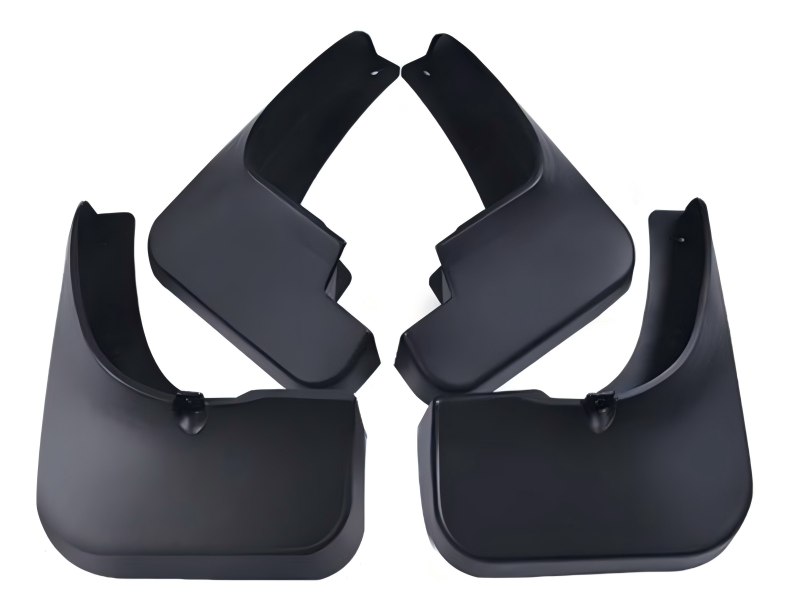
High-flow structural grades for lightweighting
Automotive and appliance designers face a fundamental trade-off: thin walls require high flow, but high flow typically reduces mechanical properties. LA640T resolves this through molecular design that delivers high melt index while maintaining modulus and impact strength, enabling lighter parts without compromising safety.
![]()
Supplier Qualification: The High-Performance Procurement Checklist
When evaluating polypropylene partners for critical applications, verify these capabilities:
☑ Formulation transparency – Can the supplier disclose catalyst systems and additive packages? Do they guarantee no use of post-consumer or post-industrial recyclate without disclosure?
☑ Statistical process control – Request six months of melt index and impact strength data for a single grade like SP179. Is the data tightly clustered or widely scattered? Do they share control charts?
☑ Customization capability – When you need a melt flow between standard grades, how quickly can their R&D team respond? Do they operate pilot-scale polymerization reactors?
☑ Supply chain redundancy – In a global disruption event, does the supplier control upstream monomer sources? Can they offer multiple shipping points and logistics routes?
☑ Compliance infrastructure – Can they provide FDA, EU, and GB food contact declarations on demand, with supporting test data for each specific grade?
From Prototype to Production: The chambroad Collaboration Framework
Phase One
Requirement Definition
We begin with your application, not a product catalog. Analysis of mechanical demands, regulatory landscape, processing equipment, and cost targets.
Phase Two
Precision Matching
Optimal grade selection from portfolio. For closures: RP242G. For ice cream containers: HI340R. For unique requirements, custom development initiated.
Phase Three
Validation Support
Samples provided for your tooling. Process engineers work alongside to optimize injection parameters and document performance.
Phase Four
Seamless Scale-Up
Transition to commercial supply with shared production schedules and real-time order tracking. Same material, same specifications, delivered consistently.
Phase Five
Continuous Partnership
Regular contact to monitor long-term performance and anticipate future requirements. Your next innovation drives our next development.
The chambroad Difference: Partner, Not Vendor
In a market where polypropylene is increasingly commoditized, chambroad chooses a different path. We invest in application expertise because we understand that your success depends on material performance, not just material delivery.
Our commitment: Behind every shipment of chambroad resin stands a team of industry specialists, process engineers, and supply chain professionals dedicated to your success. From the initial material selection through long-term production stability, we provide answers, not just atoms.
Frequently Asked Questions
1. How does chambroad polypropylene compare to major petrochemical suppliers?
We combine the scale of an integrated refining and polymerization group with the agility to address specialized applications. Our technical service team provides faster response for custom requirements, and our flexible production allows economic runs of targeted grades.
2. Can RP340R truly replace PET in all applications?
For injection-molded transparent containers including storage bins and food boxes, RP340R delivers comparable clarity and surface finish at significantly lower cost with improved chemical resistance. For applications requiring high oxygen barrier, such as carbonated beverage bottles, PET remains the appropriate choice.
3. How do you ensure export batch consistency for demanding grades like LA640T?
Consistency flows from continuous polymerization on dedicated production lines, not batch processes. Combined with our four-layer verification protocol and real-time molecular weight control, we ensure that LA640T delivered to any global destination matches the original qualification sample within narrow tolerances.
4. What is the typical lead time for international orders of chambroad polypropylene resins?
Standard grades typically ship within 2-3 weeks of order confirmation. Custom grades may require additional lead time. chambroad provides real-time tracking from production through delivery. Contact our sales team for destination-specific quotes.
5. How does F800EDF's low gel count benefit retort pouch production?
Gels represent structural weaknesses in finished film. Each gel is a potential rupture point during the thermal and pressure cycling of retort cooking. By minimizing gels, F800EDF reduces pouch failure rates, protecting both your packaging efficiency and your customer's food safety.
6. Can chambroad support export-oriented manufacturers targeting overseas markets?
Absolutely. chambroad operates as a global enterprise with dedicated international trade professionals and overseas technical support. We provide reliable FOB/CIF delivery and can collaborate on meeting specific end-user requirements in your target markets.
7. What processing considerations apply to PB-A9090 compared to standard PE100?
PB-A9090 exhibits higher melt strength than polyethylene, requiring optimized cooling and calibration during extrusion. Our technical team provides comprehensive processing recommendations covering die design, vacuum calibration, and haul-off parameters to accelerate your learning curve.
8. Does chambroad provide molding support for new applications?
Yes. Our technical service organization includes experienced injection molding and extrusion specialists available for on-site consultation. We help optimize processing parameters to maximize productivity and part quality with our materials.
Summary: Engineering Certainty Through Material Science
Global supply chains will continue to face disruption. Raw material prices will continue to fluctuate. But the fundamental requirement for consistent, high-performance polypropylene remains constant.
chambroad offers more than resin. We offer predictability: predictable quality through vertically integrated control, predictable performance through multi-layer validation, and predictable delivery through transparent milestone management.
When your application demands more than a commodity, partner with chambroad.
Experience chambroad at CHINAPLAS 2026
In an era where material performance and supply chain certainty are non-negotiable, chambroad offers the technical expertise to bridge the gap between raw polymer science and industrial application. Whether you are engineering medical devices, lightweight automotive components, or high-barrier food packaging, our polypropylene solutions provide the reliability you demand.
Visit us to discuss your next innovation:
Booth: 6.2 A02
CHINAPLAS 2026 6.2 A02 April 21-24, 2026 Shanghai, China
Ready to Optimize Your Material Strategy?
Request samples and technical data sheets for HI340R, MT Series, LA640T, and our complete portfolio of high-performance polypropylene grades. Schedule an engineering consultation to discuss how chambroad materials can support your next product innovation.
Contact Our Technical Team





.png?imageMogr2/crop/220x71/gravity/center/format/webp)