Advanced Industrial Applications of IIR Rubber Low Gas Permeability Technology
Comprehensive guide to optimizing seal integrity and barrier performance using high-performance halogenated butyl rubber solutions.
The Challenge of Gas Containment in Modern Manufacturing
In the contemporary industrial landscape, the ability to maintain airtight environments and prevent gas leakage is a critical factor in both safety and performance. Engineers across the automotive, medical, and aerospace sectors frequently encounter the limitations of standard elastomers when faced with high-pressure gas containment or delicate vacuum requirements. The common struggle involves managing gradual pressure loss, oxidative degradation, and the infiltration of ambient moisture. These challenges lead to increased maintenance costs, reduced product lifespans, and potential safety hazards.
Addressing these issues requires a fundamental shift in material selection. Conventional natural rubber or general-purpose synthetic rubbers often lack the dense molecular structure necessary for high-barrier applications. This article serves as a technical resource for decision-makers looking to leverage iir rubber low gas permeability to solve these persistent challenges. By understanding the intrinsic properties and processing advantages of specialized butyl rubber, professionals can significantly enhance the reliability of their sealing systems.
Understanding the Science of IIR Rubber Low Gas Permeability
Butyl rubber, or Isobutylene Isoprene Rubber (IIR), is a synthetic elastomer produced by the copolymerization of isobutylene with a small amount of isoprene. The molecular architecture of IIR is characterized by a high degree of saturation and a unique arrangement of methyl groups. This structure results in extremely low chain mobility and a high packing density, which are the primary factors contributing to the iir rubber low gas permeability characteristic.
When compared to other elastomers, the diffusion coefficient of gases through IIR is significantly lower. This is because the compact molecular chains create a tortuous path for gas molecules, effectively blocking their passage. For industries where air retention is non-negotiable, such as in tire inner liners or pharmaceutical packaging, this material property is indispensable. Chambroad Sinopoly has refined this technology through advanced polymerization processes, ensuring that every batch of material meets the rigorous demands of global industrial standards.
Technical Comparison of Gas Barrier Performance
In laboratory testing, the air permeability of IIR is approximately eight to ten times lower than that of natural rubber or SBR. This performance is further enhanced through halogenation, resulting in Chlorinated Butyl Rubber (CIIR) and Brominated Butyl Rubber (BIIR). These variations maintain the core iir rubber low gas permeability while providing faster vulcanization rates and improved compatibility with other rubbers.
Deep Dive into Chambroad Halogenated Solutions
Chambroad offers a comprehensive portfolio of halogenated butyl rubbers designed specifically for high-performance applications. These materials are engineered to balance processability with the maximum possible barrier efficiency.
Chlorinated Butyl Rubber CIIR1338
The Chlorinated Butyl Rubber CIIR1338 is a flagship grade known for its exceptional heat resistance and stable curing characteristics. It is widely utilized in heavy-duty tire inner liners where the iir rubber low gas permeability ensures long-term pressure retention under extreme thermal stress.
Bromobutyl Rubber BIIR2332
For applications requiring rapid vulcanization and superior adhesion to other substrates, Bromobutyl Rubber BIIR2332 provides an ideal solution. Its enhanced reactivity makes it perfect for complex automotive seals and pharmaceutical stoppers where the iir rubber low gas permeability must be maintained across intricate geometries.
Furthermore, for specialized pharmaceutical requirements, Chambroad provides BIIR 2828, which offers higher halogen content for even more precise control over the cross-linking density and chemical inertness.
Strategic Industry Applications
Healthcare and Medical Packaging
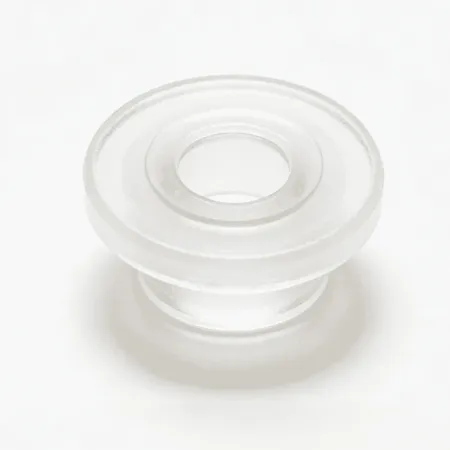
In the medical field, the integrity of a container closure system is paramount. The Medical Rubber Stopper manufactured from Chambroad halogenated IIR ensures that sensitive injectable drugs are protected from oxygen ingress and moisture vapor transmission. The iir rubber low gas permeability prevents the degradation of the medication, extending shelf life and ensuring patient safety. Unlike natural rubber, these stoppers exhibit low extractables and high cleanliness, meeting stringent pharmacopoeia standards.
Automotive and Transportation
The automotive industry relies heavily on iir rubber low gas permeability for the production of tubeless tire inner liners. By maintaining consistent air pressure, the material helps optimize fuel efficiency and reduces tire wear. Additionally, Chambroad POE materials are often used in conjunction with rubber components in automotive modification to achieve lightweight and impact-resistant designs.
Industrial Gas Storage and Sealing
From high-pressure hoses to protective masks, the barrier properties of IIR are vital for safety. The material resistance to ozone, weathering, and chemical attack, combined with iir rubber low gas permeability, makes it the preferred choice for industrial environments where hazardous gases must be contained or excluded.
Sustainability and Innovation: The Sinopoly Commitment
Chambroad is at the forefront of the green transition in the rubber industry. Our ISCC PLUS Butyl Rubber initiative demonstrates a full-cycle innovation model. By utilizing pyrolysis oil from waste tires as a feedstock to produce isobutylene, we create a circular economy "from tire to tire." This sustainable approach does not compromise on performance; the resulting iir rubber low gas permeability remains at the highest technical grade, allowing our partners to produce sustainable materials with over 80% recycled content.
Frequently Asked Questions
What is the primary benefit of iir rubber low gas permeability for pharmaceutical use?
The primary benefit is the prevention of gas exchange between the drug product and the environment. This ensures that oxygen-sensitive drugs do not oxidize and that the moisture content remains stable, which is critical for lyophilized powders and liquid injections.
How does halogenation affect the permeability of IIR rubber?
Halogenation (adding chlorine or bromine) does not significantly change the inherent low gas permeability of the butyl base, but it drastically improves the vulcanization speed and the ability to bond with other types of rubber, such as NR or SBR, which is essential for multi-layered tire construction.
Can Chambroad provide customized grades for specific gas barrier requirements?
Yes, through our integrated research and development platform, we can provide directional product development. We offer a full suite of technical services, from microscopic structural analysis to pilot-scale industrial trials, to match specific iir rubber low gas permeability requirements.
Optimize Your Sealing Systems Today
Access our technical whitepapers or request a material sample to verify the superior barrier performance of our solutions.
Providing high-performance polyolefin, elastomer, and rubber solutions for global industrial progress.
© 2026 Chambroad Chemical Solutions. All rights reserved. Technical specifications subject to change based on specific application requirements.