Modified Wood as a Sustainable Building Material: Why It's Gaining Ground in Green Construction
How biomass-modified wood checks the boxes for LEED, BREEAM, and carbon-conscious building projects worldwide
Sustainability isn't a buzzword anymore in construction — it's a baseline requirement. Architects, developers, and regulators are all pushing for materials that reduce environmental impact without sacrificing performance. That's where modified wood comes in as a serious contender.
But what actually makes modified wood "sustainable"? And how does it compare to alternatives like plastic-composite decking, treated lumber, or even concrete and steel cladding? Let's walk through the real arguments.
The Carbon Story: Wood Stores CO₂, Modified Wood Keeps It Stored Longer
Here's something a lot of people overlook. Trees absorb carbon dioxide as they grow. When that wood gets processed into a building product, the carbon stays locked in — it's called "stored carbon" or "embodied carbon negativity." The key question is: how long does it stay stored?
Untreated wood in outdoor applications rots, cracks, or gets eaten by insects within 10–15 years in many climates. Once it fails and gets replaced or landfilled, that stored carbon can be released back into the atmosphere. Modified wood changes this equation significantly.
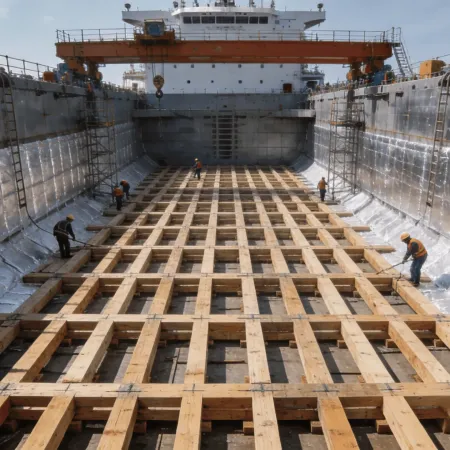
Our biomass-modified wood products at Chambroad are engineered for 25+ year service life in exterior applications — some of our marine-grade products are rated for even longer under harsh conditions. That means the carbon stays put for two to three times longer than conventional timber. In lifecycle assessment (LCA) terms, that's a meaningful advantage.
Quick fact: According to recent LCA studies, one cubic meter of wood used in construction stores roughly 0.9–1.0 tonnes of CO₂ equivalent. Extending service life from 12 years to 25+ years through modification effectively doubles the carbon benefit per unit of harvested wood.
Renewable Sourcing: FSC and PEFC Chain of Custody
A sustainable building material has to start with sustainable sourcing. This is where certification matters — not as a marketing checkbox, but as proof that the raw material comes from responsibly managed forests.
Chambroad holds both FSC (Forest Stewardship Council) and PEFC (Programme for the Endorsement of Forest Certification) chain-of-custody certifications across our modified wood product lines. What this means in practice:
- Every batch of raw material is traceable back to its forest of origin
- Harvesting rates stay within regrowth capacity — no deforestation
- Social and environmental standards are enforced at every stage of the supply chain
- Documentation is available for LEED/BREEAM credit submissions
For project teams pursuing green building certification, these certificates directly contribute to Material & Resource credits. We provide the full documentation package with every order.
Low Embodied Energy Compared to Alternatives
Embodied energy refers to the total energy required to produce a material — from extraction and processing to manufacturing and transport. Here's how modified wood stacks up:
| Material | Embodied Energy (approx.) | Key Consideration |
|---|---|---|
| Modified Wood (biomass) | 3–5 MJ/kg | Low-temperature process, bio-based inputs, renewable feedstock |
| Plastic Composite (WPC) | 70–90 MJ/kg | Petroleum-based polymers, high extrusion temperatures |
| Treated Softwood (CCA/ACQ) | 8–12 MJ/kg | Chemical treatment adds energy; end-of-life disposal concerns |
| Aluminum Cladding | 150–200 MJ/kg | Bauxite mining + electrolytic smelting = extremely energy-intensive |
The numbers tell a pretty clear story. Modified wood's embodied energy is roughly an order of magnitude lower than aluminum cladding and 15–20× lower than plastic composites. For projects targeting carbon neutrality or net-zero goals, that gap is hard to ignore.
End-of-Life Advantages: Biodegradability and Reusability
What happens to a building material when its useful life ends? This is increasingly part of sustainability assessments.
- Plastic composites: Difficult to recycle, often landfilled. Microplastic concerns during weathering.
- Chemically treated wood: Classified as hazardous waste in some jurisdictions due to preservative content. Cannot be burned cleanly.
- Modified wood (bio-based): Can be repurposed, used as biomass fuel, or allowed to biodegrade naturally. No toxic additives.
At Chambroad, our modification process uses bio-based agents rather than heavy-metal preservatives or petroleum-derived polymers. This means our products don't create hazardous waste at end-of-life — a point that's becoming more important as circular-economy regulations tighten globally.
Performance Without Compromise: The Full Sustainability Picture
Here's the thing about sustainable materials — they still have to work. A "green" product that fails in 5 years and needs replacement isn't actually sustainable at all. That's why we're proud of what our modified wood delivers on both fronts:
Durability
Rot-resistant, dimensionally stable, and proven in demanding applications from marine decks to facade systems
Fire Safety
Class B-s1,d0 fire rating means our flame-retardant panels meet strict EU and international fire codes
Indoor Air Quality
E0/E1 formaldehyde emission class, CARB Phase 2 compliant — safe for occupied spaces
Real Projects Using Sustainable Modified Wood
We've seen our modified wood specified in several types of green building projects over the past few years:
- Commercial facade retrofits where architects wanted natural aesthetics but needed better durability than cedar or redwood
- Eco-resort developments in coastal regions requiring rot resistance plus environmental branding
- Municipal boardwalks and public plazas where low maintenance and long service life were budget priorities alongside sustainability targets
- Passive house projects using our thermally stable window and door profiles to complement high-performance glazing systems
Each of these projects chose modified wood because it delivered on the sustainability promise without asking them to compromise on technical performance.
Building Something Green? Let's Talk About Materials.
Whether you're pursuing LEED certification, BREEAM credits, or simply want lower-carbon materials — our team can help you find the right modified wood solution for your project.
Includes LCA data, FSC/PEFC certs, fire rating reports, and formaldehyde test results — request yours today.