Advanced Halogenated Butyl Rubber Liner for Chemical Storage Tanks: The Definitive Industrial Guide
Industrial chemical storage presents a unique set of challenges where material integrity is non-negotiable. The containment of aggressive acids, alkalis, and volatile organic compounds requires a barrier that goes beyond standard polymer capabilities. A high-performance halogenated butyl rubber liner for chemical storage tanks has emerged as the gold standard for protecting infrastructure against corrosive degradation. At Chambroad, we understand that a single failure in containment can lead to catastrophic environmental impact and significant financial loss. This guide explores why halogenated elastomers, specifically chlorinated and brominated variants, are essential for modern storage solutions.
The Challenge of Modern Chemical Containment
Storage facilities today operate under higher pressures and temperatures than ever before. Traditional coating systems often fail when exposed to thermal cycling or specific chemical interactions that cause swelling and eventual delamination. Engineers face the persistent threat of permeation, where microscopic chemical particles migrate through the lining material and attack the steel or concrete shell of the tank.
Using a halogenated butyl rubber liner for chemical storage tanks addresses these vulnerabilities by providing a dense, molecularly stable barrier. Whether dealing with sulfuric acid, hydrochloric acid, or caustic soda, the choice of liner material dictates the operational lifespan of the entire facility. Our experience indicates that many maintenance-heavy plants could significantly reduce downtime by switching to advanced halogenated solutions like Chlorinated Butyl Rubber CIIR1338.
Foundational Knowledge: What Defines Halogenated Butyl Rubber
To understand the efficacy of these liners, one must look at the chemistry of the polymer. Regular butyl rubber (IIR) is a copolymer of isobutylene and a small amount of isoprene. While it offers excellent air impermeability, it lacks the vulcanization speed and thermal stability required for complex tank lining applications.
Halogenation—the process of adding chlorine or bromine atoms to the butyl chain—transforms the material. This modification allows for faster curing and provides the ability to co-vulcanize with other rubbers. For a halogenated butyl rubber liner for chemical storage tanks, this means superior adhesion to the tank walls and an increased resistance to heat aging. The presence of halogen atoms creates a more robust cross-linked network, which is critical for long-term immersion in harsh chemicals.
Deep Dive into Technical Solutions
Bromobutyl vs. Chlorobutyl Selection
The choice between brominated and chlorinated variants often depends on the specific chemical profile and the installation environment. Bromobutyl Rubber BIIR2332 is frequently selected for its faster cure rates and exceptional stability in higher temperature ranges. It is particularly effective in liners that must withstand steam cleaning or high-temperature reaction processes.
- Thermal Resistance: BIIR maintains flexibility and structural integrity at temperatures where other elastomers begin to embrittle.
- Chemical Inertness: Both CIIR and BIIR offer unmatched resistance to oxidation and polar solvents.
- Permeability: The dense molecular structure ensures that the halogenated butyl rubber liner for chemical storage tanks prevents the migration of hazardous ions toward the substrate.
Strategic Implementation and Maintenance
Installing a halogenated butyl rubber liner for chemical storage tanks requires precision. The substrate must be blasted to a specific white-metal finish, and the adhesive system must be compatible with the halogenated polymer. Once the rubber sheets are applied, autoclave or internal steam vulcanization is typically employed to ensure the liner achieves its full physical properties.
Regular inspection protocols should include spark testing to identify micro-pinholes and hardness testing to monitor the aging process. Using high-grade materials like BIIR 2828 ensures that the lining maintains a consistent Shore A hardness over years of service, reducing the frequency of costly full-liner replacements.
Why Professional Engineers Choose Chambroad Materials
The reliability of a halogenated butyl rubber liner for chemical storage tanks is directly tied to the purity and consistency of the raw polymer. Chambroad Sinopoly focuses on full-cycle innovation, ensuring that every batch of chlorinated or bromobutyl rubber meets rigorous international standards. Our manufacturing processes are designed to provide:
- Unmatched Batch Stability: Consistent Mooney viscosity ensures predictable processing during liner fabrication.
- Extreme Durability: Formulations optimized for industrial environments that require decades of service life.
- Sustainability: Integration of eco-friendly practices in the production of high-performance elastomers.
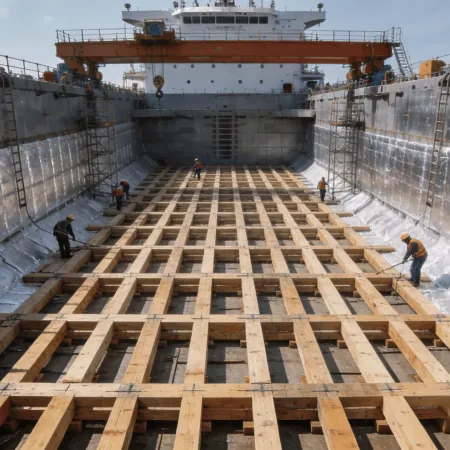
Furthermore, our expertise extends into complementary materials. For instance, in maritime chemical transport, we offer specialized marine anti-corrosion flooring and support wood for liquid cargo tanks, demonstrating a holistic understanding of industrial protection.
Frequently Asked Questions (FAQ)
What is the typical lifespan of a halogenated butyl rubber liner for chemical storage tanks?
Depending on the chemical concentration and temperature, a well-maintained liner can last between 15 and 25 years. Using premium grades like BIIR or CIIR from Chambroad maximizes this longevity.
Can halogenated butyl be used for food-grade storage?
Yes, specific formulations of butyl rubber are safe for food and pharmaceutical contact. We provide food-grade options that meet strict purity requirements.
How does it compare to PTFE or Epoxy coatings?
While PTFE offers high chemical resistance, it is often brittle and difficult to repair. A halogenated butyl rubber liner for chemical storage tanks provides superior flexibility, allowing it to withstand mechanical vibration and thermal expansion better than rigid coatings.
Conclusion: Securing Your Assets
Investing in a halogenated butyl rubber liner for chemical storage tanks is an investment in safety, environmental compliance, and operational continuity. By selecting advanced elastomers like those produced by Chambroad, facilities can mitigate the risks of corrosion and ensure a stable future for their chemical storage infrastructure. Our commitment to high-performance material science allows us to provide solutions that go beyond traditional limits, offering peace of mind to engineers and facility managers worldwide.
Ready to Upgrade Your Storage Protection?
Download our technical manuals or contact a specialist today for a custom consultation on your next lining project.
Copyright 2026 Chambroad High-Performance Materials Solutions. All Rights Reserved. For information on high-transparency polypropylene or specialized elastomers like POE and BIIR, please visit our solutions portal.