Strategic Engineering Solutions Using IIR Rubber Industrial Material for Global Manufacturing
Exploring the convergence of chemical resilience, gas impermeability, and sustainable innovation in modern polymer science.
The Evolution of High-Performance Elastomers in Industrial Ecosystems
In the contemporary landscape of industrial manufacturing, the demand for materials that can withstand extreme environments while maintaining structural integrity has never been higher. Engineers often face the daunting challenge of leakage, chemical degradation, and environmental aging in critical systems. Choosing the right iir rubber industrial material is no longer just a procurement decision; it is a fundamental strategic choice that dictates the longevity and safety of the final product.
Chambroad has emerged as a pioneer in this sector, addressing these complexities through a comprehensive portfolio of halogenated butyl rubbers and polyolefin solutions. This guide serves as a technical deep dive into the properties, applications, and strategic advantages of utilizing advanced elastomers to solve real-world engineering bottlenecks, from medical precision to automotive durability.
Understanding the Chemistry of IIR Rubber Industrial Material
Butyl rubber, or Isobutylene-Isoprene Rubber (IIR), is distinguished by its unique molecular structure, which provides a high degree of saturation. This saturation results in exceptional resistance to heat, oxygen, and ozone. However, the true industrial breakthrough lies in the halogenation of this base polymer. By introducing chlorine or bromine, the resulting Chlorinated Butyl Rubber (CIIR1338) and Bromobutyl Rubber (BIIR2332) exhibit significantly faster vulcanization rates and improved adhesion to other rubbers, such as natural rubber and SBR.
Exceptional Gas Impermeability
The primary characteristic of iir rubber industrial material is its ability to retain gases. This is due to the dense packing of methyl groups in its chain, making it the preferred choice for tire inner liners, pharmaceutical stoppers, and high-pressure seals.
Chemical and Thermal Stability
These materials maintain flexibility over a wide temperature range and resist a variety of acids, alkalis, and polar solvents, ensuring performance in the most demanding industrial environments.
Strategic Applications in High-Precision Industries
The versatility of iir rubber industrial material allows it to span across diverse sectors. Chambroad ensures that each variant is optimized for specific industrial requirements, ensuring that performance metrics are not only met but exceeded.
Medical and Pharmaceutical Safety
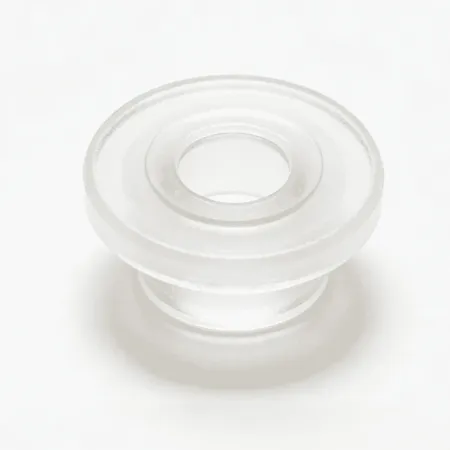
In the healthcare sector, material purity is paramount. The use of Medical Rubber Stoppers manufactured from high-quality BIIR ensures a superior barrier against contamination. Unlike natural rubber, these halogenated butyl components do not leach proteins and exhibit minimal interaction with medications, maintaining the efficacy of vaccines and injectable drugs over time.
Automotive and Heavy Industry
Beyond simple sealing, the automotive industry utilizes polyolefin elastomers and butyl derivatives for vibration damping and sound insulation. Products like POE G6012 work in tandem with rubber components to provide lightweight, impact-resistant solutions. The low shrinkage and high impact strength of these materials facilitate the manufacturing of durable bumpers, interior panels, and engine gaskets.
Sustainable Manufacturing and Global Certification
At Chambroad, we believe that material excellence must coexist with environmental stewardship. Our commitment to the circular economy is evidenced by our ISCC PLUS certified Butyl Rubber. By utilizing pyrolysis oil derived from waste tires, we produce isobutylene that feeds back into our production of iir rubber industrial material, effectively closing the loop from tire to tire.

FDA Compliant
Ensuring the highest safety standards for food and medical contact applications.

ISCC PLUS
Recognized certification for sustainable and bio-based material sourcing.

RoHS/REACH
Strict adherence to international environmental and chemical safety regulations.
Strategic Selection: Choosing the Right Elastomer
Selecting the optimal iir rubber industrial material requires a nuanced understanding of the operational environment. For instance, while standard IIR is excellent for basic gas retention, halogenated versions like BIIR 2828 are required for applications needing faster cure cycles or co-vulcanization with unsaturated polymers.
Chemical Compatibility: Evaluate the material resistance to specific acids or oils within your process. Halogenated butyl offers superior resistance to heat and chemicals compared to standard elastomers.
Processing Efficiency: Higher viscosity grades provide better structural integrity during extrusion, while lower viscosity grades may be preferred for complex injection molding.
Environmental Footprint: Leveraging ISCC PLUS certified materials can help your company meet ESG targets and appeal to eco-conscious markets.
Expert Insights: Frequently Asked Questions
How does IIR compare to natural rubber in industrial seals?
Natural rubber offers high elasticity but poor gas barrier properties and environmental resistance. IIR rubber industrial material provides a significant upgrade in terms of impermeability and aging resistance, making it essential for long-term sealing applications.
What is the shelf life of halogenated butyl rubber?
When stored under proper conditions (cool, dry, and away from direct sunlight), these materials exhibit excellent stability. Typically, we recommend a re-evaluation after 24 months, although the functional life of the material in a finished product can be decades.
Can Chambroad provide customized formulations?
Yes. Based on our comprehensive R&D and pilot-to-industrial configurations, we offer directional development of high-performance products tailored to specific customer needs in automotive, medical, and industrial filtration.
Ready to Optimize Your Material Strategy?
Consult with our technical experts to find the perfect elastomer for your application.
© 2026 Chambroad High-Performance Materials Solutions. All rights reserved.
Specializing in iir rubber industrial material and advanced polyolefin technology.
Innovation in Polypropylene, Elastomers, and Sustainable Wood Bases.