Enhancing Industrial Efficiency with Advanced IIR Rubber Raw Material and Halogenated Elastomers
A comprehensive guide to leveraging specialized butyl rubber solutions for high-demand sealing, tire manufacturing, and medical applications.
Introduction to the Evolution of Elastomers
In the rapidly evolving landscape of polymer science, procurement professionals and industrial engineers are constantly seeking components that offer more than just basic elasticity. The demand for materials that can withstand extreme environments while maintaining structural integrity is at an all-time high. This is where iir rubber raw material, or Isobutylene Isoprene Rubber, becomes a cornerstone of modern industrial manufacturing.
The challenge for many manufacturers today lies in the delicate balance between processing efficiency and long-term performance. Issues such as high permeability, poor chemical resistance, and inconsistent curing rates often lead to increased downtime and product failure. At Chambroad, we recognize these operational pain points and have developed a suite of solutions focused on the high-performance application of iir rubber raw material.
This article serves as a technical deep dive into the properties, applications, and strategic advantages of using premium grade butyl and halogenated butyl rubber. By the end of this guide, you will understand how to select the right material to optimize your supply chain and enhance product durability.
What is IIR Rubber Raw Material?
Standard iir rubber raw material is a synthetic elastomer produced by the copolymerization of isobutylene with a small amount of isoprene. Its unique molecular structure provides several distinct advantages that are unmatched by natural rubber or other general-purpose synthetics.
Excellent Impermeability: The tight molecular packing results in extremely low gas and moisture permeability, making it the preferred choice for inner liners of tires and pharmaceutical closures.
Chemical Stability: It exhibits high resistance to aging, weather, ozone, and many inorganic chemicals.
Thermal Resistance: Maintains flexibility and performance over a broad temperature range, which is critical for industrial gaskets and hoses.
Advanced Halogenated IIR: BIIR and CIIR Solutions
While standard butyl rubber is highly effective, specific industrial applications require faster curing and better compatibility with other elastomers. This leads to the utilization of Halogenated iir rubber raw material, specifically Bromobutyl (BIIR) and Chlorobutyl (CIIR).
Bromobutyl Rubber (BIIR)
Products such as BIIR 2332 and BIIR 2828 are engineered for high-performance applications. Bromination allows for a much faster vulcanization rate and improved adhesion to other rubbers like NR or SBR. This is essential for the modern tire industry where the inner liner must bond perfectly with the tire carcass.
Chlorobutyl Rubber (CIIR)
Chlorinated options like CIIR 1338 offer superior heat resistance and excellent compression set properties. They are frequently used in the manufacturing of high-quality pharmaceutical stoppers and medical-grade components where purity and chemical inertness are non-negotiable.
Sustainable ISCC PLUS IIR
In alignment with global sustainability goals, Chambroad offers ISCC PLUS certified butyl rubber. By utilizing pyrolysis oil from waste tires as a feedstock to produce isobutene, we create a circular economy, enabling manufacturers to produce products with up to 80% sustainable content.
Strategic Applications of IIR Rubber Raw Material
Pharmaceutical and Medical Grade Sealing
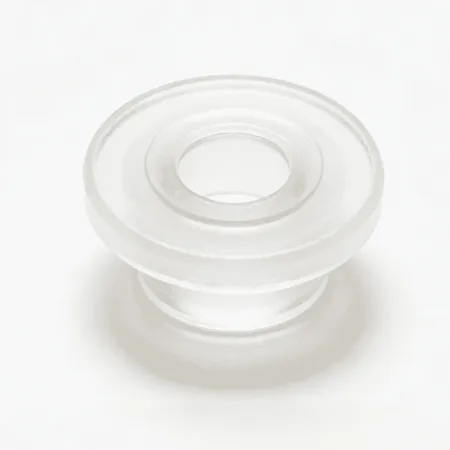
The healthcare industry demands the highest level of material integrity. Our halogenated iir rubber raw material is the foundation for medical rubber stoppers used in infusion systems and syringes. Compared to natural rubber, our butyl solutions prevent the absorption or leaching of drug ingredients, ensuring patient safety.
Furthermore, when paired with medical-grade polypropylene like RP348P for syringe bodies, the result is a high-performance, safe, and hygienic drug delivery system that meets stringent international standards.
Automotive and Tire Manufacturing
The core of every tubeless tire is an air-tight inner liner. High-quality iir rubber raw material ensures that the tire maintains optimal pressure for longer periods, improving fuel efficiency and safety. In the era of Green Mobility, the weight reduction achieved through thinner, higher-performance liners using BIIR 2332 is a significant competitive advantage.
Beyond tires, our POE (Polyolefin Elastomer) products like G6012 can be integrated with butyl rubber compounds to provide enhanced impact resistance and flexibility in automotive modifications.
Professional Insights: Optimizing Your Selection Process
Based on our experience serving hundreds of global manufacturing partners, we have identified that the most common mistake in purchasing iir rubber raw material is focusing solely on the initial cost per ton rather than the total cost of processing. Here is a strategic checklist for your procurement team:
Check Curing Compatibility
Ensure that the halogen level (Bromine or Chlorine) is consistent to prevent fluctuations in vulcanization time within your production line.
Evaluate Purity Standards
For food and medical applications, verify that the material meets FDA or RoHS standards to avoid contamination risks.
Sustainability Credentials
Look for ISCC PLUS certifications if you are operating under carbon-neutral mandates or circular economy frameworks.
At Chambroad, our Sinopoly division leads the way in full-cycle innovation. We don't just provide iir rubber raw material; we provide technical support platforms from micro-structural analysis to industrial-scale configurations, ensuring that the material fits your specific equipment and process parameters.
Frequently Asked Questions
How does IIR rubber compare to Natural Rubber for sealing?
Standard iir rubber raw material offers significantly lower air permeability and better chemical resistance than Natural Rubber. While Natural Rubber is excellent for dynamic fatigue, Butyl rubber is superior for static sealing and preventing gas escape.
What is the shelf life of halogenated butyl rubber?
Generally, halogenated iir rubber raw material should be stored in cool, dry conditions away from direct sunlight. Under optimal conditions, the performance properties remain stable for up to 2 years, though we recommend testing after 12 months.
Can I get customized formulations?
Yes, through our R&D pilot platforms, we provide customized high-performance products based on small-scale and pilot testing configurations to meet specific industrial requirements.
Ready to Upgrade Your Material Strategy?
Partner with Chambroad for high-purity, high-performance, and sustainable elastomer solutions.
© 2026 Chambroad Solutions. All Rights Reserved. Providing sustainable and advanced iir rubber raw material for global industries.