High Performance Materials: Advancing IIR Rubber Ozone Resistance
In the demanding landscape of modern industrial manufacturing, material longevity is often dictated by its ability to withstand environmental stressors. One of the most critical factors for elastomeric components used in automotive, pharmaceutical, and high-voltage applications is iir rubber ozone resistance. As industries push for higher reliability and longer service cycles, understanding the molecular foundations of isobutylene isoprene rubber (IIR) and its inherent stability against atmospheric degradation becomes paramount for engineers and procurement specialists alike.
The Engineering Challenge of Atmospheric Degradation
Elastomers are frequently exposed to ground-level ozone, a reactive gas that attacks the carbon-carbon double bonds within the polymer backbone. For traditional natural rubber or general-purpose synthetics, this leads to ozonolysis, resulting in surface cracking and eventual mechanical failure. However, the unique chemical architecture of IIR provides a specialized defense. The primary advantage of focusing on iir rubber ozone resistance lies in the polymer's low degree of unsaturation. Since the isoprene content is typically restricted to 1% to 3%, there are fewer vulnerable sites for ozone to attack compared to highly unsaturated rubbers like SBR or BR.
Chambroad, through its Sinopoly division, has pioneered advanced polymerization techniques to further refine these properties. By strictly controlling the molecular weight distribution and the homogenization of isoprene units, we ensure that our rubber products maintain structural integrity even in high-ozone environments. This is particularly vital for components such as tire inner liners and industrial membranes where microscopic cracks could lead to catastrophic pressure loss.
Core Solutions for Enhanced Protection
To achieve peak performance, Chambroad offers a diversified portfolio of halogenated solutions that elevate standard performance metrics:
-
Chlorinated Butyl Rubber (CIIR): Our Chlorinated Butyl Rubber CIIR1338 is engineered for rapid vulcanization and superior heat resistance, providing a robust barrier against environmental oxidation.
-
Bromobutyl Rubber (BIIR): For applications requiring even higher reactivity and co-vulcanization capability, products like Bromobutyl Rubber BIIR2332 and BIIR 2828 offer exceptional impermeability and enhanced iir rubber ozone resistance.
Deep Dive into Halogenated IIR Performance
Halogenation transforms the standard IIR molecule by introducing chlorine or bromine atoms, which significantly alters the cross-linking chemistry. This modification does not just improve the curing speed; it also enhances the physical barrier against gaseous diffusion. When evaluating iir rubber ozone resistance, halogenated grades provide a denser vulcanization network. This network prevents ozone molecules from penetrating the surface layers, effectively confining any potential degradation to the absolute surface and preventing the propagation of deep cracks.
In industrial sealing systems, this translates to a longer lifespan for gaskets and O-rings. Professionals looking for detailed selection criteria can refer to our Advanced Butyl Rubber Selection Guide. Our research indicates that the synergy between the saturated backbone and the halogenated sites provides an unmatched balance of flexibility and chemical inertness.
Strategic Insights: Medical and Industrial Applications
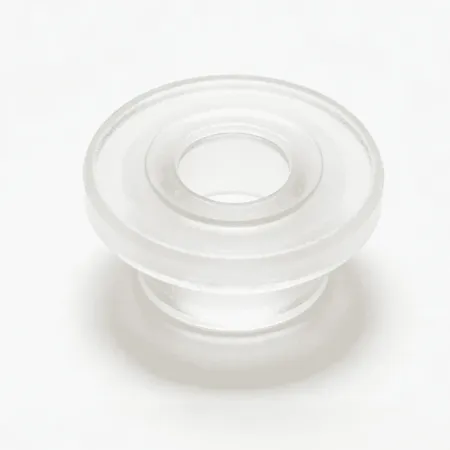
The pharmaceutical sector demands the highest levels of material purity and stability. Medical Rubber Stoppers manufactured with Chambroad's halogenated butyl rubber benefit from the material's low extractables and high gas barrier properties. Here, iir rubber ozone resistance ensures that the seals do not degrade during sterilization processes or long-term storage, maintaining the sterile integrity of life-saving medications.
Furthermore, the automotive industry utilizes these elastomers for engine mounts and weatherstripping. By integrating Halogenated IIR for Industrial Environments, manufacturers can reduce the need for anti-ozonant waxes, which can often bloom and discolor the surface of the finished part. This leads to both aesthetic and functional improvements in vehicle design.
Sustainable Innovation: The Green Circular Economy
As part of our commitment to a sustainable future, Chambroad has introduced the ISCC PLUS Butyl Rubber initiative. This program focuses on a "tire-to-tire" green cycle, utilizing pyrolysis oil from waste tires to produce isobutylene, which is then used to synthesize high-performance rubber. Our Rubber Reimagined Full-Cycle Innovation ensures that environmental responsibility does not come at the cost of performance. Even our bio-based and recycled-content rubbers maintain strict standards for iir rubber ozone resistance, proving that high-performance materials can indeed be eco-friendly.
Frequently Asked Questions (FAQ)
While IIR has naturally high resistance due to low unsaturation, adding specific antioxidants or blending with elastomers like EPDM can further enhance performance for extreme conditions.
CIIR1338 offers excellent heat stability and is generally more cost-effective for standard sealing applications, while BIIR grades like 2332 provide faster cure rates and better adhesion to other rubber types.
Yes, Chambroad’s materials meet RoHS, REACH, and FDA certifications, ensuring they are safe for medical, food-contact, and global industrial use.
Conclusion: The Chambroad Advantage
Choosing the right elastomer is a balance of chemistry, processing efficiency, and environmental durability. Chambroad's focus on refining iir rubber ozone resistance through halogenation and high-purity manufacturing processes provides our global partners with a competitive edge. Whether you are developing high-performance tires, medical devices, or industrial infrastructure, our materials are designed to endure.
Our technical teams provide end-to-end support, from material selection to formulation optimization. We invite you to explore our full range of High Performance Polymer Solutions and join us in shaping a more resilient and sustainable industrial world.