High-Performance IIR Rubber for Rubber Components: A Comprehensive Guide to Industrial and Medical Applications
In the complex world of polymer engineering, selecting the right material for sealing and gas barrier applications is a critical decision that determines product longevity and safety. Among the diverse array of elastomers available today, isobutylene-isoprene rubber, commonly known as butyl rubber, stands out as a foundational material. Specifically, the use of iir rubber for rubber components has revolutionized industries ranging from automotive tire manufacturing to high-precision medical packaging. As global supply chains demand higher performance and better sustainability, companies like Chambroad are leading the way with advanced halogenated IIR solutions that push the boundaries of what these materials can achieve.
Understanding the Foundations of IIR Rubber for Rubber Components
Butyl rubber (IIR) is a synthetic elastomer produced by the copolymerization of isobutylene with a small amount of isoprene. This unique chemical structure results in a polymer chain with very low unsaturation, which translates into exceptional resistance to oxygen, ozone, and weathering. When we discuss iir rubber for rubber components, we are referring to a material that offers the lowest gas permeability among all common elastomers. This property is indispensable for applications where maintaining internal pressure or preventing gas ingress is mandatory.
However, standard IIR has limitations, particularly regarding its slow vulcanization rate and poor compatibility with other rubbers. To overcome these challenges, halogenated derivatives such as Bromobutyl (BIIR) and Chlorobutyl (CIIR) were developed. Chambroad’s Bromobutyl Rubber BIIR2332 and Chlorinated Butyl Rubber CIIR1338 represent the pinnacle of this technological evolution, providing faster curing times and enhanced adhesion to polydiene rubbers like natural rubber and SBR.
The Strategic Role of IIR Rubber in Automotive Systems
The automotive industry is perhaps the largest consumer of iir rubber for rubber components, specifically in the production of tire inner liners. Modern tubeless tires rely on a thin layer of halogenated butyl rubber to retain air pressure over long periods. Without the superior impermeability of BIIR or CIIR, tires would lose pressure rapidly, leading to increased fuel consumption, uneven tread wear, and potential safety hazards.
Beyond tires, IIR is utilized in engine mounts, hoses, and vibration dampening components. The high damping capacity of butyl rubber allows it to absorb shock and vibration more effectively than natural rubber. When integrated into lightweight automotive designs, these IIR-based components contribute significantly to Vehicle Noise, Vibration, and Harshness (NVH) performance, ensuring a smoother and quieter ride for passengers.
Medical Grade IIR Solutions: Ensuring Safety and Integrity
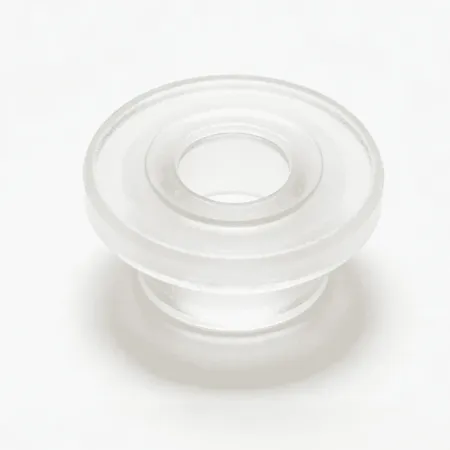
In the pharmaceutical sector, the requirements for iir rubber for rubber components are exceptionally stringent. Medical stoppers, syringe plungers, and vial seals must be chemically inert to prevent leaching of harmful substances into the medication. Chambroad’s specialized IIR formulations, such as those used in medical rubber stoppers, provide a superior barrier against moisture and air while maintaining compatibility with a wide range of drugs.
The move from natural rubber to halogenated IIR in medical devices has drastically reduced the risk of latex allergies and improved the shelf-life of sensitive injectable drugs. By utilizing BIIR 2828, manufacturers can ensure that their seals remain elastic and functional even after undergoing rigorous sterilization processes like autoclaving or gamma irradiation.
Industrial Performance and Chemical Resistance
For industrial equipment, iir rubber for rubber components offers unparalleled resistance to heat, acids, and alkalis. Industrial gaskets and seals made from butyl rubber are commonly found in chemical processing plants where they are exposed to corrosive environments. Unlike many other synthetic rubbers, IIR maintains its physical properties even when subjected to continuous heat exposure, making it an ideal choice for steam hoses and high-temperature diaphragms.
Furthermore, the electrical insulation properties of IIR make it suitable for cable insulation and protective equipment. When compared to polyolefin elastomers like POE PV7045, IIR provides a different set of advantages, particularly in terms of gas barrier performance, which is often a secondary requirement in electrical applications but a primary one in sealing systems.
Sustainability and the Circular Economy in Rubber Manufacturing
As the industry shifts towards a circular economy, the role of iir rubber for rubber components is evolving. Chambroad is at the forefront of this transition with the development of ISCC PLUS certified butyl rubber. By utilizing pyrolysis oil derived from waste tires, Chambroad has created a "Tire-to-Tire" green cycle. This innovative approach allows manufacturers to produce sustainable rubber products without compromising on technical performance.
The adoption of sustainable rubber solutions not only reduces the carbon footprint of the manufacturing process but also meets the growing demand from end-consumers for environmentally responsible products. For automotive OEMs and pharmaceutical companies, integrating ISCC PLUS certified IIR rubber into their supply chain is a powerful statement of commitment to global net-zero goals.
Technical Deep Dive: Processing IIR Rubber for Rubber Components
Processing iir rubber for rubber components requires a deep understanding of polymer rheology and vulcanization chemistry. Unlike natural rubber, IIR has a saturated backbone, which means it requires more active curing systems. Halogenation introduces active sites that allow for cross-linking with various systems, including zinc oxide, sulfur, and phenolic resins.
- Mixing: Due to its high molecular weight and viscosity, IIR requires precise temperature control during internal mixing to ensure uniform dispersion of fillers like carbon black and silica.
- Extrusion and Calendaring: For tire liners, achieving a consistent gauge is vital. The superior flow characteristics of Chambroad’s halogenated IIR ensure smooth surfaces and dimensional stability.
- Vulcanization: The choice of halogen (Bromine vs. Chlorine) dictates the curing speed. Bromobutyl typically offers a faster cure rate, which is advantageous for high-speed production lines in automotive manufacturing.
Comparative Analysis: Why Choose IIR over Other Elastomers?
When evaluating iir rubber for rubber components, it is helpful to compare it with other popular materials like EPDM or Natural Rubber. While EPDM offers excellent weather resistance, it lacks the gas barrier properties of IIR. Natural Rubber provides superior tensile strength but fails in environments with high ozone or heat exposure.
Key Performance Advantages of IIR:
- Permeability: Up to 10 times lower than Natural Rubber.
- Damping: Exceptional energy absorption for vibration control.
- Cleanliness: Low extractables, making it perfect for medical stoppers.
- Heat Stability: Maintains performance at temperatures exceeding 120°C.
Frequently Asked Questions about IIR Rubber
What is the difference between BIIR and CIIR for rubber components?
Bromobutyl (BIIR) generally offers a faster vulcanization rate and better adhesion to other elastomers compared to Chlorobutyl (CIIR). However, CIIR often provides better heat resistance in specific industrial formulations.
Can IIR rubber for rubber components be used for food contact?
Yes, high-purity food-grade butyl rubber is widely used in applications such as chewing gum bases and food container seals due to its stability and lack of odor or taste transfer.
How does Chambroad ensure the quality of its halogenated butyl rubber?
Chambroad employs a comprehensive quality control system, utilizing advanced micro-macro application platforms to analyze material structures and ensure batch-to-batch consistency for all iir rubber for rubber components.
Conclusion: Partnering with Chambroad for Advanced Material Solutions
The demand for high-performance iir rubber for rubber components continues to grow as industries prioritize efficiency, safety, and sustainability. Whether you are manufacturing tires for the next generation of electric vehicles, developing life-saving medical devices, or engineering robust industrial seals, the choice of rubber material is paramount. Chambroad provides not only the high-quality halogenated IIR required for these demanding applications but also the technical expertise and sustainable innovations needed to thrive in a competitive global market.
By integrating specialized materials like CIIR 1338 and BIIR 2332 into your production lines, you can achieve superior product performance and contribute to a more sustainable future. For more information on our full range of polyolefin elastomers, aramid fibers, and bio-based materials, visit the Chambroad Product Solutions portal.
Ready to Optimize Your Production?
Contact our technical specialists today for a free consultation and sample request for our IIR rubber solutions.
Get a Custom Quote© 2026 Chambroad High-Performance Materials. All Rights Reserved. All product names and logos are trademarks of their respective owners.