Timber Material for Marine and Waterfront Applications: What Performs and What Fails
A practical guide to specifying timber for coastal, marina, and waterfront structures — covering corrosion, decay, and product selection
Marine and waterfront structures place timber under sustained stress: salt spray, high humidity, temperature swings, and constant wet-dry cycling. Not every timber product is up to it. If you're specifying timber material for a marina boardwalk, a coastal deck, or a seawall structure, here's what to check.
We supply marine-grade modified timber flooring and marine structural timber products to contractors and developers in coastal regions. Here's how timber performs in waterfront conditions and which products are engineered for it.
The Three Things That Destroy Timber at the Waterfront
- Salt spray and salt crystallization: Saltwater evaporates and leaves salt crystals in surface checks. Repeated cycling drives salt deeper into the wood, accelerating surface degradation. Modified timber with reduced EMC resists this better than untreated timber.
- Decay fungi in persistently damp conditions: Waterfront timber is rarely dry enough to be outside the fungal growth range. Sustained moisture = decay risk. Biomass modification reduces equilibrium moisture content, lowering decay risk.
- Fastener corrosion: This is often what fails first. In coastal sites, all metal in contact with timber must be A4 stainless (316 grade) as a minimum. We specify this on all our marine timber installation guides.
Keep in mind: Even the best marine timber won't last if the fasteners corrode out in 5 years. Specifying the right stainless grade (A4/316 as minimum within 2km of shoreline) is as important as picking the right timber species.
Product Selection for Marine Applications
| Application | Product Type | Notes |
|---|---|---|
| Marina boardwalks | Marine anti-corrosion decking | Slip-resistant surface texture; A4 stainless fixing pack included |
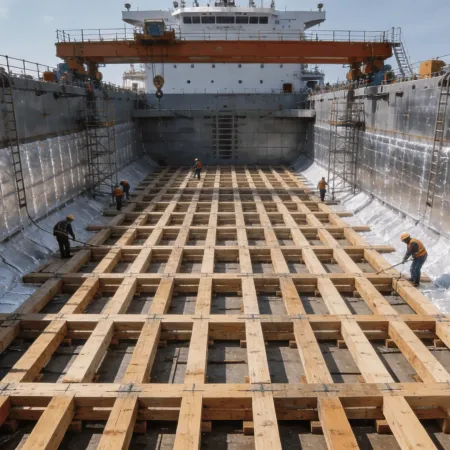
| Seawalls / fender systems | Marine structural timber | High-density modified timber; tolerates intertidal wet-dry cycling |
| Coastal cladding / facades | Outdoor flame-retardant panels | Modified surface resists salt spray; Class B-s1,d0 fire rating maintained |
Installation Details That Matter in Marine Environments
Marine Installation Checklist
- Fastener specification: A4 (316) stainless steel for all timber-to-timber and timber-to-structure connections. In tropical coastal zones, consider duplex stainless (A5) for critical connections.
- End-grain sealing: Cut ends of marine timber must be sealed with a compatible end-grain sealer on installation day. This is the single most common failure point in coastal timber structures.
- Drainage detailing: Timber in marine structures must not allow water to pond on horizontal surfaces. Minimum 1:50 fall on all decking; open-joint cladding to allow drainage behind panels.
For LNG and low-temperature marine applications, our marine low-temperature liquid cargo tank supporting wood is engineered for cryogenic service temperatures while maintaining structural capacity.
Specifying Timber for a Marine or Waterfront Project?
We provide product data sheets, corrosion specifications, and installation guides for all marine timber applications.
Or request a marine specification consultation for your waterfront project.