Polyolefin Elastomer as a High-Performance Polymer: Beyond Commodity Applications
How advanced POE grades deliver engineering-grade performance in demanding automotive, industrial, and consumer applications
Polyolefin elastomer is often categorized as a commodity material — a standard impact modifier or low-cost rubber alternative. But that characterization misses the reality. Modern metallocene-catalyzed POE grades deliver performance that rivals engineering thermoplastics in many applications, at a more attractive cost position.
We manufacture high-performance POE products under the Betopp-G and PV series, engineered for applications where failure is not an option. Here's how POE earns its place as a high-performance material.
What Makes POE "High-Performance"
Performance is relative to the application. POE delivers high performance through specific combinations of properties:
- Precision molecular architecture: Metallocene catalysis enables precise control of molecular weight distribution and comonomer incorporation. The result: predictable, consistent properties batch-to-batch — critical for automotive and medical approvals.
- Service temperature range: POE maintains flexibility from −50°C to +100°C — a wider operating window than many competing elastomers.
- Chemical purity: Low catalyst residue, low oligomer content, and minimal extractables make POE suitable for food contact, medical, and automotive interior applications with strict VOC requirements.
- Customization potential: POE can be functionalized, crosslinked, filled, or blended to achieve specific property targets — it's a platform material, not a single product.
The performance test: A material is "high-performance" if its failure has serious consequences. POE is used in automotive safety components, medical sterile barriers, and photovoltaic encapsulants where material failure would be catastrophic. That usage defines it as high-performance, regardless of its position in commodity pricing tables.
High-Performance Applications
Here's where POE delivers engineering-grade performance:
| Application | Performance Requirement | POE Advantage |
|---|---|---|
| Automotive bumper systems | Impact at −30°C, paintability, dimensional stability | Toughness, low-temp flexibility, consistent shrinkage |
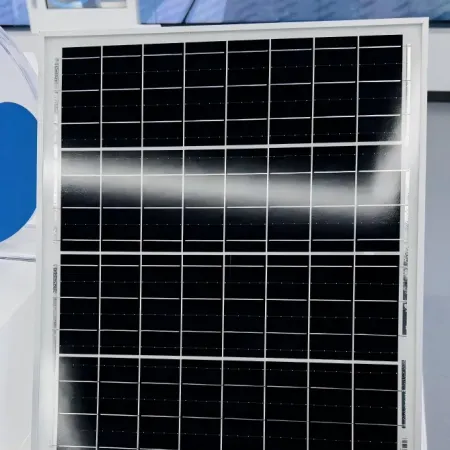
| PV encapsulant film | 25-year optical clarity, PID resistance | UV stability, volume resistivity, no acetic acid |
| Medical sterile barriers | Hermetic seal, clean peel, biocompatibility | Low extractables, seal control, regulatory compliance |
| HFFR cable insulation | Flame retardance, flexibility, electrical insulation | Halogen-free formulation, processability, durability |
| Performance footwear | Energy return, durability, lightweight | Low density, compression set resistance, foam control |
Performance Metrics: How POE Compares
Quantitative comparison against alternative materials shows where POE wins:
POE Performance Benchmarks
- Low-temperature impact: Notched Izod at −40°C: 600–800 J/m (POE-modified PP) vs. <100 J/m (unmodified PP) vs. 400–600 J/m (EPDM-modified PP).
- Compression set resistance: 70°C/22h: 25–35% (crosslinked POE foam) vs. 40–60% (EVA foam) — meaning better cushioning durability.
- Volume resistivity: >10¹⁵ Ω·cm (POE) vs. 10¹³–10¹⁴ Ω·cm (EVA) — 10–100x better electrical insulation for PV applications.
- Water vapor transmission: 3–5 g/m²/day (POE film) vs. 20–40 g/m²/day (EVA) — 5–10x better moisture barrier.
Advanced POE Technologies
High-performance POE isn't just about base polymer properties. Advanced technologies extend capabilities:
- Functionalized POE: Maleic anhydride or silane grafting creates reactive sites for adhesion, compatibility, or crosslinking. Enables tie layers in multilayer structures and improved filler coupling in HFFR compounds.
- Crosslinked POE: Silane moisture cure or peroxide crosslinking creates thermoset-like heat resistance and creep resistance while maintaining thermoplastic processability.
- Nanocomposites: Clay or other nanofillers at low loadings (3–5%) can significantly improve barrier properties and modulus without the weight penalty of conventional mineral fillers.
- Reactor blends: In-reactor production of POE-PP blends creates intimate dispersion that would be difficult to achieve through mechanical compounding.
The innovation pipeline: New catalyst technologies continue to expand POE capabilities. Higher comonomer incorporation, controlled long-chain branching, and tailored molecular architectures are enabling grades that would have been impossible with early Ziegler-Natta systems.
Specifying High-Performance POE
When your application demands more than commodity performance, here's how to specify POE:
- Define the critical performance criteria: Is it low-temperature toughness? Long-term UV stability? Electrical insulation? Focus specification on what actually matters for the application.
- Request batch-to-batch consistency data: High-performance applications can't tolerate variation. Ask for Cpk data on key properties like MFR and density.
- Validate long-term performance: Accelerated aging tests, thermal cycling, and environmental exposure testing should confirm performance over the design life.
- Ensure regulatory documentation: For automotive, medical, or electrical applications, full regulatory packages (IMDS, biocompatibility, UL) are essential.
High-Performance POE Solutions
Our Betopp-G and PV-series POE grades are engineered for demanding applications where performance is critical. Consistent quality, advanced properties, and full technical support.
Or contact our technical team for application-specific recommendations.