Butyl Rubber Injection Molding: Precision Manufacturing Solutions for High-Performance Elastomer Components
In the realm of precision elastomer manufacturing, butyl rubber injection molding has emerged as the preferred processing method for producing complex, high-quality components that demand exceptional dimensional accuracy, consistent material properties, and cost-effective production at scale. From pharmaceutical stoppers and automotive seals to industrial gaskets and medical device components, butyl rubber injection molding enables manufacturers to transform raw butyl rubber into finished parts with unmatched efficiency and repeatability. For production engineers, procurement specialists, and product developers seeking reliable manufacturing solutions, understanding the capabilities, process parameters, and quality considerations of butyl rubber injection molding is essential to achieving optimal component performance.
At Chambroad (solutions.chambroad.com) , expertise in advanced polymer materials extends to comprehensive support for butyl rubber injection molding applications. As a manufacturer serving the automotive, medical, pharmaceutical, and industrial sectors, Chambroad provides high-quality butyl rubber compounds specifically formulated for injection molding processes, combined with deep application knowledge to ensure successful manufacturing outcomes.
Understanding Butyl Rubber Injection Molding: Process Overview
Butyl rubber injection molding is a manufacturing process that converts uncured butyl rubber compound into finished, vulcanized components through a precisely controlled sequence of heating, pressure application, and chemical cross-linking. Unlike compression molding or transfer molding, butyl rubber injection molding offers superior automation, faster cycle times, and tighter dimensional control.
The butyl rubber injection molding process consists of several critical stages:
Compound Preparation
Raw butyl rubber is combined with curatives, fillers, processing aids, and other additives to create a homogeneous compound specifically formulated for injection molding. The compound’s rheological properties—including viscosity, scorch time, and cure rate—are precisely engineered to optimize flow characteristics within the injection molding equipment.
Material Feeding and Plasticization
The butyl rubber compound is fed into the injection molding machine’s screw or ram system, where it is heated and sheared to achieve the necessary flow properties. Temperature control during this stage is critical to prevent premature vulcanization—a phenomenon known as scorching—that would compromise the molding process.
Injection into Mold Cavity
Under controlled pressure, the plasticized butyl rubber is injected into the heated mold cavity. The injection pressure, speed, and fill time are carefully calibrated to ensure complete cavity filling without air entrapment or material degradation.
Vulcanization (Curing)
Within the heated mold, the butyl rubber undergoes vulcanization—a chemical cross-linking reaction that transforms the thermoplastic compound into a thermoset elastomer. The cure temperature, typically ranging from 160°C to 200°C (320°F to 390°F), and cure time are optimized based on the compound formulation and part geometry.
Demolding and Post-Processing
After curing, the molded part is ejected from the mold. Depending on the application, post-processing steps such as deflashing, inspection, and packaging follow.
Key Advantages of Butyl Rubber Injection Molding
Butyl rubber injection molding offers distinct advantages over alternative manufacturing methods:
Superior Dimensional Accuracy
The controlled injection process enables tight tolerances and consistent part-to-part repeatability. For components such as pharmaceutical stoppers and precision seals, butyl rubber injection molding achieves the dimensional consistency required for reliable performance.
High Production Efficiency
Automated butyl rubber injection molding systems deliver faster cycle times compared to compression molding, enabling high-volume production with reduced labor costs and improved throughput.
Complex Geometry Capability
Injection molding accommodates intricate part designs, including undercuts, thin sections, and complex sealing geometries that would be difficult or impossible to achieve through compression molding.
Reduced Material Waste
The closed-mold nature of butyl rubber injection molding minimizes flash and scrap, resulting in higher material utilization and lower per-part costs for high-volume production.
Consistent Cure Profile
The uniform heating and pressure distribution within injection molds ensure consistent vulcanization throughout the part, eliminating variations that can affect physical properties.
Process Parameters and Optimization
Successful butyl rubber injection molding requires precise control of multiple process variables:
Mold Temperature
Uniform mold temperature distribution is essential for consistent cure rates and dimensional stability. Mold temperature directly affects cure time, flow characteristics, and final part properties.
Injection Pressure and Speed
Proper injection pressure ensures complete cavity filling without excessive stress that could cause part distortion or flash. Injection speed must balance flow characteristics with the avoidance of air entrapment.
Cure Time
Cure time is determined by the compound’s vulcanization kinetics and part thickness. Insufficient cure results in under-vulcanized parts with poor physical properties, while excessive cure may cause degradation.
Shot Size and Dosing Accuracy
Precise material dosing ensures consistent part weight and cavity filling while minimizing waste and flash.
Materials for Butyl Rubber Injection Molding
The choice of butyl rubber compound significantly influences the butyl rubber injection molding process and final part properties:
Regular Butyl Rubber (IIR) Compounds
Standard IIR formulations for butyl rubber injection molding offer the fundamental properties of low permeability, high damping, and good flexibility. These compounds are suitable for general-purpose industrial components.
Halogenated Butyl Rubber Compounds
Chlorinated (CIIR) and brominated (BIIR) butyl compounds provide faster cure rates and improved adhesion characteristics. These materials are preferred for butyl rubber injection molding of pharmaceutical stoppers, tire components, and applications requiring co-vulcanization with other elastomers.
Self-Sealing Compounds
Specialized formulations incorporate swelling agents or other additives that enable self-sealing properties, particularly valuable for butyl rubber injection molding of pharmaceutical vial stoppers and medical device components.
High-Purity Grades
For medical and pharmaceutical applications, high-purity butyl rubber compounds meet stringent extractables and leachables requirements while maintaining consistent injection molding performance.
Applications of Butyl Rubber Injection Molding
Butyl rubber injection molding serves critical applications across multiple industries:
Pharmaceutical and Medical
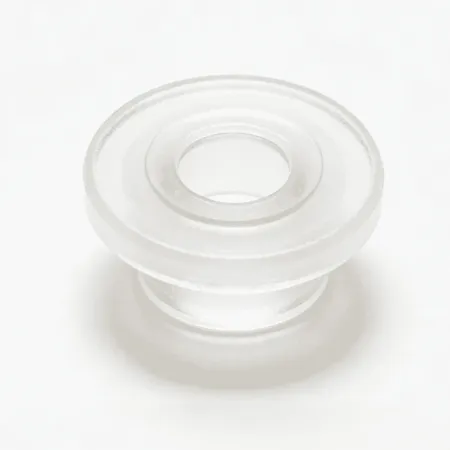
Pharmaceutical stoppers, syringe plungers, vial seals, and medical device components represent some of the most demanding butyl rubber injection molding applications. These components require exceptional purity, dimensional precision, and consistent sealing performance.
Automotive
The automotive industry utilizes butyl rubber injection molding for vibration-damping mounts, weather seals, gaskets, and fluid handling components where durability and sealing integrity are essential.
Industrial Equipment
Hydraulic seals, pneumatic gaskets, and industrial component seals benefit from the precision and consistency achieved through butyl rubber injection molding.
Consumer Goods
Handles, grips, and sealing components for consumer products leverage the flexibility, durability, and aesthetic finish achievable with butyl rubber injection molding.
Mold Design Considerations for Butyl Rubber Injection Molding
Successful butyl rubber injection molding begins with proper mold design:
Cavity Layout
Balanced runner systems and strategic cavity placement ensure uniform fill and consistent cure across multi-cavity molds.
Venting
Proper venting allows trapped air to escape during injection, preventing voids and ensuring complete cavity filling.
Draft Angles
Appropriate draft angles facilitate part ejection without distortion or surface damage.
Surface Finish
Mold surface finish directly affects part appearance and release characteristics. Polished finishes are typical for pharmaceutical and aesthetic applications.
Quality Control and Testing
Rigorous quality control ensures that butyl rubber injection molding produces consistent, reliable components:
Dimensional Inspection
Automated optical inspection and coordinate measuring machines verify dimensional accuracy against specifications.
Physical Property Testing
Hardness, tensile strength, elongation, and compression set are tested to confirm material performance.
Functional Testing
Leak testing, seal integrity verification, and application-specific performance tests validate component functionality.
Cleanliness and Extractables Testing
For pharmaceutical and medical applications, stringent cleanliness and extractables testing ensures compliance with regulatory requirements.
Frequently Asked Questions
Q: What is the difference between injection molding and compression molding for butyl rubber?
A: Butyl rubber injection molding forces material into a closed mold under pressure, offering faster cycle times, tighter tolerances, and greater automation compared to compression molding, where material is placed into an open mold before closure. Injection molding is preferred for high-volume production of precision components.
Q: What are the typical cure temperatures for butyl rubber injection molding?
A: Butyl rubber injection molding typically operates at mold temperatures between 160°C and 200°C (320°F to 390°F). Specific temperature profiles depend on the compound formulation, part geometry, and required cure characteristics.
Q: Can complex part geometries be produced through butyl rubber injection molding?
A: Yes. Butyl rubber injection molding accommodates complex geometries including undercuts, thin walls, and intricate sealing features. Proper mold design and material selection are essential to achieving consistent results with complex parts.
Q: What are the common defects in butyl rubber injection molding?
A: Common defects include flash (excess material at parting lines), voids (air entrapment), short shots (incomplete filling), and scorching (premature cure). Proper process control and mold design minimize these defects.
Q: How does Chambroad support butyl rubber injection molding applications?
A: Chambroad provides high-quality butyl rubber compounds specifically formulated for injection molding processes, with consistent rheological properties, optimized cure characteristics, and application-specific performance profiles. Technical support is available to assist with compound selection and processing optimization.
Q: What industries benefit most from butyl rubber injection molding?
A: Pharmaceutical, medical device, automotive, and industrial equipment industries derive significant benefit from butyl rubber injection molding, particularly for high-volume precision components requiring consistent sealing performance and dimensional accuracy.
Conclusion
Butyl rubber injection molding represents the pinnacle of precision manufacturing for elastomeric components, delivering the dimensional accuracy, production efficiency, and material consistency that demanding applications require. From pharmaceutical stoppers that protect patient safety to automotive seals that ensure vehicle reliability, injection-molded butyl rubber components play essential roles across industries where performance cannot be compromised.
Chambroad combines deep expertise in butyl rubber chemistry with comprehensive support for injection molding applications. By providing consistently formulated compounds, application engineering guidance, and quality assurance, Chambroad enables manufacturers to achieve optimal results in butyl rubber injection molding operations.
For organizations seeking reliable, high-performance butyl rubber components produced through precision injection molding, Chambroad stands ready as a trusted partner—delivering materials, expertise, and solutions that drive manufacturing success.