Butyl Rubber High Air Tightness: The Molecular Advantage for Critical Sealing Applications
In industries where gas containment, pressure retention, and environmental isolation are mission-critical, butyl rubber high air tightness stands as the defining characteristic that distinguishes this elastomer from all conventional alternatives. From pharmaceutical vial stoppers that preserve sterility for years to tire inner liners that maintain optimal pressure across thousands of miles, butyl rubber high air tightness enables applications that simply cannot tolerate gas permeation. For engineers, product developers, and procurement specialists seeking sealing solutions that deliver uncompromising barrier performance, understanding the science behind butyl rubber high air tightness and its practical applications is essential to selecting the right material for critical operations.
At Chambroad (solutions.chambroad.com) , expertise in advanced polymer materials is built upon a deep understanding of butyl rubber high air tightness and its applications across diverse industries. As a manufacturer serving the pharmaceutical, automotive, energy, and industrial sectors, Chambroad delivers butyl rubber solutions engineered to maximize barrier performance while maintaining the flexibility, durability, and processability that demanding applications require.
The Science Behind Butyl Rubber High Air Tightness
Butyl rubber high air tightness is not an incidental property but a direct consequence of the material’s unique molecular architecture. Butyl rubber—chemically known as isobutylene-isoprene rubber (IIR)—features a polymer structure that creates an exceptionally effective barrier against gas permeation.
The molecular basis for butyl rubber high air tightness lies in two key structural characteristics:
Dense Methyl Group Packing
The butyl rubber polymer chain consists of repeating isobutylene units with two methyl groups attached to every other carbon atom. These methyl groups create steric hindrance—a molecular crowding effect that physically blocks gas molecules from diffusing through the polymer matrix. This dense packing reduces the free volume within the material, creating a tortuous path that gas molecules must navigate, significantly slowing permeation rates.
Saturated Hydrocarbon Backbone
Unlike many elastomers that contain carbon-carbon double bonds in their main chain, butyl rubber features a fully saturated backbone. This saturation eliminates sites where gas molecules might interact or where chain mobility could facilitate diffusion, further contributing to butyl rubber high air tightness.
The result is that butyl rubber high air tightness delivers gas permeability approximately 8 to 10 times lower than natural rubber and 5 to 7 times lower than general-purpose synthetic rubbers. For applications demanding absolute containment, this performance advantage is decisive.
Quantifying Butyl Rubber High Air Tightness: Permeability Metrics
The exceptional butyl rubber high air tightness can be quantified through permeability coefficients, which measure the rate at which gases pass through a material of standard thickness under controlled conditions.
| Gas | Permeability in Butyl Rubber (cm³·mm/m²·day·atm) | Comparison to Natural Rubber |
|---|---|---|
| Air | 0.5 - 0.8 | ~8-10x lower |
| Nitrogen | 0.3 - 0.5 | ~10x lower |
| Oxygen | 0.4 - 0.6 | ~8x lower |
| Helium | 2.0 - 3.0 | ~5x lower |
These values represent the foundation of butyl rubber high air tightness, enabling engineers to specify materials with confidence for applications where gas permeation cannot be tolerated.
Critical Applications Leveraging Butyl Rubber High Air Tightness
The superior butyl rubber high air tightness makes this material indispensable across multiple industries:
Pharmaceutical and Medical Packaging
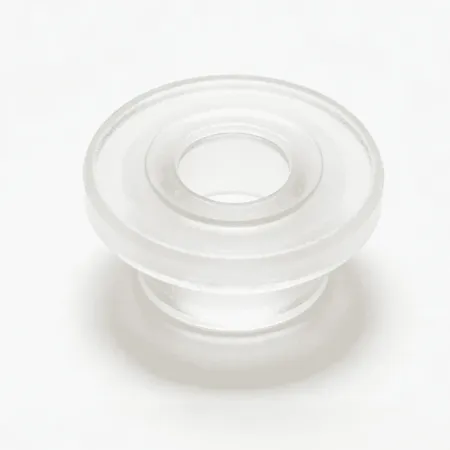
In pharmaceutical applications, butyl rubber high air tightness ensures that sterile products remain uncontaminated throughout their shelf life. Rubber stoppers for vials, syringe plungers, and cartridge seals rely on butyl rubber to maintain:
-
Sterility Barrier: Preventing microbial ingress that would compromise patient safety
-
Moisture Protection: Blocking humidity that could degrade sensitive drug formulations
-
Gas Exchange Prevention: Maintaining inert headspace atmospheres in lyophilized products
-
Oxygen Exclusion: Preventing oxidation of oxygen-sensitive pharmaceuticals
For pharmaceutical manufacturers, butyl rubber high air tightness is not merely a performance attribute—it is a regulatory requirement validated through rigorous container closure integrity testing.
Tire Inner Liners
The tire industry represents one of the largest applications of butyl rubber high air tightness. Tire inner liners—the layer that retains inflation air within tubeless tires—must maintain pressure across temperature extremes, road impacts, and thousands of miles of service.
Halogenated butyl rubber compounds deliver the butyl rubber high air tightness required to:
-
Maintain optimal tire pressure for fuel efficiency and safety
-
Reduce rolling resistance through consistent inflation
-
Extend tire life by preventing pressure-related wear patterns
-
Enable tubeless tire technology that revolutionized automotive safety
Energy Storage and Battery Systems
As energy storage systems become increasingly critical to the renewable energy transition, butyl rubber high air tightness plays an essential role in battery safety and longevity. Lithium-ion battery packs, flow batteries, and hydrogen storage systems require seals that prevent:
-
Moisture ingress that can degrade electrolyte performance
-
Gas escape that could compromise pressure management
-
Contaminant entry that might create safety hazards
Butyl rubber high air tightness provides the reliable barrier performance that energy storage applications demand.
Vacuum Systems and Analytical Equipment
Laboratory equipment, semiconductor manufacturing tools, and industrial vacuum systems rely on butyl rubber high air tightness to maintain the pressure differentials essential to their operation. Seals, gaskets, and diaphragms made from butyl rubber ensure:
-
Consistent vacuum levels for analytical precision
-
Reliable operation across temperature cycles
-
Long service life without permeability-related degradation
Construction and Building Envelopes
In construction applications, butyl rubber high air tightness contributes to energy efficiency by preventing air infiltration. Window seals, curtain wall gaskets, and HVAC system connections leverage butyl rubber to:
-
Reduce energy loss through building envelopes
-
Prevent moisture-laden air intrusion that causes condensation
-
Improve occupant comfort through draft elimination
-
Support green building certification requirements
Factors Affecting Butyl Rubber High Air Tightness in Practice
While the inherent butyl rubber high air tightness is exceptional, real-world performance depends on several factors:
Compound Formulation
The addition of fillers, plasticizers, and other compounding ingredients can affect permeability. Premium compounds maintain butyl rubber high air tightness by selecting additives that do not compromise barrier properties.
Vulcanization State
Proper cure is essential for achieving optimal butyl rubber high air tightness. Under-cured material may exhibit higher permeability due to incomplete cross-linking, while over-cured material may develop micro-cracking that compromises barrier integrity.
Processing Conditions
Injection molding, compression molding, and extrusion parameters affect material density and homogeneity. Consistent processing ensures that butyl rubber high air tightness is fully realized in finished components.
Service Temperature
Gas permeability increases with temperature. High-quality butyl rubber high air tightness maintains barrier effectiveness across the intended service temperature range, with specialized formulations available for extreme conditions.
Halogenated Butyl Rubber: Enhanced Performance Without Compromise
For applications demanding both butyl rubber high air tightness and additional performance characteristics, halogenated butyl rubber variants offer distinct advantages:
Chlorinated Butyl Rubber (CIIR)
Chlorinated butyl retains the fundamental butyl rubber high air tightness while offering faster cure rates and improved adhesion to other materials. This makes CIIR the preferred choice for tire inner liners and pharmaceutical stoppers requiring co-vulcanization.
Brominated Butyl Rubber (BIIR)
Brominated butyl provides the highest reactivity among halogenated grades, enabling even faster cure rates and superior compatibility with natural rubber and other elastomers—all while maintaining the essential butyl rubber high air tightness that defines butyl rubber performance.
Testing and Validation of Butyl Rubber High Air Tightness
For critical applications, butyl rubber high air tightness must be verified through rigorous testing:
Gas Permeation Testing
Standardized methods such as ASTM D1434 measure gas transmission rates across butyl rubber samples under controlled conditions, providing quantitative validation of barrier performance.
Container Closure Integrity Testing
For pharmaceutical applications, butyl rubber high air tightness is validated through dye ingress testing, vacuum decay analysis, and high-voltage leak detection to ensure container closure systems maintain sterility.
Pressure Decay Testing
In pneumatic and automotive applications, pressure decay testing confirms that components maintain butyl rubber high air tightness across expected service conditions.
Frequently Asked Questions
Q: How does butyl rubber high air tightness compare to other elastomers?
A: Butyl rubber high air tightness is significantly superior to most other elastomers. Butyl rubber exhibits air permeability approximately 8 to 10 times lower than natural rubber, 5 to 7 times lower than EPDM, and 3 to 5 times lower than silicone rubber. Only specialized barrier materials such as fluoroelastomers offer comparable impermeability, often at significantly higher cost.
Q: Does butyl rubber high air tightness degrade over time?
A: When properly formulated and manufactured, butyl rubber high air tightness remains stable throughout the intended service life. High-quality compounds include antioxidant and antiozonant systems that protect barrier properties against environmental degradation.
Q: Can butyl rubber high air tightness be maintained at elevated temperatures?
A: Yes, though gas permeability increases with temperature for all materials. Premium butyl rubber high air tightness formulations maintain effective barrier performance across temperatures from -20°C to 120°C (-4°F to 248°F), with specialized grades available for extended temperature ranges.
Q: What role does butyl rubber high air tightness play in pharmaceutical packaging?
A: In pharmaceutical applications, butyl rubber high air tightness is essential for maintaining sterility, preventing moisture ingress, and preserving drug stability. Regulatory standards such as USP <1207> specifically address container closure integrity, where butyl rubber stoppers are the industry standard for parenteral packaging.
Q: How does Chambroad ensure butyl rubber high air tightness in its products?
A: Chambroad combines precise compound formulation with rigorous quality control to deliver butyl rubber high air tightness that meets or exceeds industry requirements. Each product batch is tested for permeability characteristics, cure state, and physical properties to ensure consistent barrier performance.
Q: Is butyl rubber high air tightness affected by humidity?
A: Butyl rubber exhibits excellent resistance to moisture and maintains its barrier properties in humid environments. The material’s hydrophobic nature prevents water absorption that could otherwise compromise butyl rubber high air tightness in other elastomers.
Conclusion
For applications where gas containment, pressure retention, and environmental isolation are non-negotiable, butyl rubber high air tightness delivers the barrier performance that engineers and manufacturers depend on. From the pharmaceutical stoppers that protect life-saving medications to the tire inner liners that enhance vehicle safety and efficiency, butyl rubber’s exceptional impermeability enables technologies that define modern industry.
Chambroad combines deep expertise in polymer science with manufacturing excellence to deliver butyl rubber solutions that maximize butyl rubber high air tightness while providing the processing characteristics, durability, and application-specific performance that demanding industries require. With a commitment to quality, consistency, and technical support, Chambroad serves as a trusted partner for organizations where barrier performance cannot be compromised.
When the application demands uncompromising gas containment, the proven butyl rubber high air tightness of Chambroad materials provides the confidence that seals will hold—product after product, year after year, across the most demanding conditions.