Engineered Wood vs Solid Wood Comparison: A Practical Guide for B2B Buyers
This question comes up constantly: should you spec engineered wood or stick with solid wood? The honest answer is — it depends on your application, your market, and what your end customer actually needs. Let's look at what the data says.
The Core Difference (In Plain Terms)
Solid wood is exactly what it sounds like — a single piece of timber, cut and shaped. It's beautiful, it's natural, and it moves. A lot.
Engineered wood is a manufactured product — layers of wood fibers, veneers, or strands bonded together under heat and pressure. The grain directions alternate, which is exactly why it stays stable when humidity changes.
For B2B buyers shipping into regions with variable humidity — Southeast Asia, the Middle East, coastal Europe — that stability difference isn't minor. It's the reason projects succeed or fail.
Dimensional Stability: Where Engineered Wood Wins
Solid wood can expand or contract up to 3–8% across the grain with humidity changes. In a 150mm wide plank, that's up to 12mm of movement. For flooring and cladding, that kind of movement causes gaps, cupping, and warping — all of which become warranty claims.
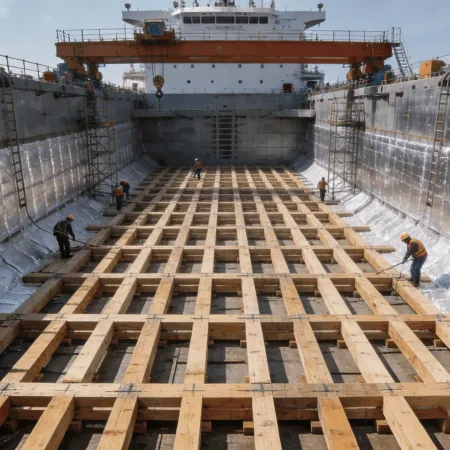
Modified engineered wood, by contrast, typically shows thickness swell rates under 3% (EN 317). Chambroad's marine anti-corrosion flooring panels, for example, maintain dimensional tolerances even in salt-spray environments — something solid wood simply can't do reliably.
A Buyer's Real Experience
A European distributor sourced solid oak flooring for a coastal hospitality project in Portugal. After one winter season, 30% of the boards had cupped visibly. The replacement cost — including labor — ran to three times the original material cost.
The same project, re-specified with modified engineered wood panels, has had zero reported movement issues in two years of follow-up. Keep in mind — this is one case. Results vary by product specification and site conditions. But it illustrates why stability matters.
Cost: It's Not as Simple as Price Per m²
On paper, solid hardwood often looks cheaper than premium engineered wood. But that comparison ignores:
- Waste factor — solid wood typically has 15–25% waste in cutting; engineered wood runs 8–12%
- Acclimatization time — solid wood needs 2–4 weeks on-site before installation; engineered wood can go in within days
- Maintenance costs — solid wood in humid climates needs annual treatment; modified engineered wood often doesn't
- Replacement rate — solid wood in demanding environments fails faster
When you factor in total installed cost over a 10-year lifecycle, engineered wood is frequently the better value — especially for commercial and outdoor applications.
Head-to-Head: Engineered Wood vs Solid Wood
| Factor | Engineered Wood | Solid Wood |
|---|---|---|
| Dimensional stability | ✅ Excellent | ⚠️ Moves with humidity |
| Moisture resistance | ✅ High (with treatment) | ❌ Requires ongoing care |
| Material cost | ⚠️ Mid–high | ✅ Variable (can be low) |
| Total lifecycle cost | ✅ Lower over 10 years | ⚠️ Higher in demanding use |
| Fire rating options | ✅ Class B-s1,d0 available | ❌ Limited |
| Formaldehyde control | ✅ E0 / CARB Phase 2 | ✅ Naturally low |
| Customization | ✅ OEM / custom sizes | ⚠️ Limited by log size |
When Solid Wood Still Makes Sense
Don't get us wrong — solid wood has its place. For interior furniture in climate-controlled environments, or for buyers whose customers specifically want "100% natural wood" as a marketing point, solid wood can be the right call.
It's also worth noting that some premium solid species — like teak or ipe — have natural oil content that gives them genuine outdoor durability. But those species are expensive, increasingly restricted under CITES, and availability is inconsistent for large orders.
Where Engineered Wood Is the Clear Choice
In most cases, if your application involves any of the following, engineered or modified wood is the stronger specification:
- Outdoor applications — decking, cladding, marine use (see marine anti-corrosion flooring)
- High-humidity environments — coastal, tropical, or riverside projects
- Fire-rated specifications — commercial buildings, public spaces (see flame retardant wall panels)
- Large-format or structural use — where consistent dimensions are critical
- Sustainable procurement — when FSC/PEFC certification or LEED credits are required
The engineered wood vs solid wood comparison isn't really about which is "better" — it's about which is right for your specific project. Chambroad has been helping global buyers make that call for years. If you want a straight answer on whether our modified wood products fit your application, just ask.
Find the Right Wood Product for Your Project
Browse our full range of engineered and modified wood products, or get a tailored quote.
Browse Product Catalog Get a Real-Time Quote
Not sure which product fits your spec? Contact our technical experts for a free consultation.