Polyolefin Elastomer Advantages: Why POE Outperforms in Demanding Applications
A practical look at what polyolefin elastomers actually deliver — in impact modification, film production, photovoltaic encapsulation, and beyond
If you're formulating for impact resistance, flexibility at low temperatures, or compatibility with polypropylene systems, polyolefin elastomer (POE) is probably already on your shortlist. It should be. POE has displaced older toughening agents in a growing range of applications — not because of marketing, but because the material data backs it up.
We manufacture POE products under the Betopp-G series (G6012, G6045) for polymer modification and the PV7045 / PV7200 grades for photovoltaic encapsulant film. Here's an honest breakdown of where POE wins — and why.
What Makes POE Different from Other Elastomers
POE is produced via metallocene catalysis, which gives it a narrow molecular weight distribution and uniform comonomer incorporation. That's not just chemistry detail — it directly translates into performance advantages you can measure.
Compared to EPDM (ethylene propylene diene monomer) or SBS (styrene-butadiene-styrene), POE has a simpler, fully saturated backbone. No double bonds means better resistance to UV, ozone, and thermal oxidation. In outdoor applications like solar encapsulants or automotive exterior trim, that matters over a 20–30 year service life.
Key point: POE's narrow molecular weight distribution (PDI typically 2.0–2.5 with metallocene catalysis vs. 4–6 for Ziegler-Natta polyolefins) means more consistent batch-to-batch performance — important when you're running high-volume compounding lines or certifying material to automotive or photovoltaic standards.
The Core Advantages: Where POE Pulls Ahead
Here's a direct comparison across the properties that matter most in compound design:
| Property | POE | EPDM | SBS/SEBS |
|---|---|---|---|
| PP compatibility | Excellent — direct blend | Good, needs compatibilizer | Limited without compatibilizer |
| Low-temp toughness | Excellent (Tg ≈ −55°C) | Good | Moderate |
| UV / ozone resistance | Excellent (saturated backbone) | Good | Poor (SBS) / Fair (SEBS) |
| Density | 0.857–0.880 g/cm³ | 0.850–0.870 g/cm³ | 0.890–0.960 g/cm³ |
| Processing (extrusion/injection) | Excellent — no vulcanization | Requires vulcanization for rubber parts | Good |
| Recyclability | Thermoplastic — fully recyclable | Thermoset — not melt-recyclable | Thermoplastic — recyclable |
Application-Specific Advantages
The advantages aren't the same across every end-use. Here's where POE makes the biggest practical difference:
POE Advantage by Application
- Automotive interior & exterior (PP modification): POE blends with PP without a compatibilizer. Add 15–25% G6012 or G6045 to a PP compound and you get notched Izod impact strength above 50 kJ/m² — adequate for bumpers, door panels, and under-hood components. Shrinkage is low and predictable, which reduces warpage in large injection-molded parts.
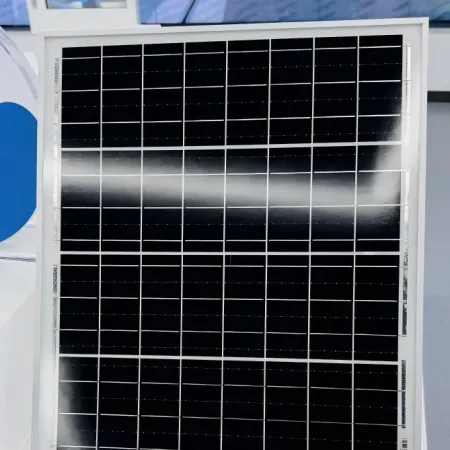
- Photovoltaic encapsulant film: Our PV7045 grade is designed for high crosslink density, which is what solar module manufacturers need for long-term adhesion and delamination resistance. PV7200 is optimized for processability — faster line speeds, wider processing window. Both maintain optical clarity (transmittance >91%) after accelerated aging tests equivalent to 25+ years outdoor exposure.
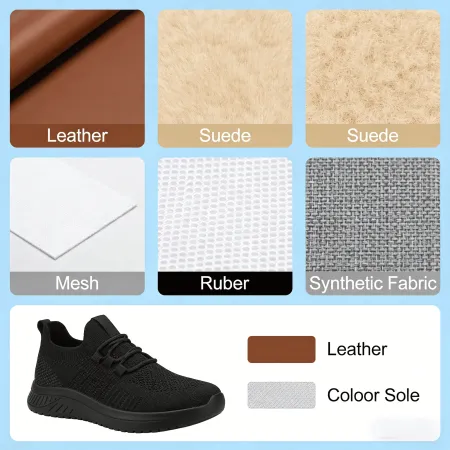
- Footwear foaming: POE's low density and consistent cell structure after foaming make it competitive with EVA in midsole applications. The low Tg means the sole stays flexible in cold weather — a real advantage for outdoor footwear sold into markets like Korea, Turkey, or Northern Europe.
- Wire & cable insulation: POE compounds can be crosslinked to achieve XLPE-like performance with easier processing. The saturated backbone provides inherent flame-retardant synergy when combined with ATH (aluminium trihydroxide) — relevant for halogen-free cable formulations increasingly required in Southeast Asian and European markets.
- Packaging film: In multilayer film structures, a POE tie layer or sealant layer improves low-temperature seal strength and puncture resistance. It's commonly used in medical packaging and food packaging where seal integrity under cold storage conditions is critical.
Processing Advantages That Cut Costs
Here's the thing — POE's performance advantages only matter if the material runs well on your equipment. It does.
POE is a thermoplastic. It melts, flows, and re-solidifies like any polyolefin. No vulcanization step, no sulfur compounds, no separate curing oven. For injection molding, twin-screw compounding, or cast film lines, POE fits into standard polyolefin processing without equipment modification. In most cases, you can switch from EPDM-based compounds to POE-based ones on the same line with only minor parameter adjustments. If you're evaluating the switch, our technical team can provide processing guidelines for your specific equipment setup.
- Melt temperature range: 180–220°C — compatible with standard PP/PE processing windows
- Screw design: Standard polyolefin screws work without modification
- Pellet form: Supplied as pellets — no sticky bale handling, no cryo-grinding needed
- Blending: Direct dry-blend with PP pellets is feasible for many modifier applications
Don't overlook the recycling angle: As markets in Vietnam, India, and Southeast Asia tighten their packaging and automotive recycling standards, the fact that POE is a thermoplastic polyolefin — fully compatible with PP recycling streams — becomes a real commercial advantage. Products compounded with POE can be recycled through existing PP recycling infrastructure without separation. Learn more about our sustainable polymer solutions.
Where POE Has Limits (Being Honest)
POE isn't the answer to everything. Keep in mind a few situations where it's not the first choice:
- High-temperature applications above 120°C continuous: Uncrosslinked POE softens above its melting range. For sustained high-temperature use (engine bay components exposed to direct heat), EPDM or crosslinked POE compounds may be more appropriate.
- Replacement for thermoset rubber: If your application requires permanent crosslinking for compression set resistance (seals, gaskets under constant load), thermoset EPDM or silicone rubber still performs better than uncrosslinked POE.
- Very high-density compounding: POE's low density means you need more volume to achieve a given mass of modifier — relevant when calculating cost-per-part rather than cost-per-kilogram.
Looking for a Reliable POE Supplier?
We supply Betopp-G POE grades (G6012, G6045) for polymer modification and PV-series grades for photovoltaic encapsulant film. Fast delivery, stable batches, and full technical support for compound development.
Or contact our technical team for formulation support and application-specific grade recommendations.