IIR Rubber High Airtightness: The Definitive Guide for Industrial Sealing and Medical Packaging
In the demanding world of polymer science, maintaining an impenetrable barrier against gases and liquids is not just a preference but a technical necessity. For industries ranging from automotive tire manufacturing to pharmaceutical packaging, the challenge of gas permeation can lead to compromised safety, reduced shelf life, and operational failure. This article serves as a comprehensive resource for professionals seeking to leverage IIR rubber high airtightness solutions to solve complex sealing challenges.
Understanding the Science of Airtight Sealing
At the molecular level, IIR (Isobutylene Isoprene Rubber), commonly known as butyl rubber, possesses a unique structure that differentiates it from other synthetic elastomers. The high degree of saturation and the specific packing of methyl groups along the polymer chain create a dense matrix. This dense molecular arrangement is the primary reason why IIR rubber high airtightness is considered the industry standard for low gas permeability. When compared to natural rubber or traditional synthetic alternatives, butyl rubber demonstrates a gas transmission rate that is significantly lower, making it indispensable for vacuum systems and pressurized containers.
To further enhance these properties, halogenation processes—resulting in Chlorinated Butyl Rubber (CIIR) and Bromobutyl Rubber (BIIR)—are employed. These modifications not only maintain the core benefits of IIR rubber high airtightness but also introduce faster vulcanization rates and improved compatibility with other polymers. This synergy allows manufacturers like Chambroad to provide materials that are both highly impermeable and easier to process in complex manufacturing cycles.
Critical Applications of Halogenated IIR Solutions
The practical application of IIR rubber high airtightness extends into sectors where failure is not an option. In the automotive industry, the inner liner of a tire must retain air pressure over long periods to ensure fuel efficiency and safety. Utilizing advanced tire and sealing systems ensures that the tire structure remains stable under varying thermal conditions.
Pharmaceutical and Medical Integrity
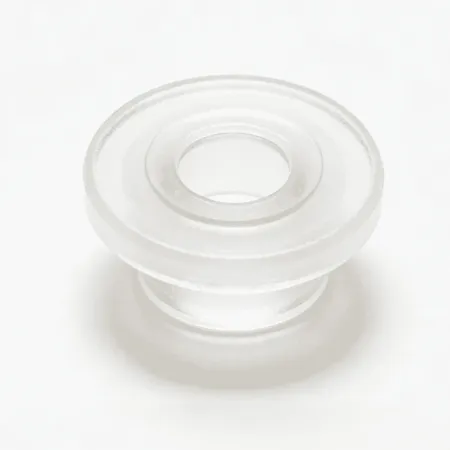
The healthcare sector relies heavily on the inert nature and superior barrier properties of halogenated elastomers. Products such as the medical rubber stopper require the inherent IIR rubber high airtightness to prevent oxygen ingress and maintain the sterility of liquid medications. By using Bromobutyl Rubber BIIR2332 or BIIR2828, manufacturers can ensure that volatile components do not escape and external contaminants do not penetrate the seal.
Automotive and Heavy Industry
Beyond tires, IIR rubber high airtightness is vital in shock absorption and vibration damping. When integrated with polyolefin elastomer POE materials, butyl rubber components provide a robust seal that withstands environmental degradation and mechanical stress.
Technical Breakdown of Chambroad Rubber Portfolio
Expertise in material selection is key to optimizing production costs and product performance. Chambroad offers a specialized range of elastomers designed for specific industrial demands, each emphasizing the core attribute of IIR rubber high airtightness.
Chlorinated Butyl Rubber CIIR1338: Known for its exceptional chemical resistance and thermal stability. This grade is optimized for industrial hoses and seals where maintaining IIR rubber high airtightness under heat is critical. Explore more at CIIR1338 Details.
Bromobutyl Rubber BIIR2332: A high-purity grade often selected for high-speed manufacturing environments. It offers superior cross-linking density, which further enhances the IIR rubber high airtightness required for modern tubeless tire liners. View specifications at BIIR2332 Product Page.
BIIR 2828: Specifically engineered for the medical and food industries, this grade ensures high cleanliness and conforms to strict safety regulations while providing the essential IIR rubber high airtightness for long-term storage. Detailed info at BIIR 2828 Overview.
Sustainability and the Circular Economy
In today’s industrial landscape, performance must be balanced with environmental responsibility. Chambroad is at the forefront of this movement by introducing ISCC PLUS Butyl Rubber. By utilizing pyrolysis oil derived from waste tires, we produce isobutylene that feeds into the production of sustainable elastomers. This "tire-to-tire" circular model ensures that the high performance of IIR rubber high airtightness is maintained while significantly increasing the sustainable material content in our clients' end products. This breakthrough allows our partners to meet green building and manufacturing standards without sacrificing the technical integrity of their sealing systems.
Frequently Asked Questions
How does IIR rubber high airtightness compare to Natural Rubber?
IIR rubber offers a gas permeability rate that is approximately 8 to 10 times lower than natural rubber. While natural rubber is superior in terms of elasticity and tensile strength, it cannot compete with butyl rubber in applications requiring long-term air or gas retention.
Are these materials compatible with medical sterilization?
Yes, both BIIR and CIIR grades from Chambroad are designed to withstand common sterilization methods, including steam autoclaving and gamma radiation, without losing their IIR rubber high airtightness or leaching harmful substances into the medication.
Can I obtain samples for technical testing?
We provide technical samples for industrial validation. Our team of specialists can assist in selecting the specific grade that balances processing speed with the required IIR rubber high airtightness standards for your project.
Ready to Optimize Your Sealing Solutions?
Whether you are designing the next generation of eco-friendly tires or mission-critical medical devices, our experts are here to help you harness the power of IIR rubber high airtightness.
Copyright 2026 Chambroad Chemical Solutions. All rights reserved. Professional performance through advanced polymer science.