



.png?imageMogr2/crop/220x71/gravity/center/format/webp)

A Technical Guide to Performance, Design Freedom, and Lifecycle Advantages
The Automotive Material Dilemma: The dual imperatives of reducing emissions through lightweighting and embracing circular economy principles are reshaping vehicle design. Engineers must find materials that offer high strength-to-weight ratios, design flexibility for part consolidation, and a viable path at end-of-life. This guide demonstrates how advanced Polypropylene (PP) compounds, from high-flow copolymers to impact-modified grades, are not just replacing traditional materials—they are enabling a new generation of lighter, safer, and more sustainable vehicles.
1. The Strategic Imperative: Why PP is at the Core of Modern Automotive Design
Polypropylene provides a unique triad of benefits critical for next-generation vehicles: weight reduction, cost-effectiveness, and sustainability. The following table outlines its competitive edge.
| Design Challenge | How Advanced PP Compounds Address It | Traditional Material Limitation |
|---|---|---|
| Structural Lightweighting | High modulus-to-density ratio. Grades like LA640T and EP640V offer high stiffness at low weight, enabling large, integrated components that replace metal assemblies. | Steel and aluminum offer strength but at a significant weight penalty. Standard plastics lack the necessary stiffness. |
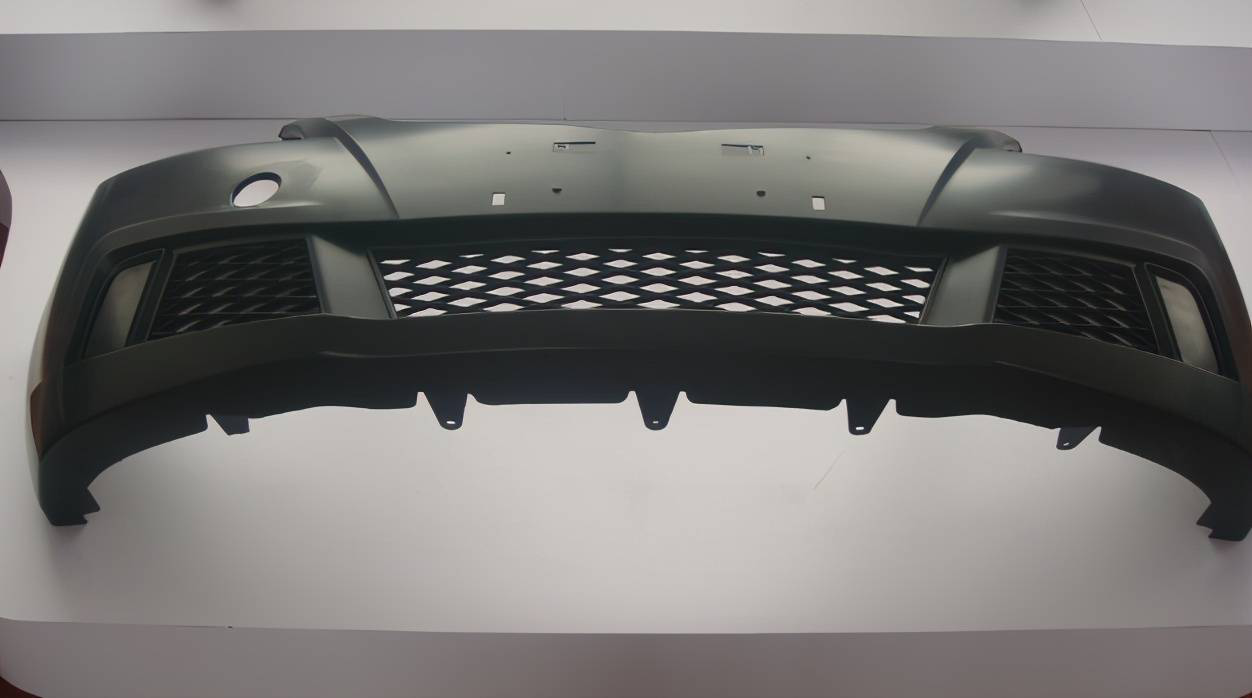
| Impact Safety & Durability | Superior impact resistance at low temperatures. High-impact copolymers like SP179 absorb crash energy and withstand cold-weather brittleness for bumpers and interior trim. | Metals can dent and corrode; some engineering plastics become brittle in cold conditions or are prohibitively expensive. |
| Chemical & Fluid Resistance | Inherent resistance to a wide range of automotive fluids (oils, greases, coolants, cleaning agents), ensuring long-term part integrity in under-hood and interior applications. | Some materials swell or degrade upon prolonged exposure, leading to failure. |
| Processing Efficiency | Excellent flow properties enable complex, thin-wall designs and fast cycle times, reducing energy consumption and cost per part. | Metals require multiple stamping/welding steps; other plastics may require higher processing temperatures or slower cycles. |
| End-of-Life & Sustainability | PP is one of the most readily recyclable thermoplastics. Its monolithic nature (vs. multi-material assemblies) and compatibility within the polyolefin family simplify recycling and support closed-loop goals. | Multi-material composites are difficult to separate and recycle. Thermosets cannot be remelted and reshaped. |
2. The Automotive PP Portfolio: Matching Material to Function
Selecting the right PP grade is critical. The automotive industry utilizes a spectrum of PP materials, each engineered for specific roles.
High-Flow, High-Stiffness Copolymers
Purpose: Large, integrated structural components.
Key Grades: LA640T, EP640V
Why: High Melt Flow Index (MFI) allows for filling large, complex molds (e.g., door panels, instrument panel carriers) with lower clamp force and faster cycles. High modulus provides the structural integrity previously requiring metal supports.
High-Impact Copolymers (ICP)
Purpose: Energy management and durable interiors.
Key Grade: SP179
Why: Designed to absorb impact energy in bumpers, interior trim, and under-hood components. Offers an excellent balance of stiffness and toughness, even at sub-zero temperatures, enhancing passenger safety and part longevity.
Long Glass Fiber Reinforced PP (LGFR-PP)
Purpose: Metal replacement for ultra-high stiffness.
Why: Glass fibers dramatically increase stiffness and heat deflection temperature, enabling direct substitution of metal brackets, battery trays, and structural front-end carriers. Significant weight savings (30-50%) are achievable.
Expanded Polypropylene (EPP)
Purpose: Energy absorption and ultra-lightweight cores.
Key Grade: EPP800MM
Why: Foam beads molded into complex shapes provide outstanding energy management for pedestrian safety areas, seat cushions, and interior padding. Its closed-cell structure and durability make it reusable and recyclable.
3. Application Selection Guide: From Bumper to Battery
| Vehicle System | Typical Components | Primary Material Requirements | Recommended PP Solution |
|---|---|---|---|
| Exterior | Bumpers, front-end modules, wheel arch liners, side claddings | Impact resistance, low-temperature ductility, paintability, dimensional stability, UV resistance. | High-Impact Copolymer (e.g., SP179) or TPO blends (PP + EPDM). LGFR-PP for structural carriers. |
| Interior | Door panels, instrument panels, pillar trims, console components | Stiffness, low VOC/fogging, scratch resistance, good surface finish for painting or grain, low odor. | High-Flow, High-Stiffness Copolymer (e.g., LA640T). Talc-filled PP for higher modulus. Low-odor grades are critical. |
| Under-the-Hood | Air intake manifolds, engine covers, cooling system components, battery housings | Heat resistance (up to 150°C+), chemical resistance to oils/fuels, dimensional stability, creep resistance. | Heat-stabilized, mineral-filled PP or LGFR-PP. High-temperature copolymers. |
| Powertrain / EV | Battery modules & trays, electric motor components, lightweight structural brackets | High stiffness, flame retardancy (FR), thermal management, dimensional precision, low density. | LGFR-PP or advanced FR-PP compounds. EPP for protective cushioning within battery packs. |
4. Beyond Lightweighting: The Sustainability & Circularity Advantage
PP's role extends beyond weight savings to directly support automotive OEMs' carbon neutrality and circularity goals.
Design for Monomaterial & Disassembly
Advanced PP compounds enable large, integrated parts that replace multi-material assemblies. A door module made from a single PP family (e.g., PP for structure, TPO for skin) is far easier to disassemble and recycle than one combining PP, ABS, metal, and fabric.
Incorporating Recycled Content
Post-industrial and post-consumer recycled PP can be successfully incorporated into non-aesthetic, semi-structural components (e.g., wheel liners, underbody shields, battery tray supports) using compatibilizers and careful compounding, reducing virgin material use.
End-of-Life Pathways
PP is one of the most commonly recycled polymers. Automotive shredder residue (ASR) rich in PP can be sorted, cleaned, and reprocessed into lower-grade applications, or via advanced recycling (pyrolysis/purification) back into virgin-quality feedstock—a key focus for future closed-loop systems.
Bio-based & Mass-Balanced Options
The industry is moving towards PP derived from bio-based feedstocks (e.g., sugarcane) or attributed via mass balance from renewable or recycled sources (similar to the ISCC PLUS certification for butyl rubber), providing a drop-in solution to reduce the carbon footprint of the material itself.
5. Enabling Manufacturing Efficiency: Processing Advantages of PP
High Flow for Large Parts
Grades like LA640T allow for the molding of large, thin-wall components (e.g., door panels) with lower injection pressure, faster cycle times, and reduced energy consumption per part.
Weldability & Assembly
PP components can be easily joined using vibration welding, hot plate welding, or laser welding, creating strong, hermetic bonds ideal for fluid reservoirs, air ducts, and complex assemblies.
Surface Finish & Decoration
PP offers excellent surface quality for painting, in-mold decoration (IMD), or grain finishes. Proper surface treatment ensures adhesion for aesthetic and functional coatings.
6. Case in Point: Lightweighting a Battery Electric Vehicle (BEV) Platform
Challenge:
A major OEM developing a new BEV platform needed to reduce non-battery mass to maximize range. Key targets included the front-end module, which traditionally used a steel carrier with multiple attached plastic parts, and the underbody panels for aerodynamic protection.
Solution:
A multi-pronged PP strategy was implemented:
1. Front-End Carrier: Redesigned as a single, large Long Glass Fiber Reinforced PP (LGFR-PP) component, integrating mounting points for the radiator, headlights, and sensors.
2. Underbody Panels & Wheel Liners: Switched to a high-stiffness, talc-filled PP compound from standard ABS/PC blends.
3. Interior Door Module: Utilized a high-flow, high-stiffness PP copolymer (LA640T) for the carrier, enabling a thinner design.
Result:
Total mass reduction of 8.5 kg per vehicle from these changes alone, directly contributing to extended range. The integrated front-end module also reduced assembly time and part count by over 30%. The project demonstrated that strategic application of advanced PP materials is a cornerstone of affordable BEV lightweighting.
7. Critical Questions for Your PP Supplier
1. Do you have grade-specific data for key automotive OEM material standards?
Request test reports showing compliance with standards like **GMW, VW, Ford, or Toyota** for properties such as heat aging, fogging, odor, and chemical resistance. This is non-negotiable for tier-1 qualification.
2. Can you support the development of compounds with recycled content?
For sustainability targets, inquire about experience formulating grades with **post-consumer or post-industrial recycled PP (rPP)** that meet performance specs for semi-structural applications.
3. What is your capability in color matching and lot-to-lot consistency?
Consistent color and mechanical properties are vital for just-in-time manufacturing. Ask about their quality control processes and color matching capabilities for interior trim applications.
4. Do you offer technical support for part design and simulation (CAE)?
Early involvement is key. A strong supplier provides material data for **Moldflow and structural FEA simulations** and can advise on gate location, weld lines, and shrinkage to prevent costly mold rework.
8. Conclusion: Engineering the Sustainable Vehicle with Advanced Polypropylene
The transition to electric and more sustainable vehicles is as much a materials challenge as it is a powertrain one. Advanced Polypropylene compounds stand at the intersection of this transformation, offering a proven path to significant weight reduction, cost efficiency, and improved sustainability credentials. From the high-impact bumper to the structural battery tray, PP provides the performance, processability, and circularity potential that modern automotive manufacturing demands.
From Specification to Road: The Next Step
Success hinges on moving from generic material data to application-validated performance. Engage with suppliers who can provide:
- Application-specific compound data (not just datasheet minima).
- Prototyping and testing support to derisk your design.
- A clear roadmap for sustainable solutions, including recyclate integration.
Explore the Future of Automotive Materials at CHINAPLAS 2026
Discover how our portfolio of advanced Polypropylene solutions—from high-flow LA640T for interior modules to impact-resistant SP179 for exteriors—can address your specific lightweighting, performance, and sustainability challenges.
Visit the Chambroad booth to discuss material selection, review case studies, and see how we partner with tier-1s and OEMs to drive innovation.
CHINAPLAS 2026 International Rubber & Plastics Exhibition
Date: April 21-24, 2026
Venue: National Exhibition and Convention Center (Shanghai), China
Booth: [6.2 A02]
Disclaimer: Material performance is dependent on part design, processing conditions, and end-use environment. All specifications should be validated through application-specific testing.
Ready to Lightweight Your Next Vehicle Platform?
Request a technical consultation or access our automotive-grade PP portfolio datasheets to start your evaluation.
Request Technical ConsultationFor immediate project support: info@chambroad.com