



.png?imageMogr2/crop/220x71/gravity/center/format/webp)

Future Trends in Polypropylene Resin Technology and Market Demand
Navigating the Next Decade of Material Innovation, Sustainability, and Strategic Sourcing
Why Future-Proofing Your PP Resin Strategy Matters Now
The global polypropylene (PP) resin market is at an inflection point. Driven by evolving regulatory landscapes, accelerating sustainability mandates, and shifting end-user expectations, procurement and R&D teams can no longer rely on historical selection criteria alone.
This article synthesizes emerging signals from policy, technology, and market dynamics to help you:
- ✅ Anticipate material innovation directions that impact product performance
- ✅ Align sourcing strategies with regional demand shifts and compliance requirements
- ✅ Evaluate suppliers not just on today's specs, but on tomorrow's readiness
Note: Trend analysis is based on publicly available industry reports, policy documents, and technological trajectories. Specific product recommendations are grounded in verified technical data.
Three Macro Forces Reshaping PP Resin Demand
🌍 Regulatory & Sustainability Pressure
Global policies (EU PPWR, China's Dual Carbon, US EPA guidelines) are accelerating demand for:
- Food-contact safety with traceable compliance
- Recyclability design (mono-material structures)
- Low-carbon production footprints
⚡ End-Industry Evolution
Key growth verticals are redefining material requirements:
- EV/Lithium Battery: Lightweighting + flame retardancy + purity
- Healthcare: Biocompatibility + sterilization resistance
- E-commerce Packaging: Durability + printability + cost efficiency
🔬 Technology Convergence
Material science is intersecting with digital and process innovation:
- Catalyst advancements enabling tailored molecular structures
- AI-assisted formulation for faster application matching
- Closed-loop recycling compatible resin design
Technology Trends: What's Next in PP Resin Innovation
1. Performance Specialization Over Generic Grades
The era of "one PP fits all" is ending. Future demand will favor resins engineered for specific application stressors:
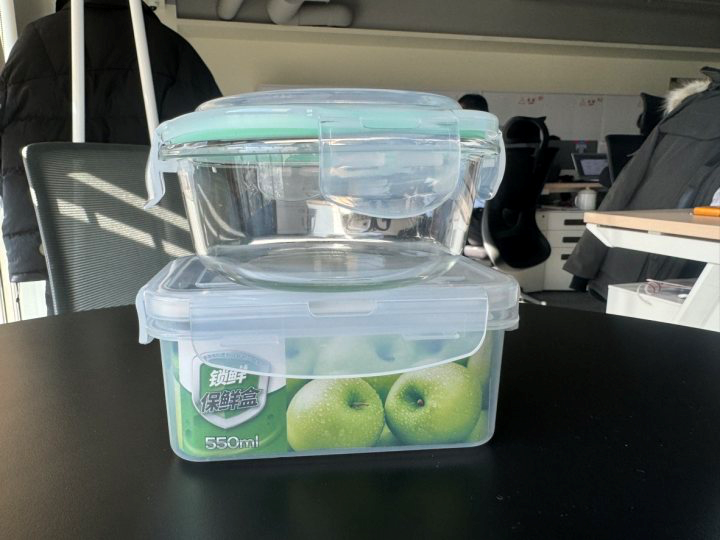
- High-Clarity + Toughness: For premium food packaging replacing PET/PC (e.g., RP340R-type grades with optical clarity and impact resistance)
- Low-Odor + Food-Safe: For direct-contact applications requiring sensory neutrality (e.g., RP242G-type grades with controlled volatiles)
- Heat-Resistant + Safe: For hot-fill containers without additive migration (e.g., B800E-type grades validated for thermal stability)
2. Process Efficiency as a Competitive Lever
As labor and energy costs rise, resins that enable faster, more stable processing will command premium adoption:
- High Melt Flow + Stability: Reducing cycle times in injection/blow molding (e.g., SP179, LA640T for automotive/healthcare parts)
- Consistent Shrinkage: Minimizing post-mold adjustment and scrap (e.g., RP242G for dimensionally critical caps/closures)
- Low-Waste Formulations: Compatible with regrind strategies without property loss
3. Sustainability by Design, Not by Retrofit
Future-proof PP resins will embed circularity principles from molecular design:
- Mono-material compatibility for easier recycling streams
- Additive systems that don't hinder mechanical recycling
- Traceable batch documentation supporting ESG reporting
Market Demand Shifts: Where Growth Is Concentrating
| Application Segment | Key Demand Driver | Material Requirement Evolution |
|---|---|---|
| Food & Beverage Packaging | E-commerce growth + safety regulations | Low-odor, high-clarity, heat-resistant grades (e.g., MT40, B800E) |
| Healthcare & Pharma | Aging population + sterile packaging demand | Biocompatible, sterilization-stable, traceable grades (e.g., RP348P) |
| EV & Battery Components | Lightweighting + safety standards | High-impact, low-emission, flame-retardant compatible (e.g., SP179, LA640T) |
| Consumer Durables | Premiumization + design flexibility | High-gloss, scratch-resistant, colorable grades (e.g., M800E, HI340R) |
| Industrial Films & Sheets | Sustainable packaging mandates | Recyclable CPP grades with high toughness (e.g., F800EDF) |
Note: Segment analysis reflects directional trends based on industry reports. Specific grade recommendations are illustrative of capability alignment, not exhaustive.
Navigating Challenges: Turning Constraints into Competitive Advantages
⚠️ Challenge: Supply Chain Volatility
Raw material price swings and logistics disruptions threaten production continuity.
→ Opportunity: Partner with suppliers offering multi-grade flexibility (e.g., RP340R as PET/PC alternative) and transparent inventory visibility.
✅ Opportunity: Compliance as Differentiation
Regulatory complexity is a barrier for many—but a moat for prepared suppliers.
→ Action: Prioritize partners providing batch-level compliance documentation (COA, food-contact statements) and proactive regulatory monitoring.
⚠️ Challenge: Performance-Cost Tension
High-spec resins often carry premium pricing, pressuring margins.
→ Opportunity: Evaluate Total Cost of Ownership: grades like RP340R that replace higher-cost materials (PC/PET) can deliver net savings despite unit price.
How to Future-Proof Your PP Resin Strategy
Based on the trends above, we recommend a three-pillar approach for procurement and R&D teams:
🔍 Pillar 1: Audit Your Current Portfolio Against Future Requirements
Ask: Do your current PP grades support emerging needs in clarity, safety, process efficiency, and recyclability? Use this quick checklist:
- Is food-contact compliance documented per batch?
- Can the grade support faster cycle times without property loss?
- Is the resin compatible with mono-material recycling streams?
- Are alternative grades available if supply is disrupted?
🤝 Pillar 2: Evaluate Suppliers on Forward-Looking Capabilities
Beyond today's specs, assess partners on:
- Roadmap Transparency: Do they share development priorities aligned with market trends?
- Application Engineering: Can they help adapt formulations to your specific process?
- Traceability Systems: Do they provide batch-level data supporting ESG reporting?
🧪 Pillar 3: Pilot Emerging Grades Before Full Commitment
De-risk adoption through structured evaluation:
- Request small-scale samples for lab/line testing (e.g., MT40 for food container trials)
- Define success metrics upfront: cycle time reduction, scrap rate, compliance validation
- Document learnings to inform broader rollout decisions
Pro Tip: The most resilient PP strategies aren't about predicting the future perfectly—they're about building adaptability into your material portfolio and supplier relationships.
Frequently Asked Questions
Q: How can I assess if a PP grade is "future-proof" for my application?
A: Evaluate across four dimensions: (1) Performance stability under your process conditions, (2) Compliance documentation depth, (3) Supplier's R&D roadmap alignment with your industry trends, (4) Flexibility for reformulation if regulations shift. Request a capability matrix from your supplier.
Q: Are high-performance PP resins significantly more expensive?
A: Unit price may be higher, but Total Cost of Ownership often favors specialized grades. Example: A grade like RP340R that replaces PC can reduce material cost by 20-40% while maintaining clarity—plus savings from faster processing and lower scrap. Always model TCO, not just $/kg.
Q: How quickly can new PP grades be validated for production?
A: Timeline depends on application criticality. For non-critical parts: 2-4 weeks for sample testing. For food/medical: 8-12 weeks including compliance review. Partner with suppliers offering structured pilot support to accelerate validation.
Q: Can I get trend analysis specific to my industry vertical?
A: Yes. We provide customized trend briefings for key verticals (food packaging, healthcare, automotive, etc.). Contact our technical team with your application focus for a tailored discussion.
Ready to Align Your PP Strategy with Future Demand?
Trends create uncertainty—but also opportunity. The right material partner can help you turn market shifts into competitive advantage.
Meet Us at CHINAPLAS 2026
Booth 6.2 A02
April 21–24, 2026 · Shanghai
Let's discuss how emerging PP technologies can support your 2026–2030 roadmap.
© 2026 Chambroad Chemical Solutions. All Rights Reserved.
This trend analysis is for informational purposes. Product recommendations are based on verified technical data; consult our team for application-specific guidance.