

.png?imageMogr2/crop/220x71/gravity/center/format/webp)

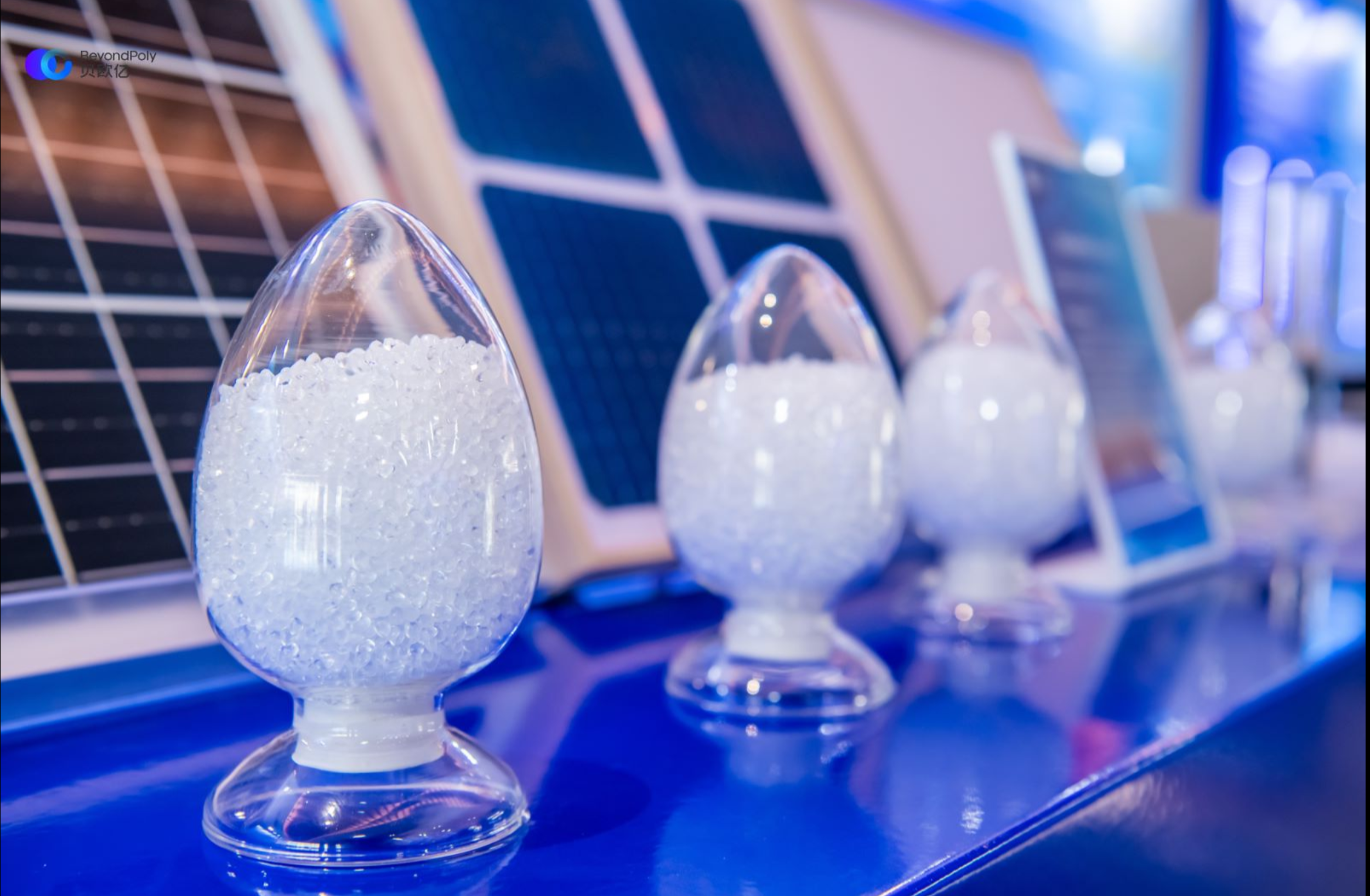
The Design Freedom Dilemma: Engineers today are tasked with reconciling conflicting demands: create products that are both lightweight and incredibly tough, flexible yet dimensionally stable, and high-performing while remaining cost-effective and sustainable. This guide explores how POE's unique molecular architecture is strategically deployed to solve modern engineering challenges across automotive, consumer goods, and renewable energy.
1. Executive Summary: The POE Value Proposition - More Than Just an Additive
POEs are a class of thermoplastic elastomers with a rubber-like ethylene-octene copolymer structure. Their core value lies in their seamless integration into polyolefin matrices, offering a unique property set that is difficult to achieve with other elastomers.
| Design Objective | How POE Enables It | Contrast with Common Alternatives |
|---|---|---|
| Enhance Impact & Toughness | Excellent compatibility with PP/PE allows fine dispersion of rubbery domains, efficiently absorbing impact energy. | SEBS/SBS: Better compatibility with PS/PC; often higher cost. EPDM: Requires complex dynamic vulcanization. |
| Achieve Lightweighting | Very low density (~0.87 g/cm³). Adds performance without significant weight penalty. | Mineral Fillers: Increase weight and density. Glass Fiber: Significant weight addition. |
| Improve Flexibility & Soft Touch | Can be compounded to create low modulus, highly flexible compounds for seals and soft-touch overmolds. | Plasticized PVC: Contains migratory plasticizers. TPU: Higher cost, moisture sensitivity. |
| Simplify Processing & Sustainability | Thermoplastic nature allows easy reprocessing and compatibility with polyolefin recycling streams. | Thermoset Rubber: Not recyclable, longer cure cycles. EVA: Lower thermal stability. |
2. The Molecular Engine: Why POE's Structure Drives Performance
Elastic Octene Segments
Provide the rubber-like, flexible behavior and excellent low-temperature performance, enabling applications in cold climates.
Crystalline Ethylene Segments
Create physical crosslinks upon cooling, granting thermoplastic processability and dimensional stability without chemical curing.
Fully Saturated Backbone
Provides superior thermal stability, UV resistance, and resistance to polar chemicals, crucial for long-term outdoor applications.
3. Head-to-Head: POE in the Competitive Elastomer Landscape
| Material | Core Strengths | Typical Limitations | POE's Strategic Advantage |
|---|---|---|---|
| Ethylene-Vinyl Acetate (EVA) | Good clarity, flexibility, adhesion. Low cost. | Limited heat resistance, can degrade and emit acid. Poor weatherability. | Superior thermal stability and weatherability. Direct upgrade for PV encapsulants demanding >25-year life. |
| Styrenic Block Copolymers (SEBS, SBS) | Excellent clarity, very soft grades, good processing. | Poor oil/chemical resistance. Compatibility primarily with styrenics. | Inherent polyolefin compatibility and better chemical resistance. Go-to modifier for PP and PE-based compounds. |
| Thermoplastic Vulcanizates (TPV) | Excellent compression set, rubber-like feel. | Complex manufacturing. Higher cost. Less transparent. | Simpler, cost-effective one-step compounding. Better balance of processability, clarity, and cost. |
| Thermoplastic Polyurethane (TPU) | Abrasion resistance, high strength, oil resistance. | Susceptible to hydrolysis, higher cost, requires drying. | Hydrolysis resistance and moisture insensitivity. More suitable for damp environments. Lower density. |
4. Application-Centric Design: Selecting the Right POE Grade
5. The Processing Advantage: From Pellet to Performant Part
Direct Dry-Blending & Compounding
POE pellets can be easily dry-blended with PP/PE base resins and fed directly into processing equipment, simplifying the supply chain vs. pre-compounded materials.
Broad Processing Window
Exhibits good thermal stability, allowing for forgiving processing conditions in extrusion, injection molding, and blow molding without degradation.
Recyclability & Sustainability
Being a pure polyolefin, POE-modified scrap can be more easily incorporated back into production cycles, supporting circular economy goals.
6. Case in Point: Enhancing SUV Bumper Performance and Efficiency
Challenge:
An automotive OEM needed to improve low-temperature (-30°C) impact performance of PP-based bumper fascia to meet stricter safety standards, while reducing part weight for fuel efficiency.
Solution:
Implementation of a next-generation, high-octene POE impact modifier (G6045). The POE's superior compatibility and finer dispersion within the PP matrix created a more efficient "skeleton" of elastic domains.
Result:
40% improvement in notched Izod impact strength at -30°C, exceeding the new safety standard. Simultaneously, bumper weight was reduced by ~7% due to POE's lower density versus mineral fillers. This translated to a direct win in both performance and sustainability metrics.
7. Critical Questions for Your POE Supplier
1. What is the optimal let-down ratio for my base resin?
The efficiency of POE as an impact modifier is non-linear. A supplier should provide guidance on the optimal loading percentage (e.g., 10-20% in PP) to achieve desired toughness without over-softening.
2. Can you provide compound data that includes aging tests?
For exterior applications, request data on property retention after extended UV and thermal aging to ensure long-term performance.
3. Do you offer grades tailored for specific processes like foaming or film extrusion?
The required melt strength and rheology differ. A specialized grade for foaming or high-clarity film will yield better results than a general-purpose grade.
4. How does your POE support sustainability initiatives?
Inquire about ISCC PLUS certified mass-balanced POE options and performance when blended with post-consumer or post-industrial recyclate.
8. Conclusion: Specifying for Synergistic Performance
Polyolefin Elastomers represent a paradigm shift from viewing modifiers as simple additives to recognizing them as performance-engineered components. By leveraging POE's inherent compatibility with the world's most common plastics, designers and engineers can systematically dial in properties—toughness, flexibility, weight—to meet precise application demands.
Bridge the gap between design prototype and production-ready material.
Theoretical advantages are proven on the factory floor. Partner with a supplier that understands both the molecular science and the practical realities of high-volume manufacturing.
Explore POE Innovation at CHINAPLAS 2026
Visit the Chambroad booth to see how our Betopp-G and PV series POEs enable breakthroughs in automotive, energy, and consumer goods. Discuss your flexibility, weight, and impact challenges with our polymer experts.
CHINAPLAS 2026 International Rubber & Plastics Exhibition
Date: April 21-24, 2026
Venue: National Exhibition and Convention Center (Shanghai), China
Booth: [6.2 A02]
Disclaimer: This guide is for informational purposes. The performance of any POE compound depends on specific grade, formulation, processing, and end-use environment.
Need to Optimize Your Polymer Formulation with POE?
Get expert advice on selecting and compounding the right POE grade for your impact modification, flexibility, or lightweighting goals.
Request a Formulation Review