.png?imageMogr2/crop/220x71/gravity/center/format/webp)
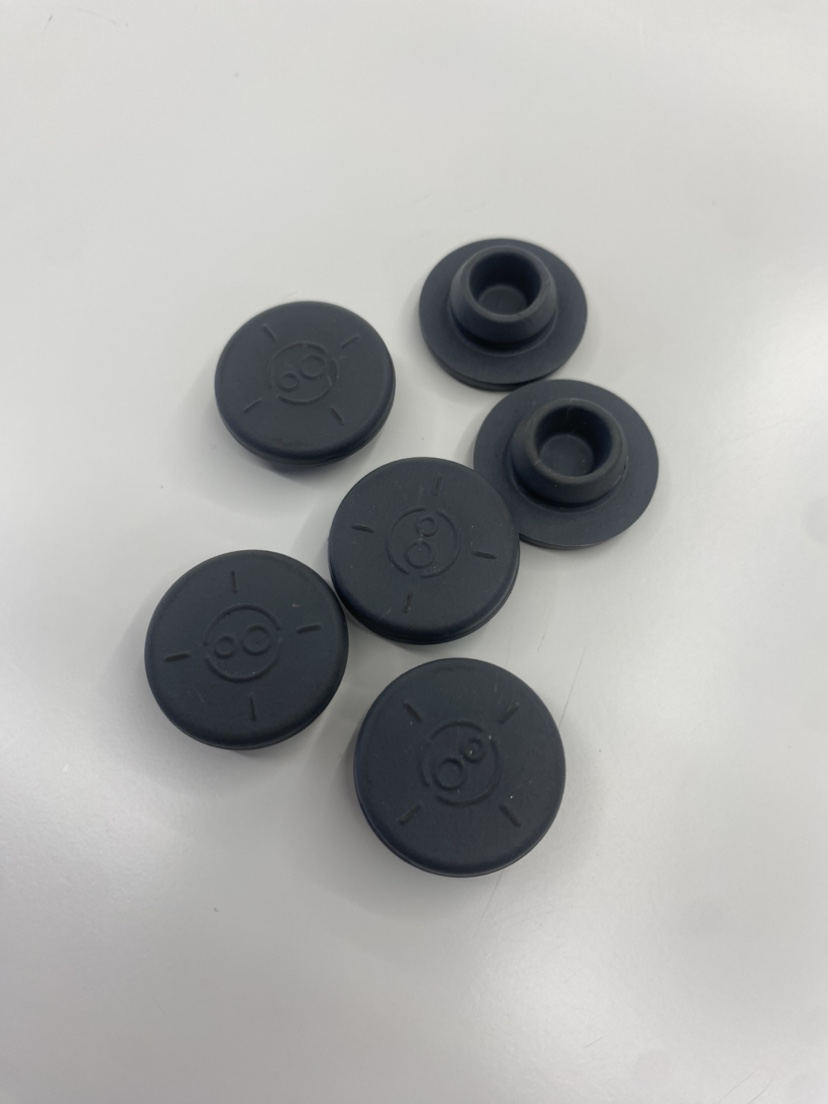
The High-Cost of Seal Failure: In chemical processing, oil & gas, and heavy manufacturing, sealing system failure is not an option. This guide details why Halogenated Butyl Rubber (BIIR/CIIR) is engineered to deliver unmatched reliability in punishing conditions, focusing on its unique balance of impermeability, chemical resistance, and superior processability for complex industrial components.
1. Executive Summary: The Halogenated IIR Value Proposition
Halogenated IIR transforms the superb barrier properties of standard butyl rubber into a processable, bondable engineering material. The table below summarizes its decisive advantages for industrial sealing.
| Decision Driver | Halogenated IIR (BIIR/CIIR) | Standard IIR or General-Purpose Rubbers | The Industrial Advantage |
|---|---|---|---|
| Chemical & Solvent Resistance | Excellent to polar media (acids, bases, ketones). | Varies; often specialized. | Broad compatibility reduces risk in complex chemical environments. |
| Gas & Fluid Impermeability | Exceptional (8-10x lower than NR). | Moderate to Poor. | Prevents permeation of VOCs and gases, critical for emission control. |
| Heat Aging & Compression Set | Very Good. Maintains properties at 125-150°C. | Often a trade-off. | Long-term sealing integrity in hot applications like steam lines. |
| Cure Compatibility & Bonding | Excellent. Bonds to metals and other rubbers. | Standard IIR: Poor. Others: Vary. | Enables reliable, monolithic bonding in complex assemblies. |
| Processing & Green Strength | Good to Excellent. Faster cure, good mold flow. | Standard IIR: Poor green strength. | Enables manufacturing of complex seals with high yield. |
2. Molecular Advantage: Why Halogenation is Key for Industry
The performance stems from a dual-structure: the butyl backbone for barrier properties, plus halogen atoms (Br/Cl) that introduce critical functionality.
1. Enable Covalent Bonding
To metal substrates (for tank linings) or to other rubber layers in composite seals, creating leak-proof interfaces.
2. Broaden Chemical Resistance
Enhance resistance to polar chemicals (acids, ketones), a common challenge in industrial settings.
3. Improve Processability
Allow for faster curing cycles and better flow vs. standard IIR, improving manufacturing efficiency.
3. Performance Deep Dive: Property by Property for Industrial Specifiers
| Critical Property | Halogenated IIR Performance | Why It Matters in Industry |
|---|---|---|
| Polar Chemical Resistance | Excellent to acids, alkalis, glycols, ketones. | Protects seals in chemical processing where media changes are common. |
| Hot Air & Steam Aging | Very Good at 125-150°C. | Ideal for steam valve diaphragms, autoclave seals, hot air ducting. |
| Low Permeability to Gases/VOCs | Best-in-Class barrier. | Critical for environmental emission control (EPA/LDAR), vacuum systems. |
| Water & Weather Resistance | Outstanding ozone, UV, moisture resistance. | Long service life for outdoor tank seals, marine, offshore equipment. |
| Dynamic Flex & Fatigue | Good for diaphragms, reciprocating seals. | Suitable for metering pumps, pneumatic actuators. |
4. Application Selection Guide: Matching Halogenated IIR to the Challenge
5. The Critical Processing Advantage: From Design to Reliable Part
Faster Cure Rates
Halogenation activates the polymer, reducing cure times vs. standard IIR, boosting production efficiency.
Excellent Green Strength
Particularly in Star-Branched (SBIIR) variants. Vital for handling pre-formed linings without tearing.
Superior Mold Flow
Ensures complete filling of intricate geometries for custom seals and defect-free demolding.
Co-Vulcanization
The killer feature: vulcanize directly onto metal inserts, creating perfect, durable bonds that prevent leakage.
6. Frequently Asked Questions for Engineers
1. We use EPDM for steam. Why consider Halogenated IIR?
While EPDM has excellent steam resistance, its permeability to gases and many chemicals is much higher. If your system requires a superior barrier or handles mixed media, Halogenated IIR is the upgrade. Its bonding to metals is also more reliable.
2. For a fuel oil hose, Halogenated IIR or NBR?
For comprehensive resistance including weathering, ozone, and providing an exceptional vapor barrier to prevent emissions, a specifically compounded Halogenated IIR is often the superior, more durable choice for outdoor/mobile applications.
3. How does "green strength" affect manufacturing?
High green strength means the uncured rubber holds its shape. This reduces tearing during handling, allows accurate placement into molds, and is critical for building complex laminated structures like tank linings before curing.
4. Trade-off between chemical resistance and low-temp flexibility?
It can be balanced. A knowledgeable supplier can optimize the compound using specific plasticizers and blends to meet both targets. Share your full service temperature range.
7. Beyond Specification: Engineering Reliability for Extreme Conditions
Selecting a sealant for aggressive industrial environments transcends material selection—it's a critical risk mitigation decision. Halogenated IIR (BIIR/CIIR) represents a system engineering solution, where its inherent low permeability, chemical resilience, and bondability are not just features but foundational requirements for preventing catastrophic failure, costly downtime, and environmental liabilities in chemical, energy, and heavy processing applications.
This guide provides the framework; the final validation must be empirical. Moving forward requires translating your specific operating parameters—chemical cocktails, thermal cycles, pressure spikes—into a tested compound specification.
Your Action Plan for Validation:
- Benchmark Against Current Failure Modes: Analyze past seal failures. Was it swelling, hardening, or bond delamination? This dictates the key property to prioritize (chemical resistance, heat aging, or adhesive strength).
- Define the Full Environmental Profile: Beyond the primary fluid, consider cleaners, steam-in-place cycles, outdoor UV exposure, and incidental contact with other process media.
- Partner for Prototyping: Engage with a supplier capable of compounding and testing. The optimal halogenated IIR formulation is often a custom balance of polymer grade, filler system, and cure package.
Pressure-Test Your Sealing Strategy with Us at CHINAPLAS 2026
Bring your blueprints, fluid compatibility charts, and failure analysis reports. Our elastomer specialists will be on hand to conduct preliminary feasibility assessments and discuss how our portfolio of Halogenated IIR, EPDM, and specialty compounds can be engineered to meet your exacting standards.
Seeking solutions for: Chemical Permeation | High-Temperature Static Seals | Metal-Rubber Bonding | Curing Bladder Longevity
CHINAPLAS 2026 International Rubber & Plastics Exhibition
Date: April 21-24, 2026
Venue: National Exhibition and Convention Center (Shanghai), China
Booth: [6.2 A02]
Disclaimer: The information herein is for technical guidance. Final material suitability must be determined through application-specific testing under actual or simulated service conditions.
Facing a Sealing Challenge That Standard Elastomers Can't Solve?
Submit your application's key parameters for a preliminary technical evaluation.
Get a Preliminary Material AssessmentOR explore our technical library for specific case studies on chemical resistance and bonding.