



.png?imageMogr2/crop/220x71/gravity/center/format/webp)

How Modified & Engineered Wood Enhances Product Durability and Performance
A deep dive into advanced timber technologies that overcome traditional wood limitations for superior outdoor durability, stability, and structural performance.
The Modern Challenge in Architectural Materials
In outdoor construction and architectural design, material selection directly determines product lifespan, maintenance cost, and long-term performance. Traditional wood, while valued for its natural aesthetics, often fails when exposed to moisture, temperature fluctuations, and biological degradation.
To overcome these limitations, modified wood and engineered timber materials have emerged as high-performance solutions. By enhancing structural stability and environmental resistance, these materials provide a reliable alternative for demanding applications across diverse climates.
.jpg?imageMogr2/format/webp)
What Is Modified Wood and Engineered Timber?
Modified Wood
Modified wood refers to natural timber that has been enhanced through physical, thermal, or chemical processes to improve its durability and stability. These modifications reduce the wood's sensitivity to moisture and biological attack without compromising its natural appearance.
Engineered Wood
Engineered wood is manufactured by bonding wood layers, fibers, or particles together. This process creates materials with consistent strength, improved load-bearing capacity, and better dimensional control.
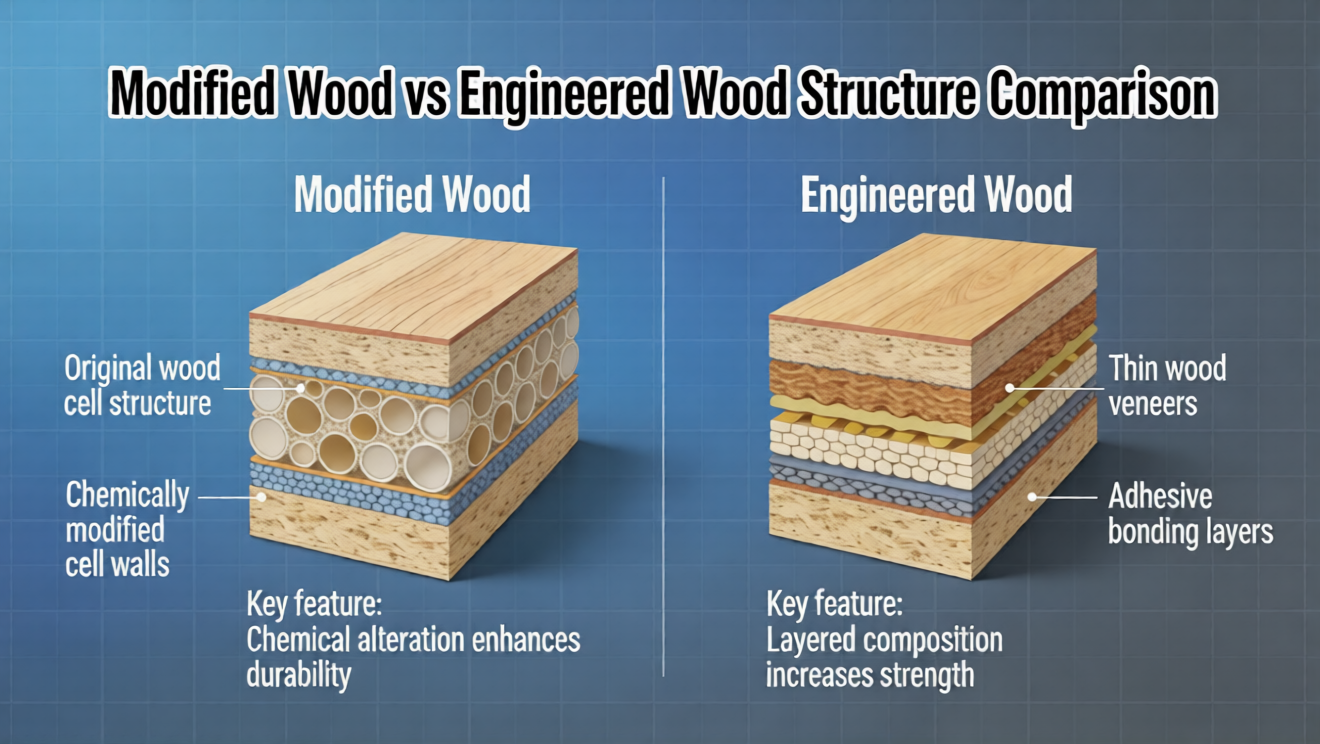
Diagram: Modified wood vs engineered wood structure comparison
Why Traditional Wood Fails in Demanding Environments
Despite its popularity, untreated wood is highly sensitive to environmental conditions. In outdoor or high-humidity environments, it commonly experiences:
Cracking
Due to temperature fluctuations
Warping
Caused by moisture absorption
Mold Growth
In humid climates
Insect Damage
Termite and pest infestation
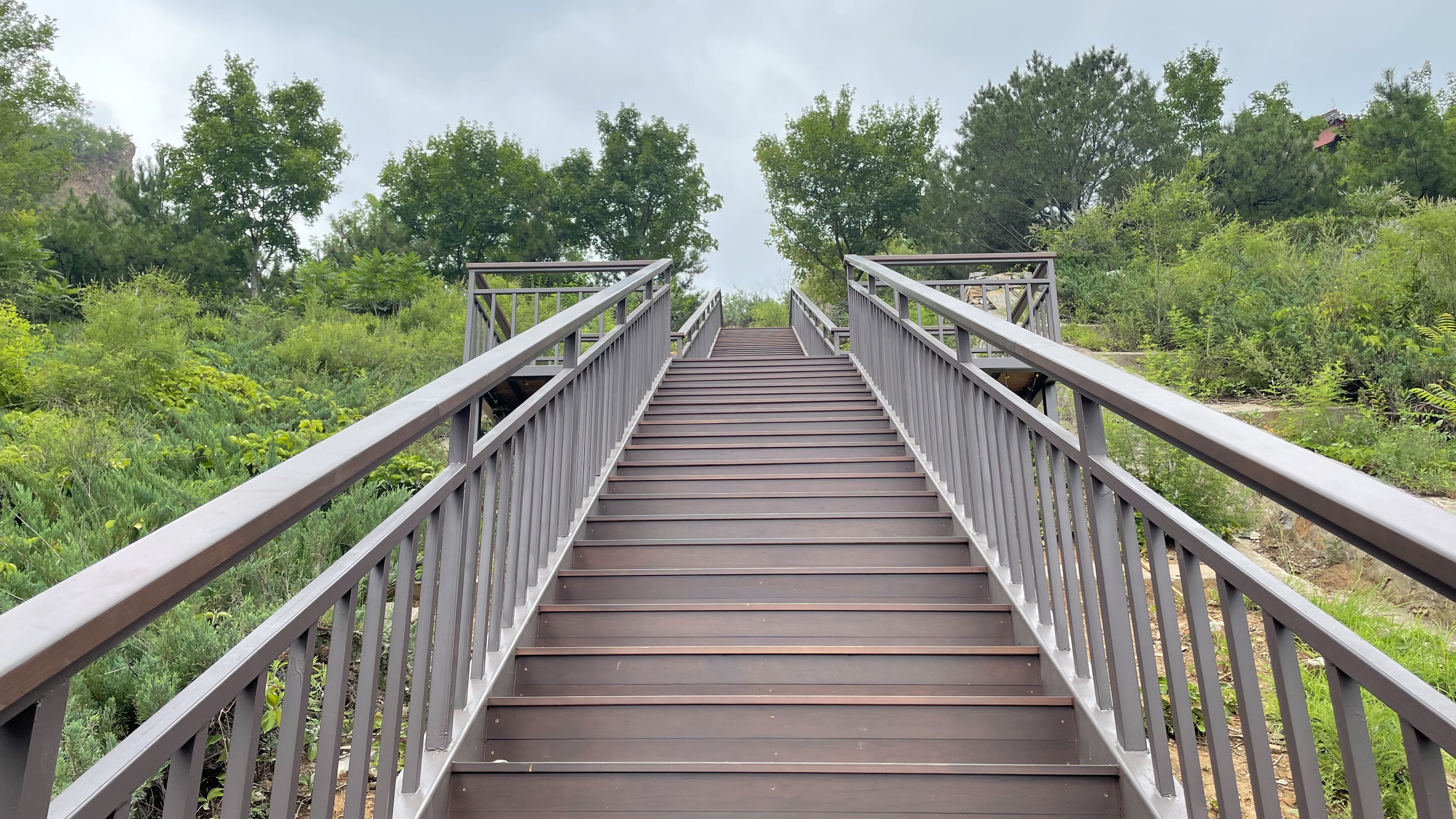
Case Example: Mountain Scenic Boardwalk
In a mountainous scenic area with large temperature swings and high humidity, traditional wood decking often suffers from cracking, warping, and mold or insect damage, compromising both appearance and safety.
Chambroad Timber decking offers a durable solution, engineered for superior dimensional stability, weather resistance, and protection against mold and termites. After installation, the decking maintained its integrity and aesthetics through changing seasons, providing a safe, low-maintenance, and long-lasting outdoor walkway.
How Modified Wood Improves Durability
1. Moisture and Mold Resistance
Modified wood significantly reduces water absorption, making it ideal for humid and rainy environments.
- Prevents warping & cracking
- Resists mold growth
- Minimizes pest infestation
Real Case: Tropical Climate Outdoor Decking
An outdoor project in a tropical climate faced warping, cracking, mold, and insect damage with conventional wood. Chambroad’s biomass-modified timber solved these challenges with <0.05% warping rate, Mold Rating 0, and Use Class 5 durability.
The newly formed overseas team managed customs, logistics, production coordination, and inspections from scratch, ensuring timely shipment and earning client trust.
2. Dimensional Stability
Modification processes reduce expansion and contraction caused by moisture changes.
- Less warping
- Reduced cracking
- Extended service life
Real Case: Mountain Scenic Boardwalk
A mountainous boardwalk project faced extreme temperature swings and high humidity. Chambroad Timber decking delivered superior dimensional stability and mold/termite resistance, while the team managed production alignment, logistics, and installation challenges to ensure a safe, long-lasting walkway.
3. UV and Weather Resistance
Modified timber resists UV aging and surface cracking under intense sunlight and extreme temperatures.
Real Case: Desert Climate Residential Project
In a desert climate with heat, strong UV, and sharp day-night temperature swings, conventional wood failed. Chambroad Timber decking maintained structural integrity and appearance. The overseas team handled production standards, custom pallets, painting, and logistics under multiple challenges to successfully deliver the shipment.
4. Biological Degradation Resistance
Enhanced resistance to fungi, termites, and microbial growth makes modified wood suitable for long-term outdoor use without heavy chemical treatments.
Project Highlight
Chambroad’s solutions have enabled multiple international projects to overcome pest and microbial challenges. Teams coordinated across production, packaging, and logistics to maintain quality standards and on-time delivery, proving both product reliability and operational capability.
Engineered Wood Advantages in Structural Performance
While modified wood enhances durability, engineered wood focuses on structural efficiency and consistency.
Uniform Strength
Predictable performance with reduced internal defects
Large-Span Capability
Designed for applications requiring extended spans
Load-Bearing
Improved load-bearing capacity for structural applications
Dimensional Control
Precise dimensions and consistent quality
Material Comparison: Traditional vs Modified vs Engineered Wood
| Property | Traditional Wood | Modified Wood | Engineered Wood |
|---|---|---|---|
| Durability | Low | High | High |
| Dimensional Stability | Low | High | Very High |
| Moisture Resistance | Low | High | Medium–High |
| Maintenance | High | Low | Medium |
| Structural Strength | Natural variation | Improved | Engineered consistency |
Key Applications of Modified and Engineered Wood
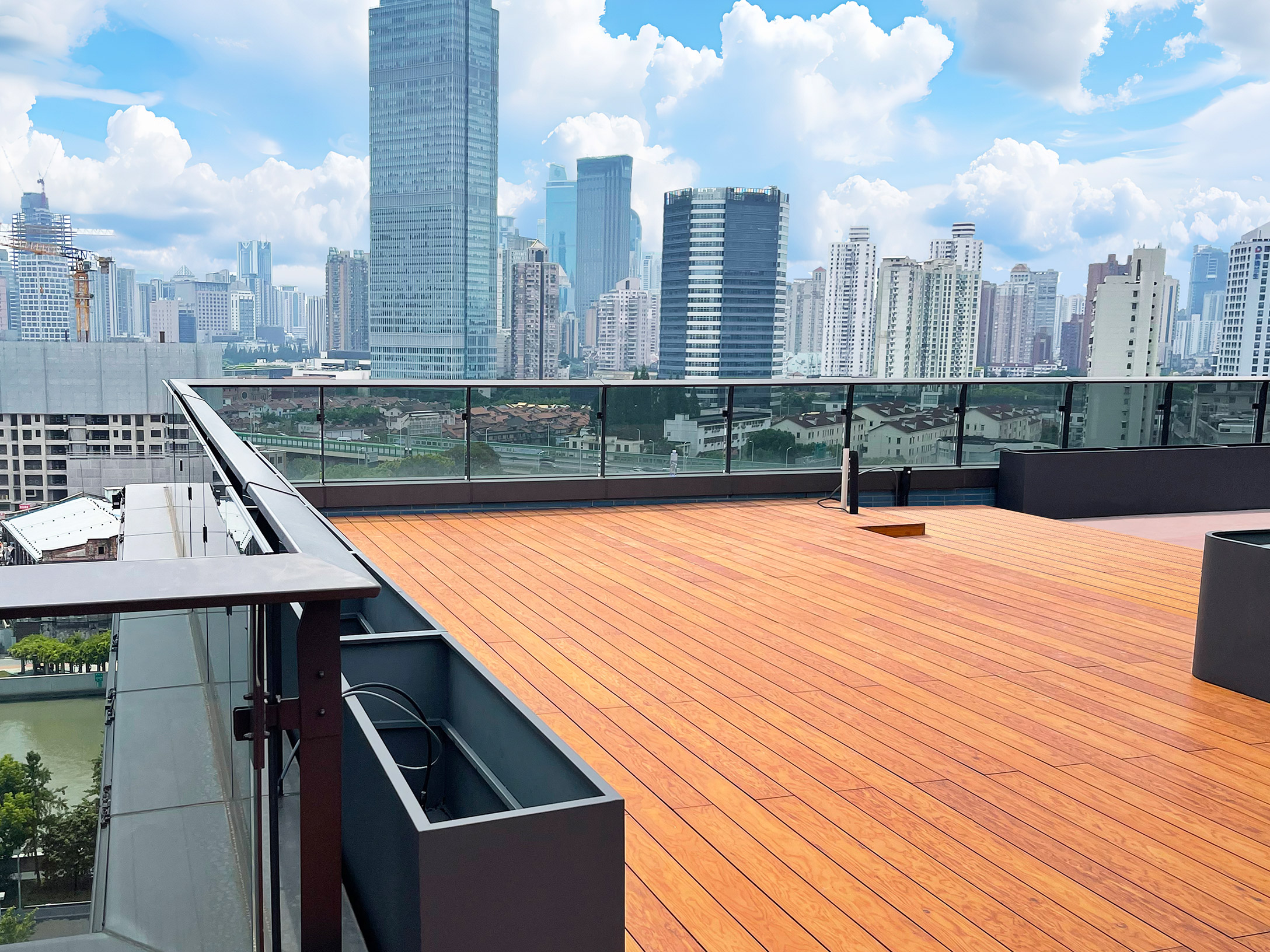
Outdoor Decking & Landscaping
Modified wood provides durability and weather resistance for decks, terraces, and outdoor structures.
Public Spaces & Parks
Ideal for boardwalks, benches, and park structures requiring durability under high foot traffic.
Tropical Environments
Resists high humidity, mold, and UV exposure in tropical climates like Southeast Asia.
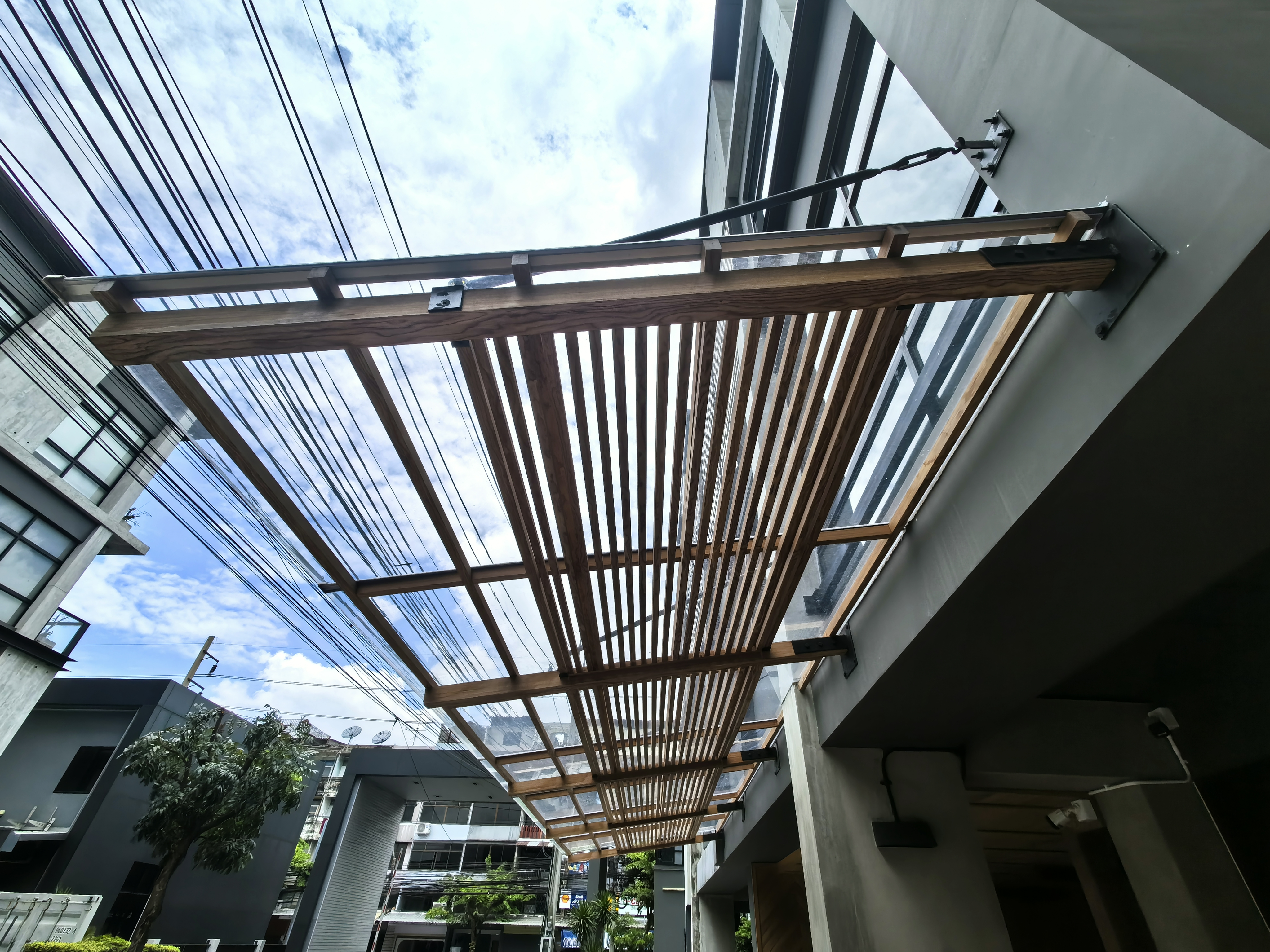
Architectural Cladding
Used in façade systems for natural aesthetics with long-term weather resistance and low maintenance.
.jpg?imageMogr2/format/webp)
How to Choose the Right Wood Material for Your Project
Consider Your Climate
- Humid climates → Choose modified wood with high moisture resistance
- Dry/UV-intensive climates → Select UV-resistant modified grades
- Variable climates → Consider both modified and engineered options
Application Requirements
- Structural applications → Engineered wood for consistent strength
- Surface/decorative uses → Modified wood for aesthetics and durability
- Low maintenance projects → Modified wood preferred
Expert Tip: Working with experienced suppliers can help match material properties with specific project needs, ensuring optimal performance and cost-effectiveness.
Frequently Asked Questions
Is modified wood better than traditional wood?
Yes, for demanding environments. Modified wood offers significantly better durability, dimensional stability, and resistance to environmental factors compared to untreated traditional wood.
How long does modified wood last outdoors?
Depending on the modification process and environment, properly installed modified wood can last decades with minimal maintenance—often 25+ years in outdoor applications.
Is engineered wood suitable for outdoor use?
Some engineered wood products are specifically designed for exterior applications, but proper treatment, sealing, and design are essential for long-term performance outdoors.
What is the difference between modified and treated wood?
Modified wood changes the internal cellular structure of the material through thermal or chemical processes, while treated wood typically relies on chemical preservatives applied to the surface or under pressure.
Conclusion
As construction and architectural demands continue to grow, traditional wood alone often falls short in challenging environments.
Modified wood and engineered timber materials offer a balanced solution—combining natural aesthetics with enhanced durability, stability, and structural efficiency. From tropical parks to desert residences and urban rooftops, these advanced materials have proven their value in diverse real-world conditions.
For architects, engineers, and manufacturers, choosing the right timber solution is no longer just about appearance—it’s about long-term performance, reliability, and sustainability.
Experience Advanced Timber Solutions at CHINAPLAS 2026
Discover how Chambroad’s Modified Wood solutions combine natural beauty with industrial-grade reliability. Whether you are designing high-end villas, engineering 220KV transformers, or constructing LNG carriers, our materials provide the durability and performance you demand.
Join us at CHINAPLAS 2026 to experience these solutions firsthand.
Booth: 6.2 A02