



.png?imageMogr2/crop/220x71/gravity/center/format/webp)

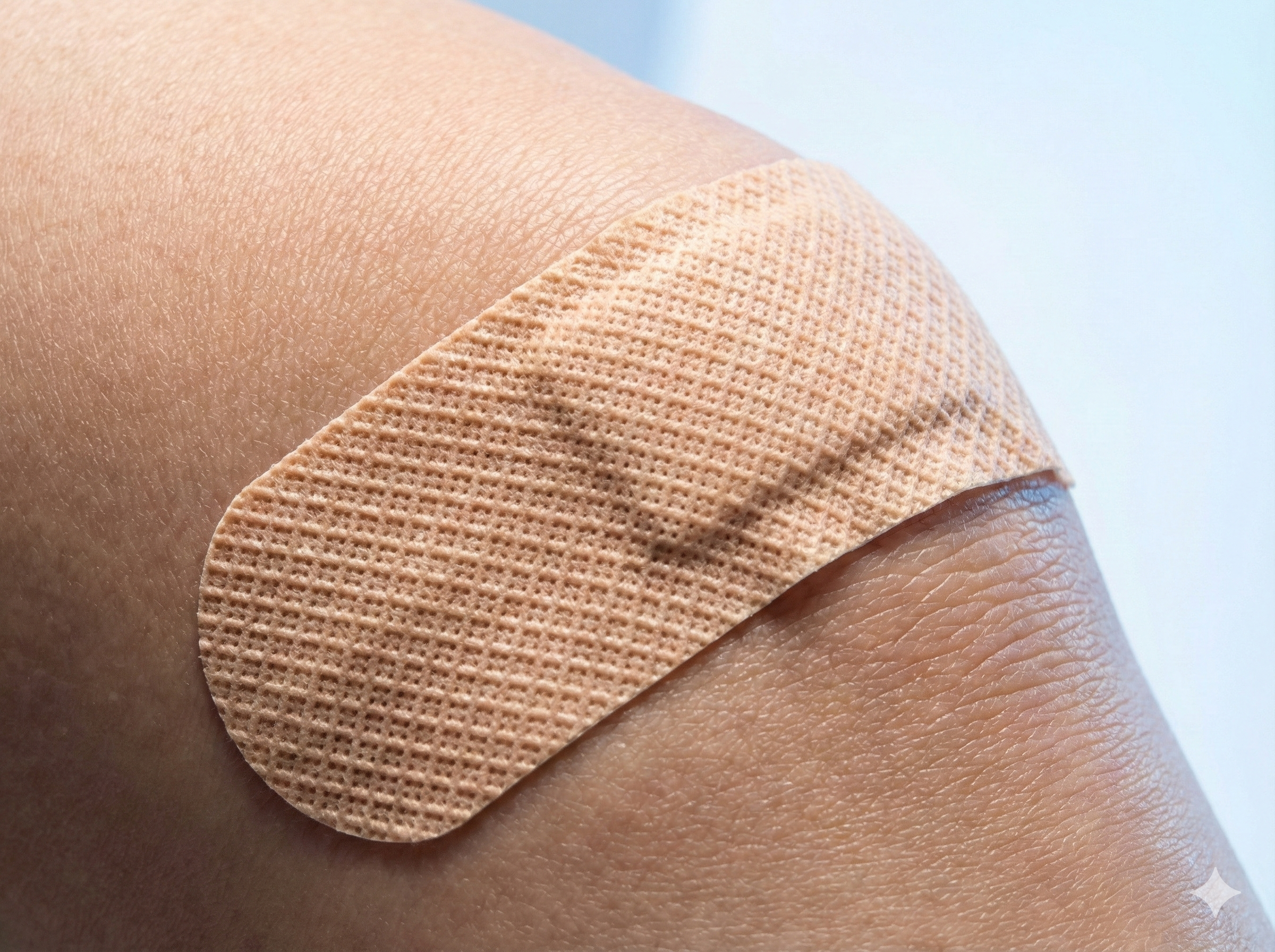
Modern wound dressings are engineered systems, not single materials. A typical construction combines an absorbent core, a wound-contact layer, an exudate-distribution layer, a breathable outer film, and an adhesive fixation system. Each layer performs a specific function, and elastic nonwoven increasingly appears as the substrate of choice for fixation layers and conformable backing components in dressings designed for mobile body sites. Selecting a medical-grade elastic nonwoven is not the same exercise as selecting a hygiene-grade material — the regulatory framework, biological safety testing burden, and clinical performance expectations are substantially more demanding.
This article examines the material properties that determine in-use performance in wound dressings, the medical-grade requirements that distinguish wound-care materials from hygiene applications, and the supplier qualification criteria that wound-care manufacturers apply when sourcing breathable elastic nonwoven for clinical products.
The Functional Demands Placed on Elastic Nonwoven in Wound Dressings
A wound dressing material that fails to perform mechanically produces clinical consequences — leakage, displacement, dressing failure, or periwound skin damage. The elastic nonwoven component of a wound dressing must address three competing functional demands simultaneously:
Conformability
The dressing must follow joint movement and body contour without bridging, rolling at edges, or losing adhesive contact at corners. Knee, elbow, heel, and finger dressings experience repeated flexion cycles — material that stiffens after 24 hours of wear produces edge lift and wound exposure.
Moisture Balance
Excess moisture at the wound bed causes maceration of periwound skin; insufficient moisture desiccates the wound bed and delays healing. The dressing material must allow moisture vapor to escape at a rate matched to exudate production — too high MVTR dries the wound, too low MVTR causes maceration.
Gentle Removal
Frequent dressing changes — daily for some wound types — must not strip epidermal layers, tear fragile newly-formed skin, or cause Medical Adhesive-Related Skin Injury (MARSI). The backing material's interaction with the adhesive determines removal force and skin trauma risk.
These demands are not additive — they interact. Higher MVTR material may be more breathable but can cause the adhesive to dry out faster, increasing removal force. Higher conformability may require lower modulus, which can reduce the material's ability to maintain tension across a joint. Material selection for wound dressings is an optimization across these trade-offs, not a maximization of any single property.
What "Medical-Grade" Means in Material Terms
The term "medical-grade" is widely used in marketing but has a precise regulatory meaning when applied to materials used in wound dressings sold as medical devices. Under the EU Medical Device Regulation (MDR 2017/745) and equivalent frameworks in other jurisdictions, materials used in wound dressings are evaluated based on their biological safety and the duration and nature of contact with the patient.
The applicable standard is ISO 10993 — Biological evaluation of medical devices. For wound dressings that contact breached or compromised skin for limited to prolonged durations (24 hours to 30 days), the relevant test panel typically includes:
| ISO 10993 Test | What It Measures | Why It Matters for Wound Dressings |
|---|---|---|
| ISO 10993-5 — Cytotoxicity | Cell culture (typically L929 mouse fibroblast) exposure to material extract; cell viability must exceed 70% | Detects leachable substances that could damage wound-bed cells and impair healing |
| ISO 10993-10 — Irritation & Sensitization | Skin irritation (intracutaneous or epicutaneous) and sensitization (guinea pig maximization or LLNA) | Material that passes cytotoxicity can still cause delayed contact dermatitis; sensitization testing is mandatory for skin-contact medical devices |
| ISO 10993-18 — Chemical Characterization | Identification and quantification of extractables and leachables from the material | Required for risk assessment under MDR; identifies residual monomers, additives, processing aids that could migrate to wound bed |
| ISO 10993-23 — Irritation (specific) | In vitro reconstructed human epidermis (RhE) model for skin irritation | Reduced use of animal testing; increasingly accepted under MDR for medical-device skin-contact materials |
Two practical points apply here. First, ISO 10993 testing is conducted on the material as supplied — including any surface finishes, residual processing aids, and additives. A material that passes biological safety testing in the supplier's standard form may fail if the dressing manufacturer's converting process introduces contaminants or modifies the surface. Second, the test panel applies to the final device, not the raw material alone. A supplier's ISO 10993 compliance certification reduces the testing burden on the wound dressing manufacturer, but does not replace it entirely.
Wound dressing manufacturers sourcing elastic nonwoven should request documentation of the specific ISO 10993 tests the material supplier has performed, the test laboratory used, and the extractables characterization data. Materials supplied without ISO 10993 documentation require the dressing manufacturer to perform the full testing panel — a 6–12 month and substantial cost burden for a new product qualification.
Moisture Vapor Transmission in the Wound Care Context
MVTR is a critical specification for wound dressing material, but the appropriate value depends on the wound type and the dressing's intended function. A wound-care R&D engineer selecting backing material for a hydrocolloid dressing for moderate exudate will have a different MVTR target than one designing a transparent film dressing for low-exudate superficial wounds.
The clinical classification of moisture vapor handling is typically expressed as:
- Low-exudate wounds (superficial abrasions, post-surgical closed incisions): MVTR of 300–500 g/m²/24h is typical — sufficient to prevent moisture pooling while maintaining a moist wound bed.
- Moderate-exudate wounds (venous leg ulcers in early healing, donor sites): MVTR of 500–1,500 g/m²/24h, often combined with an absorbent core. The breathable backing prevents fluid accumulation that would otherwise compromise adhesive fixation.
- High-exudate wounds (infected wounds, debrided ulcers): MVTR alone is insufficient — these dressings require superabsorbent polymer (SAP) or foam absorbent cores in combination with a breathable outer film. The MVTR of the backing in this context is more important for vapor release during wear than for direct moisture removal from the wound bed.
Design caveat: MVTR specifications on material datasheets are typically reported under ASTM E96 (upright cup, 38°C, 90% RH) or JIS L 1099 (inverted cup with calcium chloride desiccant). The values from these two methods are not directly comparable — JIS L 1099 inverted cup commonly produces values 2–4× higher than ASTM E96 for the same material. Wound dressing specifications typically cite ASTM E96 because the test conditions more closely simulate in-use conditions. When comparing material datasheets, verify the test method.
For elastic nonwoven specifically, MVTR is determined by the TPU polymer chemistry (ether-ester backbone selection affects inherent moisture permeability), the filament diameter and web density, and any lamination to a barrier film. A breathable elastic nonwoven used as the dressing component should maintain MVTR under patient movement — the material elongates and recovers through joint flexion cycles, and any significant MVTR reduction under elongation impairs moisture balance during activity.
The standard test for MVTR under elongation is not universally established, but wound-care material specifications commonly include MVTR measurement at 20–30% elongation as a design validation. Material that loses more than 20% of its rest-state MVTR at 30% elongation is generally unsuitable for joint-adjacent dressings.
Conformability, Elastic Recovery, and the Patient Experience
Conformability is the clinical term for a dressing's ability to maintain intimate contact with the wound site through body movement. For dressings on knees, elbows, fingers, heels, and sacral regions, the dressing undergoes repeated flexion-extension cycles. The elastic nonwoven substrate determines whether the dressing maintains contact or lifts at the edges.
The material properties that drive conformability in clinical use are not the same properties reported as headline specifications on a material datasheet:
- Stress retention under constant strain (4–8 hours). A dressing is applied at a slight tension and held under constant strain for the wear duration. Material that loses 30–40% of its initial holding stress over this period produces edge lift and dressing displacement. Stress retention values above 70% at 4 hours are typically required for joint-region applications.
- Permanent set after cyclic loading. A knee dressing undergoes hundreds of flexion cycles per day. Material that develops permanent set of more than 10% after 100 cycles at 30% elongation produces visible distortion and baggy regions that compromise adhesive contact.
- Low modulus at functional elongation. Lower modulus means the dressing feels softer against the skin and applies less sustained pressure to underlying tissue. For pediatric and geriatric applications where skin fragility is a concern, low modulus (typically <2 MPa at 30% elongation) is preferred.
- Handfeel and drape. Not a measurable mechanical property, but a sensory one — material that feels stiff or paper-like against the skin may be technically compliant but rejected in clinical use. TPU nonwoven's inherent softness compared to PP nonwoven is one of its advantages in wound-care applications.
Dynamically conformable material is the term used in wound care for elastic nonwoven that maintains intimate skin contact through joint movement without the need for additional elastic bandages or tape reinforcement. This is the category where TPU-based elastic nonwoven has displaced older constructions (spandex-laminated nonwoven, knitted elastic textiles) for many clinical applications.
Skin Protection: Maceration, MARSI, and Removal Trauma
Periwound skin damage is the most common complication of wound dressing use. The two principal mechanisms are:
Maceration — softening and breakdown of periwound skin due to prolonged exposure to wound exudate that cannot evaporate through the dressing. Material with insufficient MVTR or that loses MVTR under elongation causes fluid to pool at the wound perimeter. The clinical sign is white, soggy epidermis at the dressing edge. Repeated maceration episodes extend the wound area and significantly prolong healing time.
MARSI (Medical Adhesive-Related Skin Injury) — mechanical damage to the epidermis caused by adhesive removal. The mechanism involves tension between the adhesive and the stratum corneum exceeding the cohesive strength of the epidermis itself. The dressing backing material contributes to MARSI risk because stiffer backing concentrates peeling force at the dressing edge, while conformable backing distributes peeling force over a wider area, reducing peak stress on the skin.
Material design implication: The use of soft, conformable elastic nonwoven as a backing material reduces MARSI incidence compared to stiffer film-only or nonwoven-only constructions. This is a clinical finding repeatedly documented in wound-care literature, and is the basis for the adoption of elastic nonwoven backings in modern dressing designs for fragile skin (pediatric, geriatric, long-term steroid use).
For wound dressings designed for frequent changes — daily for some burn and post-operative dressings — the backing material's behavior under repeated adhesive application and removal cycles is also relevant. Material that develops surface tackiness or loses dimensional stability after sterilization may not be suitable for repeated-use applications, even if it passes single-use biological safety testing.
Sterilization Compatibility
Wound dressings are typically supplied sterile. The choice of sterilization method affects material selection — not all elastic nonwoven constructions tolerate all sterilization methods.
- Ethylene oxide (EtO). The most common sterilization method for wound dressings. Material compatibility is generally good but requires aeration time to remove residual EtO. TPU nonwoven tolerates EtO well without property degradation.
- Gamma irradiation. Compatible with most TPU grades, but high doses (≥25 kGy) can cause chain scission and reduction in tensile strength. Material validation must confirm post-irradiation performance over the claimed shelf life.
- E-beam irradiation. Similar chemical effects to gamma, but with lower penetration depth. Suitable for thin dressings but may require dose mapping for thicker constructions.
- Steam autoclave. Not typically used for TPU-containing dressings due to thermal softening and potential deformation at 121°C.
Material suppliers should be able to provide data on sterilization method compatibility for their grades. Wound dressing manufacturers must conduct their own post-sterilization validation including accelerated aging to claimed shelf life, regardless of supplier-supplied data.
Supplier Qualification for Medical-Grade Elastic Nonwoven
Qualification of a medical-grade elastic nonwoven supplier involves a different scope than qualification for hygiene or general industrial applications. The following capabilities are typically assessed during supplier audits for wound-care material sourcing:
| Capability Area | What to Verify | Why It Matters for Wound-Care Material |
|---|---|---|
| Production environment classification | ISO Class 7 (Class 10,000) cleanroom or controlled environment for winding, slitting, and packaging operations | Particle and bioburden control at the supplier level reduces finished product contamination risk and sterilization validation burden |
| ISO 10993 test panel documentation | Reports from accredited laboratories for cytotoxicity, irritation, sensitization, and chemical characterization | Reduces testing burden on the dressing manufacturer; required documentation for MDR technical file |
| Batch traceability & CoA | Lot-to-raw-material traceability, certificate of analysis per production batch, retained sample storage | Required for medical device post-market surveillance; supplier must support field complaints and recall investigations |
| Change control notification | Documented procedure for notifying customers of any material, process, or supplier-of-raw-material changes | Medical device manufacturers must revalidate after material changes; unnotified changes are a regulatory and patient safety issue |
| Quality management system | ISO 9001 minimum; ISO 13485 preferred for medical-device-focused suppliers | ISO 13485 includes design control, risk management, and traceability requirements aligned with medical device regulations |
| Cross-web consistency | GSM, modulus, and elongation at five positions across roll width, measured for consecutive production batches | Cross-web variation produces inconsistent conformability in finished dressings, visible as differences in performance across the converted web |
Suppliers unable to provide evidence in any of these areas should not be disqualified solely on that basis — but the dressing manufacturer must absorb the corresponding qualification activity internally, with associated cost and timeline. The total cost of ownership for a wound-care material includes the supplier qualification burden, not just the per-kilogram material price.
Material Grades for Wound-Care Applications
The Chambroad TPU elastic nonwoven product line includes grades positioned for medical applications. The KNE-APFM series is specifically positioned as medical-grade dynamically conformable breathable elastic base fabric, designed for wound dressing and medical fixation applications where conformability through patient movement is required.
| Grade | Product Page | Positioning |
|---|---|---|
| KNE-APFM Series | Medical-grade breathable elastic base fabric | Dynamically conformable material for wound dressings and medical fixation requiring elastic performance through patient movement |
| KNE-FM12 | Breathable elastic material | General-purpose breathable elastic nonwoven; suitable as substrate for non-medical applications and as reference material for product development |
| KNE-TX06 | Breathable elastic material | Higher-modulus elastic nonwoven for applications requiring enhanced tensile stability during converting |
For broader context on TPU nonwoven material applications and properties, the article on TPU elastic non-woven as a versatile material for next-generation technical textiles provides additional product family context, and the article on nonwoven fabric material uses in filtration, medical, and industrial applications covers application categories beyond wound care.
Medical-Grade Elastic Nonwoven for Wound Dressings — Contact Chambroad
Chambroad produces medical-grade breathable elastic nonwoven for wound care and medical fixation applications. For product specifications and grade information, contact our team.
Contact Us