



.png?imageMogr2/crop/220x71/gravity/center/format/webp)


Industrial Applications of Polypropylene Resin for High-Performance Components
Optimizing manufacturing efficiency, part reliability, and regulatory compliance through advanced polymer engineering and data-driven material selection.
The Real Engineering Challenge in Modern Component Manufacturing
Manufacturers don't just need "a plastic". They need a material system that simultaneously delivers:
- High stiffness-to-weight ratio without sacrificing impact resistance at sub-zero temperatures
- Optical clarity >88% (ASTM D1003) with low haze (<3%) for consumer or medical visibility
- Sterilization stability across autoclave (121–134°C), gamma (25–50 kGy), or E-beam cycles without yellowing or embrittlement
- Fast cycling (MFR 15–70 g/10min) with minimal warpage, sink marks, or weld-line weakness
- Regulatory compliance (FDA 21 CFR 177.1520, USP Class VI, ISO 10993, EU 10/2011, OEM VOC/odor specs)
This guide explores how Chambroad's engineered Polypropylene Resin portfolio solves these critical bottlenecks with real technical data, processing guidance, and application-specific grade recommendations. By the end, you'll have a clear selection framework to reduce development time, improve part performance, and accelerate time-to-market.
Understanding Polypropylene Resin: Beyond Homopolymer vs. Copolymer
Polypropylene (PP) is a thermoplastic addition polymer made from propylene monomers. Industrial PP resins are categorized by molecular architecture, each serving distinct functional needs. Below are key technical parameters for engineering selection:
| PP Type | Typical MFR (g/10min) | Tensile Yield (MPa) | Flexural Modulus (MPa) | Notched Impact 23°C (kJ/m²) | Best Applications |
|---|---|---|---|---|---|
| Homopolymer (PP-H) e.g., HP500N, HP648T |
11.6 – 72.9 | 32.0 – 37.3 | 1561 – 1874 | 2.2 – 2.6 | Rigid housings, caps, thin-wall containers, chemical tanks |
| Impact Copolymer (PP-B) e.g., K9930H, EP548R, LA640T |
9.0 – 66.0 | 18.0 – 27.2 | 900 – 1565 | 12.0 – 55.0 | Automotive bumpers, interior panels, cold-chain logistics, appliance housings |
| Random Copolymer (PP-R) e.g., RP340R, RP348P, HI340R |
3.2 – 66.2 | 21.5 – 28.0 | 930 – 1147 | 5.0 – 23.6 | Medical syringes, IV sets, transparent food containers, CPP films |
* All values are typical values from Chambroad technical data sheets and do not serve as product specifications. Actual properties may vary by batch; refer to Certificate of Analysis for production validation.
Critical Processing Parameters
- Melt Temperature: 200–280°C (grade-dependent; higher MFR grades tolerate lower temps)
- Mold Temperature: 40–80°C (60–80°C recommended for high-clarity applications to minimize haze)
- Drying: Generally unnecessary (<0.02% moisture tolerance); dry only if additives present
- Shrinkage: 1.1–1.4% (anisotropic; design mold compensation accordingly)
- Gate Design: Avoid jetting in transparent grades; position gates away from high-impact zones in automotive parts
Key Material Properties
Chemical Resistance: Resistant to fats, acids, bases, and most organic solvents; ideal for chemical containers and medical fluid paths
Thermal Stability: HDT up to 113°C (HP648T); suitable for steam sterilization and microwaveable packaging
Low-Temperature Toughness: K9930H maintains 55 kJ/m² impact strength at 23°C and 6.0 kJ/m² at -20°C for cold-climate automotive applications
Optical Performance: RP340R achieves haze of 6.6% and yellow index of -6.4 for premium transparent packaging
Strategic Solutions for High-Performance Sectors
Based on extensive R&D collaboration with 30+ global universities and 1,000+ polymer scientists, Chambroad has developed specialized PP grades engineered for specific industry demands. Below are application-optimized recommendations with real technical data.
1. Medical and Healthcare Precision
Core Requirements: Biocompatibility, sterilization stability, optical clarity, low extractables, consistent MFR for automated assembly.
Recommended Grades:
- RP348P (MFR 16.9): Medical-grade random copolymer with haze 11.3%, yellow index -3.3, and ash content ≤0.036%. Validated for USP Class VI and ISO 10993 compliance. Ideal for syringes, IV connectors, and sterile fluid paths.
- RP340R (MFR 28.4): High-clarity grade with haze 6.6% and yellow index -6.4. Optimized for fast-cycle molding of transparent medical consumables and food-contact packaging.
- HI340R (MFR 25.2): Unique balance of transparency (haze 12.7%) and impact strength (23.6 kJ/m² at 23°C) for low-temperature food packaging requiring drop resistance.
Processing Tips:
- Use mirror-polished molds (Ra <0.1μm) + mold temp 60–80°C to minimize stress-induced haze
- Validate gamma sterilization (25 kGy standard) with post-irradiation tensile and colorimetric testing (ΔE <3.0)
- Avoid high shear rates; gate design should prevent jetting to reduce micro-cracking during autoclave cycles
Furthermore, for sealing applications, the use of medical rubber stoppers integrated with PP housings provides a sterile, leak-proof environment for pharmaceutical storage.

2. Automotive Lightweighting and Impact Resistance
Core Requirements: Low-temp toughness (-20°C), stiffness-toughness balance, VOC/odor control (≤3.0 per VDA 270), paintability, recyclability.
Recommended Grades:
- K9930H (MFR 30.0): Impact copolymer with exceptional low-temperature performance—55 kJ/m² at 23°C and 6.0 kJ/m² at -20°C. Ideal for bumpers, pillar trims, and door panels in cold climates.
- LA640T (MFR 66.0): High-flow, high-modulus (1565 MPa) grade for large, thin-wall interior components. Reduces cycle time by 15–20% vs. standard grades while maintaining dimensional stability.
- EP548R (MFR 30.0): Balanced impact copolymer with wide processing window; suitable for appliance housings and non-structural automotive trim.
Processing & Design Tips:
- Gate location must avoid weld lines in high-impact zones; use simulation tools to optimize fill pattern
- PP surface energy ~30 mN/m; apply plasma or flame treatment prior to painting for adhesion >4B (ASTM D3359)
- Design for disassembly: use PP-based clips/fasteners to enable mono-material recycling at end-of-life
To further enhance flexibility, we often integrate Polyolefin Elastomers (POE). You can explore how POE G6012 is reshaping the boundaries of automotive modification.
.jpg?imageMogr2/format/webp)
3. High-Transparency Food Packaging
Core Requirements: FDA/EU compliance, microwave/autoclave resistance, heat-seal integrity, recyclability (#5 stream), consumer appeal.
Recommended Grades:
- B800E / M800E (MFR 9.1 / 8.8): Random copolymers with haze 15.0% / 7.3% and excellent blow/injection molding balance. Ideal for rigid food containers, cosmetic jars, and microwaveable trays.
- MT60M (MFR 66.2): Ultra-high-flow transparent grade for ultra-thin-wall applications (0.3–0.5 mm). Enables 30% weight reduction in milk tea cups and disposable containers without sacrificing stiffness.
- CPP F800EDF (MFR 8.0): Cast film grade with exceptional optical clarity (haze 0.2–0.3%) and zero 0.8mm fisheyes. Premium choice for retort pouches and high-barrier lamination films.
Processing & Compliance Notes:
- Mold temp 50–70°C + controlled cooling rate → minimizes spherulite size → maximizes clarity
- PP lacks inherent O₂/moisture barrier; pair with EVOH or metallized layers in co-extrusion if shelf-life >30 days required
- Fully recyclable (#5 stream); compatible with PCR blending up to 30% without significant property drop (see sustainability section)
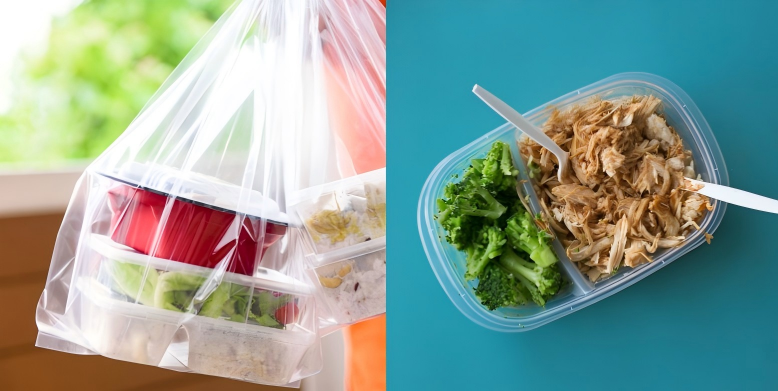
Consumer perception of freshness is directly linked to packaging clarity. Our Polypropylene Resin series, including Transparent PP B800E and M800E, offers "glass-like" transparency while maintaining the heat resistance needed for microwaveable takeaway boxes and vacuum food packaging.
Quick-Reference Grade Selection Matrix
| Application | Primary Need | Recommended Grade | Key Spec | Processing Tip |
|---|---|---|---|---|
| Medical syringes | Clarity + sterilization stability | RP348P | Haze 11.3%, USP Class VI | Mold temp 70°C, low shear |
| Automotive bumper | -20°C impact resistance | K9930H | 55 kJ/m² @23°C, 6.0 @-20°C | Avoid weld lines in impact zones |
| Thin-wall cup (0.4mm) | High flow + stiffness | MT60M / HP648T | MFR 66.2 / 72.9, modulus ~970 MPa | High injection speed, precise cooling |
| Retort food pouch | Clarity + heat seal + barrier | CPP F800EDF | Haze 0.2–0.3%, 0 fisheyes @0.8mm | Co-extrude with EVOH for O₂ barrier |
| Hot water pipe | Long-term 95°C stability | PA14D | OIT 49 min @210°C, impact 73 kJ/m² | Control extrusion cooling rate for crystallinity |
* Selection guidance based on typical application requirements. Final grade validation should include prototype testing under actual processing and end-use conditions. Contact Chambroad technical team for customized recommendations.
Why Global Engineering Teams Partner with Chambroad
Chambroad is not just a resin supplier—we deliver integrated material-system solutions backed by industrial-scale R&D and end-to-end technical support.
Proven Industrial Scale
- 2024 global revenue: ¥103 billion (Top 275, China Enterprise 500)
- 4 large-scale production bases with integrated refining-to-polymer capability
- 13 innovation centers + 8 R&D bases + 1,000+ polymer scientists
- 1,700+ authorized patents, including 44 PCT international applications
Certified Quality & Compliance
- All PP grades tested per ISO 1133 (MFR), ISO 527 (tensile), ISO 179 (impact)
- Medical grades pre-validated for USP Class VI, ISO 10993, FDA 21 CFR 177.1520
- Food-contact grades compliant with EU 10/2011 and GB 4806.7-2016
- Full documentation packages: CoA, SDS, regulatory statements, sterilization reports
Sustainable Innovation
- Chemical Recycling Leadership: Full-category PCR polypropylene (homopolymer, copolymer, transparent) with ≥95% property retention vs. virgin resin
- Closed-Loop Process: Waste plastic → pyrolysis oil → propylene monomer → PCR PP resin → new products
- Certification Support: ISCC PLUS, GRS, and OEM sustainability documentation available
- Net-Zero Roadmap: High-performance EPP solutions enabling lightweighting + recyclability
Technical Support That Moves Your Project Forward
- Free Pilot Samples: Chambroad offers free samples; please contact our engineering team.
- Mold & Process Optimization: On-site or remote support for warpage, weld lines, haze, or sterilization degradation issues
- Custom Additive Matching: Clarifiers, stabilizers, POE modifiers, and odor scavengers pre-compounded to your exact spec
- Regulatory Acceleration: Pre-assembled compliance dossiers to streamline your medical device or food-contact approvals
Common PP Processing Challenges & Data-Backed Solutions
| Symptom | Likely Root Cause | Corrective Action | Recommended Grade Check |
|---|---|---|---|
| Brittleness at low temperatures | Insufficient rubber phase; wrong copolymer type; MFR too high causing chain scission | Switch to impact copolymer (e.g., K9930H); verify EPDM/POE content; reduce MFR if wall thickness >2mm | Confirm -20°C impact >5 kJ/m² in CoA |
| Haze / poor transparency | Rapid cooling → large spherulites; mold temp too low; clarifier dispersion issues | Increase mold temp to 60–80°C; slow cooling rate; verify clarifier masterbatch compatibility | Select RP340R (haze 6.6%) or CPP F800EDF (haze 0.2–0.3%) |
| Warpage / dimensional instability | Anisotropic shrinkage; uneven wall thickness; inadequate cooling | Optimize gate location; add conformal cooling; design ribs ≤60% wall thickness; use grade with lower shrinkage variance | LA640T (shrinkage 1.3%) for large parts; HP648T (1.2%) for thin-wall |
| Yellowing after sterilization | Inadequate stabilizer package; excessive gamma dose; thermal degradation during processing | Switch to gamma-stabilized grade (e.g., RP348P); validate dose; add HALS + phosphite antioxidant; reduce melt temp 10–15°C | Confirm yellow index < -3.0 and post-sterilization ΔE <3.0 |
| Silver streaks / splay | Moisture in additives; high melt temp; trapped volatiles; excessive back pressure | Dry only if additives present; reduce barrel temp; increase venting; optimize screw compression ratio | Verify volatiles content ≤0.3% in CoA for high-flow grades |
* Troubleshooting guidance based on field experience. Actual root causes may vary; Chambroad application engineers provide on-site diagnostics for complex cases.
Frequently Asked Questions (Engineer-Focused)
Q: How does MFR affect cycle time vs. mechanical performance in thin-wall molding?
A: Higher MFR (e.g., HP648T at 72.9 g/10min or MT60M at 66.2) reduces melt viscosity, enabling faster cavity fill and 10–15% shorter cycle times. However, very high MFR grades may show 15–25% lower tensile/impact properties due to shorter polymer chains. Match MFR to wall thickness: <1mm → MFR 50–75; 1–2mm → MFR 25–40; >2mm → MFR 8–20. Chambroad's technical team can provide rheology curves to optimize your specific tooling.
Q: Can PP replace PC/ABS in automotive interior panels while meeting VOC requirements?
A: Yes, for non-structural trim. Impact copolymers like LA640T achieve flexural modulus 1565 MPa and 23°C impact 5.2 kJ/m², with odor rating ≤3.0 per VDA 270 after proper compounding. However, PC/ABS still wins in applications requiring continuous use >110°C or UL94 V-0 flame rating without halogenated FR. Chambroad offers low-odor, low-VOC PP grades with pre-validated emission data for major OEM specifications.
Q: Is chemically recycled (PCR) PP truly performance-equivalent to virgin resin?
A: Chambroad's PCR polypropylene—produced via proprietary chemical recycling (waste → pyrolysis oil → propylene → polymer)—retains ≥95% of virgin resin mechanical properties across tensile, impact, and MFR metrics. Full-category PCR options are available (homopolymer, impact copolymer, transparent). We provide ISCC PLUS certification, batch-specific CoAs, and blend-ratio guidance (typically 20–30% PCR with virgin resin) to ensure process stability. Request our PCR Technical Brief for validation protocols.
Q: How do I validate medical-grade PP for a new device submission?
A: Request the following from Chambroad: (1) Certificate of Analysis with batch-specific MFR, mechanicals, and extractables data; (2) USP Class VI test report; (3) ISO 10993-5/10 biocompatibility summary; (4) sterilization validation data (gamma 25 kGy, autoclave 134°C). Conduct in-house biocompatibility screening per ISO 10993-10 (irritation/sensitization) before clinical trials. Our regulatory team provides pre-submission consultation to align documentation with FDA/CE requirements.
Meet Our Technical Team at CHINAPLAS 2026
Chambroad is excited to announce our participation in the upcoming CHINAPLAS 2026. Join us for live molding demonstrations, sustainability roadmaps, and one-on-one material selection consultations with our polymer engineers.
Date: April 21–24, 2026
Booth: 6.2 A02
All technical data presented are typical values from Chambroad quality control testing and do not constitute product specifications. Final material selection should be validated under actual processing and end-use conditions. Contact Chambroad technical support for batch-specific Certificates of Analysis and application engineering support.
© 2026 Chambroad Chemical Solutions. All Rights Reserved. For industrial and engineering use only. Specifications subject to change without notice.